
Summary
Editor's rating
Is it worth the money once you add the subscription?
Chunky but decent-looking, very obviously a Ring
Battery life: decent but plan around charging
Build and weather resistance: feels tough enough for daily abuse
Video, motion and app: mostly solid, sometimes a bit slow
What you actually get and what it really does
Pros
- Clear 1536p video with head-to-toe view and decent colour night vision
- Battery-powered and wireless, so no need to touch existing doorbell wiring
- Good app and Alexa integration with useful extras like package alerts and Quick Replies (with subscription)
Cons
- Full functionality depends on a paid Ring Protect subscription for video history and smart alerts
- Battery swaps require a small security screw and can be fiddly, especially for people with mobility or grip issues
- Occasional delay between motion detection and app notification, so you sometimes miss the approach

Specifications
View full product page →| Brand | Ring |
A doorbell for people who hate running cables
I’ve been using the Ring Battery Video Doorbell Plus for a while now, and the short version is this: it does what it’s supposed to do, and it makes dealing with deliveries and random knocks at the door a lot less annoying. I went for the battery version because I didn’t want to mess around with existing doorbell wiring or hunt down an electrician who’d charge me more than the doorbell itself. If you’re in the same boat, the wireless side of it is the main reason to even look at this thing.
Setup is a mix of easy and slightly tedious. Physically, it’s simple: a couple of screws or a mounting plate and you’re done. The app part is where you spend a bit of time, especially with all the verification codes and permissions. If you’re adding multiple phones or tablets like I did (Android phone plus an iPad), expect to sit there tapping through security codes for a while. It’s not hard, just repetitive and a bit boring.
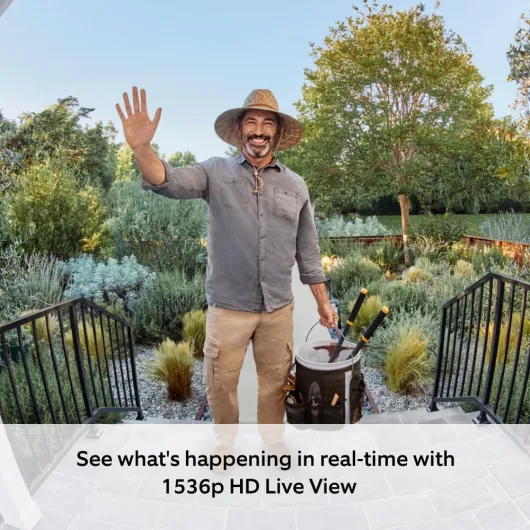
Once it’s up and running, the first thing you notice is the video quality. It’s 1536p with a head-to-toe view, and you can actually see packages on the ground and faces clearly, even at night. Compared to older or cheaper cameras I’ve used, it’s a clear step up. The notifications are also less aggressive than some systems – more of a friendly chime than a panic siren – which is nice if you’re at home all day and don’t want to jump out of your chair every time someone walks past.
Overall, my first impression was: decent bit of kit, not perfect, but it genuinely makes life easier, especially if you have mobility issues, work from home, or just get a lot of deliveries. Just be aware that to get the full benefit – recordings, person and package alerts, face recognition, etc. – you pretty much have to pay for the Ring subscription after the trial. Without that, it’s more like an expensive live-view doorbell.
Is it worth the money once you add the subscription?
On price, the Ring Battery Video Doorbell Plus sits in that mid-to-upper range for consumer video doorbells. You’re paying for the brand, the ecosystem, and the feature set. On its own, as a hardware purchase, I’d say it’s good but not cheap. Where the real question comes in is the subscription. To actually store videos, use people and package alerts, and get the most from it, you pretty much have to pay for a Ring Protect plan after the trial ends. The subscription isn’t outrageous, but it’s still an ongoing cost that you need to factor in.
If you compare it to cheaper no-name doorbells that offer free local storage or basic cloud, Ring looks a bit pricey. But in return you get a mature app, frequent updates, good Alexa integration, proper support, and a big user base. For me, the reliability and ecosystem are worth paying a bit more for. If you’re already using multiple Ring devices or Echo speakers, the value is better because everything plugs together nicely in one app and one account.
Where it really earns its keep is convenience: being able to talk to delivery drivers when you’re out, checking on the door when you hear a noise, and having video clips if something happens. One user even mentioned it’s been a big help with mobility issues, since they don’t have to rush downstairs to deal with the door every time. If that kind of use case matters to you, the cost is easier to justify. If you just want a simple doorbell and don’t care about recordings or phones, then yes, you’re probably overpaying.
Overall, I’d call the value pretty solid if you plan to keep it for a few years and accept the subscription as part of the deal. If you hate ongoing fees on principle, then this isn’t for you, because without the plan it loses a big chunk of what makes it useful. For renters, people who don’t want to touch wiring, or anyone already in the Ring/Alexa world, the price-to-benefit ratio is reasonable.
Chunky but decent-looking, very obviously a Ring
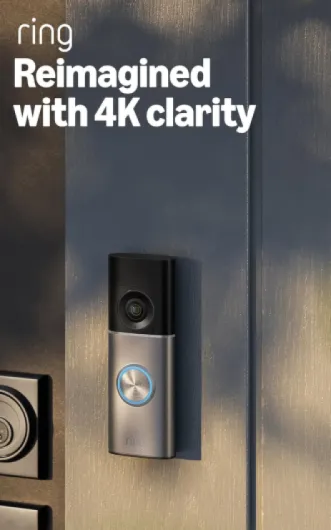
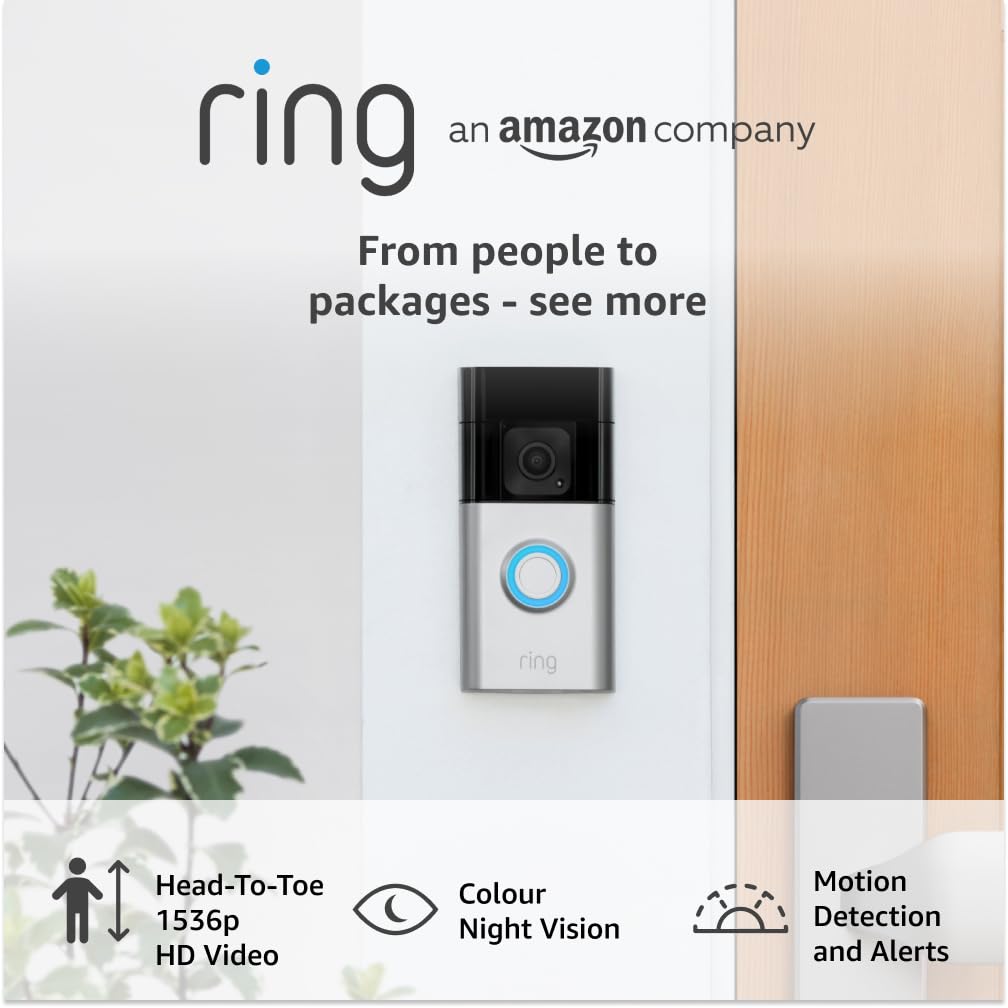
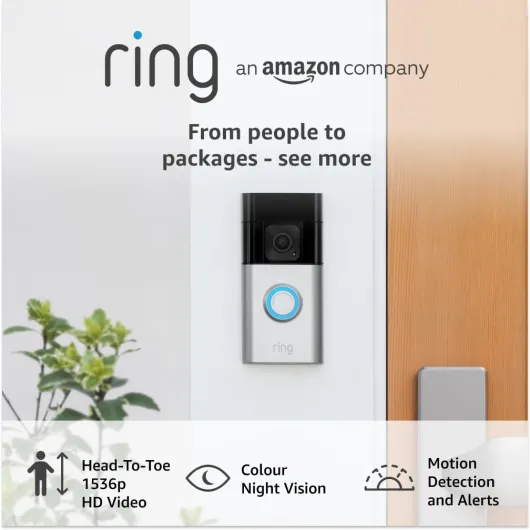
Design-wise, the Ring Battery Video Doorbell Plus looks like… a Ring. If you’ve seen any of their older models, this one is the same general style: a rectangular block, camera at the top, big round button in the middle, and the satin nickel faceplate giving it a fairly neutral look. It’s not tiny, it’s about 12.8cm x 6.2cm x 2.8cm, so it stands out on the doorframe, but in a way that kind of says “yes, this is a camera, don’t try anything stupid.” I don’t mind that personally; visible deterrent is part of why I bought it.
The build feels pretty solid. The plastic doesn’t feel cheap, there’s no creaking when you press on it, and the faceplate clips on firmly. It’s weather resistant and rated for -20.5°C to 50°C. Mine has seen a mix of rain, wind and a couple of cold nights, and it hasn’t flinched so far. Other users report it lasting through rougher weather too, so I’m not worried about it falling apart any time soon. If you want something that looks super sleek or blends into a fancy door, this isn’t that, but it looks modern enough.
The button has a clear LED ring around it, so visitors know exactly where to press, even at night. That sounds like a small detail, but older or more confused delivery drivers don’t have to guess. The camera lens is big and obvious, which probably helps with security but also means you’re not hiding the fact you’re recording. Some people might not like that, but again, that’s kind of the point of a video doorbell.
One design thing I’m less keen on is the little security screw at the bottom that locks the battery/faceplate in place. You need the special screwdriver that comes in the box. It’s good for theft protection, but if you have dodgy fingers or mobility issues, getting that screw in and out every time you charge the battery is a bit of a pain. It’s not a deal-breaker, but it does mean battery swaps are not a 10-second job. Overall, design is practical and sturdy rather than pretty, which is fine by me.
Battery life: decent but plan around charging
The big selling point of this model is the removable quick-release battery. You don’t have to take the whole doorbell off the wall to charge it, unlike some older models. You just undo the tiny security screw, slide the faceplate up, and pop the battery out. In practice, it’s not quite as “quick” as the marketing suggests, especially if you have joint problems or don’t like fiddly screws, but it’s still better than having to remove the whole unit.
Battery life will depend a lot on how busy your front door is and how aggressive your motion settings are. With moderate traffic (a few deliveries a week, plus the odd visitor and some motion events), I’d say you’re looking at a few weeks to maybe a month per charge. Some users report around a month even in colder weather, others needed to recharge sooner. When I had motion sensitivity high and lots of alerts, it drained noticeably faster. Once I fine-tuned the zones and lowered sensitivity, it settled down to something more reasonable.
Charging is done via the included USB cable. From low to full takes a few hours, so you either need a spare battery or accept that your doorbell is offline while it charges. Personally, I’d recommend buying a second battery or a compatible solar charger if you can. One reviewer mentioned they ordered the solar charger because recharging became annoying pretty fast, and I agree – if your door is busy, you’ll feel that pain. A solar panel or charger won’t magically keep it at 100%, but it should cut down how often you have to mess with it.
One small annoyance: because of that security screw, battery swaps are not something you do casually in 30 seconds. You need to remember where you put the little screwdriver Ring gives you, and if you drop that tiny screw in the grass or on gravel, good luck. It’s a trade-off between theft protection and convenience. Overall, though, the battery situation is okay: not spectacular, not terrible. It’s good enough if you’re willing to either buy a spare or accept a charging routine every few weeks.
Build and weather resistance: feels tough enough for daily abuse
In terms of durability, this thing feels pretty solid in the hand. It doesn’t flex, the faceplate doesn’t feel like it’ll snap off, and the button has a firm click without any wobble. It’s clearly built to live outside in all sorts of weather. The official spec says it can handle from -20.5°C to 50°C and is weather resistant, and user reviews back that up with real-world use in rain, cold, and general UK-style miserable conditions. Mine has been out through wet days and a couple of frosty mornings, and there’s been no fogging of the lens or weird glitches.
The mounting hardware is where you want to pay a bit of attention. The included screws are long with small cross heads, and if you’re mounting into wood or a slightly awkward frame, they can be a pain. One user said they wished they’d just used shorter screws with bigger heads from their own toolbox, and I agree – Ring’s screws do the job but they’re not the easiest to work with if you don’t have a great angle. Once it’s on, though, it feels secure. Another user even skipped screws altogether on a second unit and used a strong 3M double-sided mounting plate, and that apparently held up for months.
The quick-release battery lock and the security screw help against casual theft. Someone would need to know what they’re doing and have the right tool to get it off quickly. Plus, Ring offers theft protection in the warranty, which is a nice backup. Obviously, if someone is really determined and has tools, they can rip almost anything off a wall, but this isn’t some flimsy plastic toy that’ll fall off if you slam the door.
Long-term, I’d expect the main wear points to be the battery (eventually losing capacity after many charge cycles) and maybe the rubber seals if you live somewhere with extreme weather. But for normal home use, it feels like it’ll last several years easily, especially given how many people are running older Ring models for ages without major issues. Durability-wise, I’d call it pretty reliable for the price range and purpose.
Video, motion and app: mostly solid, sometimes a bit slow
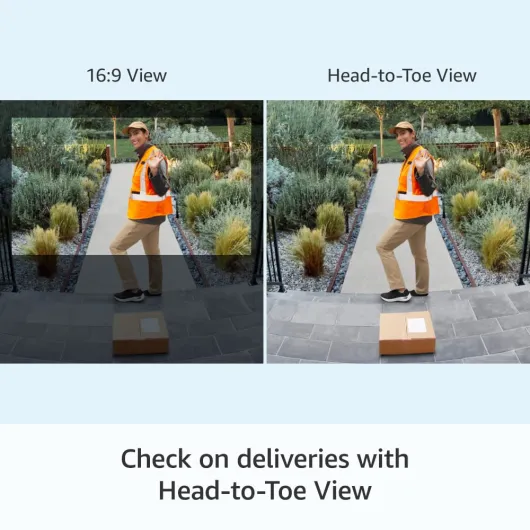
On the performance side, the camera does a pretty solid job. The 1536p HD video is clear enough to read faces, see parcels and even check small details like what logo is on a van parked outside. The 1:1 aspect ratio with head-to-toe view is genuinely useful – you can see a person from their face down to their shoes plus the doormat area, which is where most packages end up. Colour night vision is decent; it’s not cinema quality but you can clearly see what’s going on after dark, which is what matters.
Motion detection is where you need to spend a bit of time tweaking. Out of the box, it can be too sensitive, picking up people walking dogs across the street or cars going past. You can adjust the motion zones and sensitivity, and once I dialled it down, it was much more sensible. When it’s tuned properly, it picks up people coming to the door and delivery drivers as they walk up the path, which is exactly what you want. The person and package alerts (with subscription) are pretty handy: it’s nice to know “Package detected” instead of just “Motion detected.”
The weak point is speed. Sometimes, by the time the notification hits your phone and you open the live view, the delivery driver is already walking away. This doesn’t happen every time, but it’s common enough that you notice it. Part of that will depend on your Wi-Fi upload speed (Ring recommends at least 2.5 Mbps), but even with a decent connection there’s the odd delay. For me, it’s usually good enough to shout “Just leave it at the door, thanks!” but if you expect instant live view every single time, you’ll be slightly frustrated.
The app itself is fairly stable. You can arm/disarm, change modes, set privacy zones, review recordings, and share access with family members. I like that it integrates with Alexa – my Echo devices announce when someone is at the door, and my Fire TV can show the camera feed, which is handy when I’m mid-show. Overall, performance is solid for home use: it’s not perfect, but it gets the job done most of the time, and the picture quality is comfortably above the cheap cameras you find on random brands.
What you actually get and what it really does
Out of the box, you get the doorbell unit, a rechargeable quick-release battery, a satin nickel faceplate, a corner/wedge kit, a little USB cable, basic tools, and the usual manual and security sticker. No chime unit is included, so don’t expect a traditional indoor ding-dong unless you hook it to an existing chime or buy a Ring Chime accessory. In my case, I just used phone notifications and Alexa devices as chimes, which is fine if you’re already in that ecosystem.
The main features it pushes are: 1536p HD video, head-to-toe view, colour night vision, two-way audio, motion detection with custom zones, and smart alerts for people and packages (with the subscription). In practice, that means you can see who’s at your door, talk to them, and check past events from the app. The head-to-toe view is actually useful: you see faces, hands, and the floor area where parcels get dumped, not just a cropped chest-up shot.
There are a few software extras that I didn’t think I’d use but ended up liking. The "Quick Replies" feature is basically an answering machine for your door – you can set pre-recorded messages like “We can’t come to the door, please leave the package.” It sounds basic, but when you’re in the middle of something, it’s handy to let the doorbell do the talking. There are also privacy zones, where you can block parts of the view (like a neighbour’s window or the street) so it doesn’t record those areas. That’s useful if you don’t want to be that neighbour who films half the road.
On the downside, a lot of the good stuff is locked behind the subscription: person alerts, package detection, saving videos for up to 180 days, and face recognition. Without a plan, you still get live view and basic alerts, but no history. So if someone messes with your car at 3am, you can’t go back and watch it unless you’re paying. I’d say this product is basically designed assuming you’ll subscribe; if you refuse out of principle, you’re not getting full value.
Pros
- Clear 1536p video with head-to-toe view and decent colour night vision
- Battery-powered and wireless, so no need to touch existing doorbell wiring
- Good app and Alexa integration with useful extras like package alerts and Quick Replies (with subscription)
Cons
- Full functionality depends on a paid Ring Protect subscription for video history and smart alerts
- Battery swaps require a small security screw and can be fiddly, especially for people with mobility or grip issues
- Occasional delay between motion detection and app notification, so you sometimes miss the approach
Conclusion
Editor's rating
The Ring Battery Video Doorbell Plus is a straightforward, wireless doorbell camera that does its job well. The video is clear, the head-to-toe view is genuinely useful, and colour night vision means you can actually see what’s happening after dark. Motion detection works well once you spend a bit of time tuning the zones and sensitivity, and the app is stable and easy enough to live with day to day. Two-way audio is handy for deliveries, and features like Quick Replies and package alerts (with subscription) add real convenience, not just gimmicks.
It’s not perfect. There can be a slight delay between motion and notification, so sometimes you catch the back of the delivery driver rather than the approach. The battery system is better than older models where you had to remove the whole doorbell, but the tiny security screw makes swaps a bit fiddly, especially if you have mobility or grip issues. And realistically, to get real value from it, you need the Ring Protect subscription for video history and smart alerts, which adds an ongoing cost to an already not-cheap device.
I’d recommend this to renters, people who don’t want to deal with wiring, anyone with mobility issues who can’t sprint to the door, and folks already using Ring or Alexa devices. It’s also good for those who get a lot of deliveries and want proof of what happened on the doorstep. If you’re on a tight budget, hate subscriptions, or just want a basic ding-dong without smart features, you should probably look at simpler or more local-storage-focused options. For everyone else, it’s a pretty solid, no-nonsense way to add video and a bit of extra security to your front door.