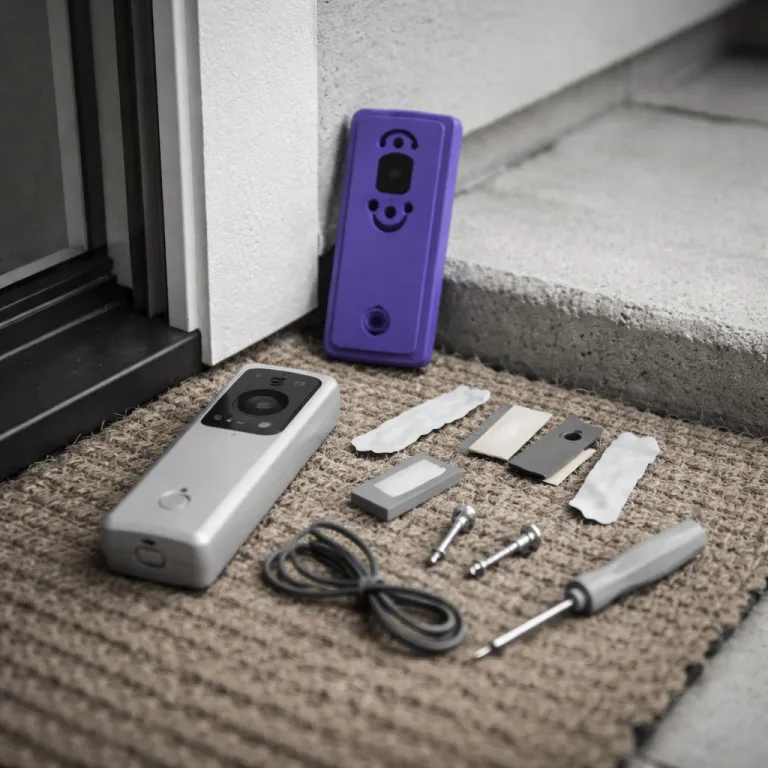

Why a wired Ring doorbell is rarely right for an apartment
A Ring doorbell for apartment living sounds simple until the lease appears. Most renters face strict clauses that forbid any wired doorbell work or changes to the existing door wiring, so a traditional hardwired video doorbell quickly becomes a legal and practical headache. In most buildings, the safest path is to leave the original mechanical chime system untouched and focus on a battery powered smart doorbell that mounts cleanly on the surface.
Hardwiring a video doorbell such as Ring Video Doorbell Wired or Ring Video Doorbell Pro 2 means opening the door chime, cutting power at the panel, and sometimes drilling into common hallway walls. That is exactly the kind of electrical intervention many landlords classify as prohibited work, especially in older blocks where the wired doorbell circuit may also feed shared lighting or other security devices. If you push ahead anyway, you risk breaching your contract and facing removal costs when you move out, which makes a wired doorbell the wrong starting point for most tenants.
There is also a technical catch that rarely appears in glossy product reviews or on a generic Amazon product page. Apartment corridors often share a single low voltage transformer for several doorbells, so one power hungry smart doorbell can destabilise the whole ring of flats and cause chimes to fail. Ring’s own help articles on transformer sizing recommend 16–24 V AC at 10–40 VA for many wired models, and independent electrician forums describe cases where under‑rated 8 VA transformers cause buzzing, weak chimes, or intermittent operation when a smart doorbell is added. When you add the fact that many wired doorbells in apartments sit far from your Wi‑Fi router behind thick walls, you end up with a supposedly smart security upgrade that drops video, misses motion detection events, and frustrates visitors at the door.
Why a battery Ring doorbell is the best first choice for renters
For a Ring doorbell for apartment use, a battery powered model is the most forgiving option. A modern battery doorbell from the Ring Video Doorbell range, such as Ring Battery Doorbell Plus or Ring Video Doorbell (2nd Gen), gives you HD video, night vision, two way audio, and motion alerts without touching a single wire in the wall. You mount it near the door, connect it to Wi‑Fi, and your phone becomes the chime and control centre in real time.
Among the current line up, the standard battery doorbell is usually a better first purchase than the more expensive Ring Battery Doorbell Pro for renters. The core experience is the same — a smart video doorbell that shows who is at the door, records Ring video clips, and sends package alerts when motion detection spots a delivery — but the simpler product costs less and is easier to move when you change flats. You still get access to the optional Ring Protect subscription, which stores video doorbell footage in the cloud and unlocks rich notifications, while keeping your upfront spend under control.
Battery life is the main practical concern, and here the Ring Quick Release Battery Pack design helps. In a typical European apartment with moderate traffic, a fully charged battery can last several weeks, sometimes months, before the doorbell ring events and motion clips drain it. Ring’s own documentation and independent tests from reviewers such as Consumer Reports (for example, its 2023 smart doorbell ratings) and Which? (in comparative reviews of Ring Video Doorbell models) generally describe performance in terms of roughly 600–1,000 motion events per charge, but real results vary with temperature, recording length, and how often you use live view. You can buy a second battery sold separately, keep it charged, and swap it in seconds so your security coverage never goes down while the first pack charges inside.
| Recommended Ring model | Typical events per charge* | Best mounting approach for renters |
|---|---|---|
| Ring Video Doorbell (2nd Gen) | Approx. 600–800 motion or ring events | No drill adhesive mount on wood or PVC; screw mount on permitted doors |
| Ring Battery Doorbell Plus | Approx. 700–1,000 events with optimised settings | No drill mount with optional wedge kit for narrow corridors |
| Ring Battery Doorbell Pro | Approx. 500–800 events due to advanced features | Adhesive mount for short‑term rentals; screw mount where leases allow |
*Figures based on Ring support guidance and aggregated lab tests from Consumer Reports and Which? under moderate usage.
No drill mounts, adhesives, and what really happens after 12 months
The real magic that makes a Ring doorbell for apartment living viable is the no drill mount. Instead of screws, this accessory uses a large adhesive pad that bonds the video doorbell backplate to the door frame, avoiding holes in wood, metal, or PVC. When it is time to move, you heat the adhesive with a hair dryer, peel it away, and the door looks close to untouched.
In practice, adhesive performance depends heavily on surface material, temperature swings, and humidity over time. On a smooth painted wooden frame indoors, the no drill mount tends to stay rock solid for at least a year, even with frequent doorbell ring presses and regular door slams from visitors and neighbours. On cold exterior metal, especially in a stairwell that sees winter condensation, the same adhesive can stiffen, lose grip at the edges, and slowly let the doorbell’s plate creep downwards.
Humidity is the silent enemy for any smart product that relies on adhesive rather than screws. If your apartment door opens directly to the outside, with rain blown against the frame and big temperature swings between night and day, you should check the mount every few weeks for gaps or movement. In those harsher conditions, some renters add a discreet safety tether sold separately, so even if the adhesive fails, the video doorbell and Ring battery do not fall and break on the landing.
Choosing the right surface and placement on your apartment door
Where you place a Ring doorbell for apartment use matters as much as which model you buy. The peephole cam once solved this neatly by replacing the existing peephole, but many buildings now prefer a surface mounted video doorbell that does not alter the door structure. That means you must think carefully about the material, height, and angle before you commit the adhesive or screws.
On a wooden frame, most compatible Ring mounts and brackets grip well, and motion detection zones are easy to tune so you see visitors but not the entire corridor. PVC frames are usually smooth and slightly flexible, so you should press the adhesive firmly for at least thirty seconds and avoid opening the door for a short time while the bond sets. Metal frames can interfere with Wi‑Fi and sometimes reflect infrared light from night vision LEDs, so you may need to angle the video doorbell slightly away from the door surface using a wedge kit sold separately.
Height is another subtle but important factor for both security and everyday comfort. Mounting the Doorbell Pro or standard battery doorbell at about 1,2 to 1,4 metres keeps faces centred in the Ring video frame while still capturing package alerts near the threshold. If you go much higher, you will see more corridor and fewer details of visitors, which can make customer reviews about image quality seem worse than the product actually delivers.
Wi‑Fi, Ring Chime Pro, and making video alerts reliable in thick walled flats
A Ring doorbell for apartment living is only as good as its Wi‑Fi link. Many urban flats have routers tucked in a far bedroom, with two or three thick brick walls between the access point and the front door. That distance can turn a star rated smart doorbell into a laggy gadget that shows video several seconds late and sometimes misses motion events entirely.
The Ring Chime Pro acts as both a plug in chime and a Wi‑Fi repeater for compatible Ring doorbells and cameras. In a compact T2 with heavy masonry, placing the Chime Pro halfway between the router and the door often stabilises the connection, so live video opens quickly and real time notifications arrive when visitors press the button. It also means you hear the doorbell ring even when your phone is in another room, which is especially useful if you rely on quick replies to tell couriers where to leave a package.
If you cannot place a Chime Pro, you can still improve reliability by testing signal strength at the door with your phone before you mount the product. Look at how long a streaming video takes to start, then compare that with performance one room closer to the router to judge the impact of the walls. This simple check mirrors what many detailed customer reviews describe and helps you avoid blaming the video doorbell’s hardware when the real issue is Wi‑Fi coverage.
Privacy, landlord conversations, and what really needs to be shared
Installing a Ring doorbell for apartment security also raises social and legal questions. Landlords care about the building fabric and wiring, while neighbours may worry about being filmed every time they walk past your door. Handling these concerns calmly at the start usually prevents complaints later, especially in close knit stairwells.
When you talk to your landlord, focus on the non invasive nature of a battery doorbell and no drill mount. Explain that you will not touch the wired doorbell circuit, that the mount uses removable adhesive, and that any accessories like a Chime Pro are simply plug in devices sold separately. Many owners are reassured when they hear that the product can be removed in minutes with a hair dryer, leaving the door and frame in the same condition as before.
With neighbours, the key is how you configure motion detection and video storage. Narrow the detection zone so it covers only your own threshold, enable package alerts for deliveries, and avoid pointing the camera directly at another flat’s door. If you choose a Ring Protect plan, remember that recorded Ring video is for your security, not casual sharing, and treating it that way builds trust in a shared hallway where everyone lives very close together.
Key figures about Ring doorbells in apartments
- In many European cities, a majority of households live in apartments rather than detached houses, which makes battery powered video doorbells more relevant than wired models for most residents. National statistics offices and Eurostat publish the exact percentages for each country and city.
- Ring’s support pages and independent testing broadly indicate that a typical Ring battery pack can support several hundred motion detection events per charge, depending on settings and temperature. Shorter clips, fewer alerts, and milder weather all extend the time between charges.
- Consumer surveys from organisations such as Consumer Reports and Which? consistently report that most smart doorbell owners primarily use their devices to verify visitors and manage package deliveries rather than to review past incidents.
- Wi‑Fi repeaters such as Ring Chime Pro can improve signal strength at the door by roughly one to two bars in many concrete walled apartments, significantly reducing missed notifications when placed correctly between the router and the entrance.
Frequently asked questions about Ring doorbells for apartments
Can I install a Ring doorbell in my apartment without drilling ?
Yes, you can install a Ring video doorbell in most apartments using a no drill mount that relies on strong adhesive instead of screws. This approach works best on smooth wooden or PVC frames and avoids damage to the door or walls. Always check your lease, but because there is no wiring change, landlords usually accept this type of installation.
Which Ring model is best for renters in small flats ?
For most renters, a standard battery powered Ring doorbell such as Ring Video Doorbell (2nd Gen) or Ring Battery Doorbell Plus is the best balance of price, features, and flexibility. It offers HD video, night vision, motion alerts, and access to Ring Protect cloud recording without requiring any electrical work. You can easily remove it when you move and reinstall it at your next address.
Will a Ring doorbell work with weak Wi‑Fi near the front door ?
A Ring doorbell can struggle if the Wi‑Fi signal at the door is very weak, leading to delayed video and missed notifications. Placing the router closer to the entrance or adding a Ring Chime Pro between the router and door usually stabilises the connection. Before mounting the device, test streaming performance on your phone at the exact spot where you plan to install it.
Do I need a subscription to use a Ring doorbell in my apartment ?
You can use a Ring doorbell without a subscription for live view and basic alerts, which keeps ongoing costs at zero. However, a Ring Protect plan adds cloud recording, rich notifications, and longer video history, which many apartment dwellers find valuable for tracking visitors and deliveries. The choice depends on how important recorded footage is for your personal security needs.
How do I avoid filming my neighbours in a shared hallway ?
You can respect neighbours’ privacy by narrowing the motion detection zone and adjusting the camera angle so it focuses only on your own doorway. Most Ring video doorbells allow you to set privacy zones that block parts of the frame from recording. Taking a few minutes to fine tune these settings helps maintain good relations in a shared corridor.
References
- Ring – Product manuals and installation guides for Ring Video Doorbell models, Ring Battery Doorbell Pro, and Ring Chime Pro, including transformer voltage and VA recommendations
- Consumer Reports – Smart doorbell comparative tests and reliability surveys, such as its 2022 and 2023 ratings of Ring Video Doorbell and Ring Battery Doorbell Plus
- Which? – Independent reviews of video doorbells, including Ring Video Doorbell (2nd Gen), Ring Battery Doorbell Plus, and other home security devices tested under controlled conditions