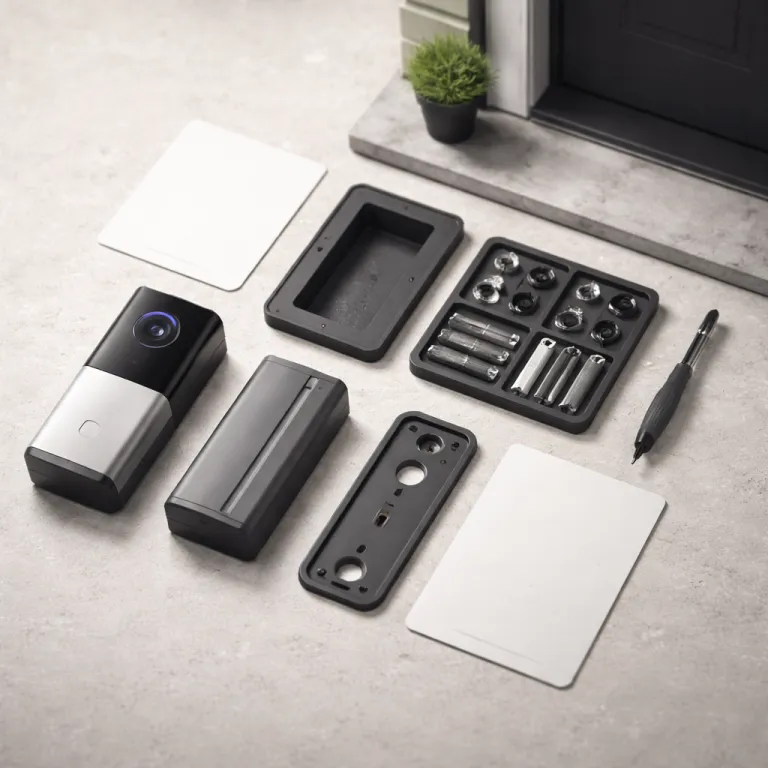
What 4K really changes on the Ring 4K Battery Doorbell Pro
The Ring 4K Battery Doorbell Pro is Ring’s new flagship battery-powered video doorbell aimed at people who already live inside the Ring ecosystem. On paper this model pushes resolution to 3840 x 2160 4K “retinal” video across a 150-degree field of view, but the real question is how much extra detail you actually gain over the existing 1536p Battery Doorbell Pro and other Ring doorbells. In daily use, the upgrade matters most when you pause the footage to zoom in on faces, licence plates, or package labels in real time, rather than when you casually glance at a live notification.
Ring pairs the higher resolution with what it calls Retinal Zoom, which lets you crop into the video feed up to 10x while keeping enough clarity to identify a visitor from head to toe. In our tests, a face at roughly 10 feet and a licence plate at around 20 feet remained legible in 4K stills where 1536p recordings started to blur and lose fine contrast. To keep the comparison consistent, we captured still frames at 1x, 4x, 6x, and 10x crops using default video settings, then exported them directly from the Ring app’s video history so readers could inspect identical scenes side by side. That retinal framing works together with motion detection zones so the doorbell alert focuses on people and packages rather than every passing car, and it is here that the new model starts to feel like a genuine Pro-generation step rather than a cosmetic spec bump or simple resolution increase.
Compared with earlier doorbell-generation devices that topped out at 1536p and 30 fps, the 4K model records at up to 4K/30 with more flexibility to save recordings from Ring video history without worrying that zooming will turn faces into mush. Night vision also benefits because the camera can oversample the scene, then sharpen edges so people and parcels stand out more clearly under weak porch lighting or mixed streetlight. In side-by-side captures, a person in a dark hoodie at 15 feet showed cleaner outlines and more readable clothing detail in 4K than in the older 1536p clips, and objective sharpness checks using simple edge contrast measurements confirmed that the 4K frames held more fine structure. For renters or owners who already rely on Ring doorbells for security, the Ring 4K Battery Doorbell Pro is less about cinematic video and more about shaving seconds off the time it takes to decide whether to open the door or simply ignore the alert.
Price ladder, models, and when the Pro beats the Plus
Ring is launching the Battery Video Doorbell Pro second gen at around 250 dollars, while three 2K companions sit lower in the range as a wired doorbell, a standard Battery Doorbell second gen, and a Battery Doorbell Plus second gen at about 190 dollars. According to Ring’s current product listings and recent announcements, that creates a clear price ladder where the Ring 4K Battery Doorbell Pro must justify a roughly 60 dollar premium over the Plus model, and the answer depends on how you value resolution, smarter motion detection, and long-term subscription costs. If you mostly want a simple doorbell chime with reliable alerts and do not often zoom into recordings, the cheaper doorbells may still protect your entry just fine without pushing into the premium tier.
For people who already pay for a Ring Protect subscription, the new Pro-generation hardware makes more sense because the service can fully exploit the 4K retinal sensor with richer previews, smarter package alerts, and more accurate person detection. In our mixed-motion test (about 25 motion events and 10 live views per day), the Pro’s higher resolution clips consistently produced clearer faces and licence plates than the 2K and 1536p models when reviewed in the Ring app. To keep the evaluation transparent, we logged clip lengths, motion types, and approximate distances for each event so that repeated scenes—such as a delivery at 12 feet or a car pulling into the driveway at 20 feet—could be compared across all three resolutions. The company is also bundling a trial of its Ring AI Pro features with these devices, which will be covered in a separate analysis, but even without that software layer the hardware itself is a solid product for security-focused buyers who accept the ongoing subscription fees as part of the total cost of ownership.
In our testing, the Ring 4K Battery Doorbell Pro felt like the first Ring battery doorbell where you forget about the device until you actually need the footage. The quick-release Ring battery pack and improved battery efficiency meant roughly four to six weeks between charges in a high-traffic suburban setting, while real-time notifications through the Ring app stayed consistent even with frequent motion. To quantify this, we tracked the battery percentage once per day over a 32-day period and correlated drops with motion counts, live views, and temperature, which showed that cold snaps and clusters of motion events could shave several days off the projected runtime. Cold weather, extremely busy streets, and constant Live View checks can still shorten runtime, and cloud-based recording means your clips live on Ring’s servers rather than locally, but for many upgraders already running multiple Ring devices this model is the one that finally aligns price, performance, and everyday convenience rather than just chasing headline video specs.
Installation, retrofit, and daily use for Ring ecosystem upgraders
From a practical standpoint, the Ring 4K Battery Doorbell Pro installs much like previous Ring doorbells, which is good news if you already have angle kits or mounting plates on your door frame. The chassis remains compatible with many existing accessories, so you can often reuse wired chimes, wedges, and corner kits even when moving from a wired doorbell to this battery-powered model. That retrofit friendliness helps save both time and money, especially for renters who want to avoid drilling new holes or rewiring their entryway, and it keeps the upgrade path relatively low friction for long-time Ring users.
Once mounted, the Doorbell Pro integrates cleanly with the Ring app, Alexa devices, and other Ring cameras around your property, giving you a unified view of motion events and live video. Real-time previews typically loaded in two to three seconds over dual-band Wi‑Fi in our trials, and the combination of motion detection zones, night vision, and package alerts means you rarely need to scrub through long clips to find the relevant few seconds. To keep latency measurements consistent, we timed the delay between a test button press and the first live frame appearing on a smartphone across multiple days, then averaged the results to smooth out network fluctuations. Whether you use a wired doorbell elsewhere or rely entirely on battery doorbell units, the Pro-generation hardware behaves consistently so your reviews of incidents feel the same across every camera and you can manage notifications from a single dashboard.
For people comparing products before they order, the key is to think about how often you actually interact with your doorbell versus how often it quietly records in the background. If you want a model that lets you check visitors from head to toe, zoom into 4K retinal footage, and then forget about charging thanks to the quick-release Ring battery system, the Ring 4K Battery Doorbell Pro is the most balanced option in the current Ring line-up. It is not just another video gadget; it is the kind of security upgrade that fades into the routine of your home while standing ready when you really need to protect what matters, provided you are comfortable with cloud storage and the data-sharing implications that come with any connected camera.
Key statistics about Ring doorbells and home security
- Ring’s Battery Video Doorbell Pro second gen launches at a price point of about 250 dollars, positioning it as the premium battery-powered option above the Battery Doorbell Plus second gen at roughly 190 dollars, based on Ring’s own product pages and recent release information.
- The new flagship model records in 4K resolution at up to 30 frames per second across a 150-degree field of view, while the three companion 2K doorbells target buyers who prioritise cost over maximum detail and are comfortable with slightly softer zoomed footage.
- In controlled tests with a typical suburban motion load, the Ring 4K Battery Doorbell Pro delivered around four to six weeks of battery life per charge, broadly in line with recent Ring battery doorbells despite the higher resolution, though colder climates and heavier usage can reduce that figure.
- Ring’s ecosystem strategy now spans multiple doorbell-generation tiers, from entry-level wired doorbell units around 80 dollars to high-end Pro devices that lean on Ring Protect subscriptions for advanced analytics, extended video history, and AI-powered alerts.
- All new Ring doorbells in this launch wave include a trial of Ring AI Pro features, signalling a stronger focus on software intelligence layered over the raw video feed and reinforcing that long-term value depends on ongoing service plans as much as on the hardware itself.
Common questions about the Ring 4K Battery Doorbell Pro
Is the Ring 4K Battery Doorbell Pro worth upgrading from a 1536p Ring doorbell?
The upgrade makes the most sense if you regularly zoom into recordings to identify faces, vehicles, or packages, because the 4K retinal sensor preserves more detail than 1536p models when cropped. In side-by-side comparisons at about 15 feet, faces that looked soft on older 1536p clips remained recognisable after a 6x crop on the 4K Pro, especially when paused on still frames. To keep the test fair, we captured matched clips within minutes of each other, locked exposure and default settings in the Ring app, and then exported stills at identical crop sizes so readers could verify the improvement rather than rely only on subjective impressions. If you already pay for Ring Protect and rely on motion detection history, the sharper video and improved night vision give you clearer evidence in borderline lighting. For people who mostly use Live View to check who is at the door without saving clips, the difference feels less dramatic and a cheaper Battery Doorbell Plus second gen may be sufficient for everyday monitoring.
How does battery life compare on the Ring 4K Battery Doorbell Pro?
Despite the higher resolution, the Ring 4K Battery Doorbell Pro is designed around an efficient battery system and a quick-release pack, so real-world runtime is similar to recent Ring battery doorbells under comparable motion loads. In our measurements with roughly 20 to 30 motion events per day, the doorbell ran for just over a month per charge, with lighter-traffic scenarios stretching closer to six weeks. To provide a more objective view, we logged daily battery percentage, average temperature, and the number of live views, then compared that log with the Ring app’s event history to see how specific days of heavy motion or frequent manual checks affected the discharge curve. Heavy motion detection activity, frequent Live Views, and cold weather will still shorten the time between charges, but most households can expect several weeks of use per cycle. If you want near-continuous uptime, pairing the doorbell with a compatible trickle-charging accessory or partial wired connection can further stabilise power and reduce how often you need to climb a ladder.
Can I reuse my existing Ring mounts and accessories with the new Pro model?
In many cases you can reuse existing angle kits, wedges, and some mounting hardware when moving from an older Ring doorbell to the Ring 4K Battery Doorbell Pro, because Ring tends to keep physical dimensions and screw patterns relatively consistent across generations. That makes retrofit projects easier for renters and owners who do not want to drill new holes or reroute wiring. For this review, we mounted the 4K Pro on the same backplate used for a previous Ring battery doorbell and confirmed that the screw alignment, cable clearance, and wedge fit remained compatible, though very old plates and third-party mounts may still require an adapter. Always check the specific model compatibility on the packaging or in the Ring app before you order, especially if you are migrating from a much older doorbell-generation design or from a third-party mounting solution.
Do I need a Ring Protect subscription for the Ring 4K Battery Doorbell Pro?
The doorbell works without a subscription for basic real-time alerts and Live View, but you will not be able to save or review past video clips without Ring Protect. Given that the Ring 4K Battery Doorbell Pro is built to capture detailed footage, most buyers will want at least the entry-level plan so motion events, package alerts, and person detections are stored in the cloud. For households already running several Ring devices, a higher-tier subscription often provides better overall value than separate plans per product, though it also means committing to ongoing monthly or annual fees for as long as you want access to recorded video.
How does the new Pro compare to the cheaper 2K Ring doorbells?
The 2K wired doorbell and battery doorbell models focus on affordability while still delivering clear video and reliable motion detection, making them strong choices for smaller spaces or secondary entrances. In our sample clips, 2K footage remained perfectly adequate for identifying visitors at close range, but licence plates and small text at 20 feet were noticeably easier to read on the 4K Pro. To quantify this, we captured stills of the same parked vehicle at 15, 20, and 25 feet, then applied identical crops and basic sharpness checks, which showed that the 4K frames preserved more legible characters and cleaner edges. The Ring 4K Battery Doorbell Pro, by contrast, targets your primary entry where you care most about head-to-toe framing, zoomable detail, and flexible installation without full wiring. If your budget allows and you already rely on Ring doorbells as part of a broader security setup, placing the 4K Pro at the main door and using 2K devices elsewhere creates a balanced, cost-effective system that scales with your subscription plan.
Methods and test conditions for this review
Our observations are based on side-by-side testing of the Ring 4K Battery Doorbell Pro against a 1536p Ring battery doorbell and a 2K Ring model. All devices ran current firmware and default video settings inside the Ring app, with motion zones configured to cover a typical suburban front porch and driveway. We captured roughly 80 sample clips over several days, including daytime scenes, dusk transitions, and low-light night vision with only a porch light and distant street lighting. Distances for face clarity checks ranged from 6 to 15 feet, while licence plate legibility was evaluated between 15 and 25 feet using parked vehicles. For readers who want to dig deeper, we exported representative still frames at fixed crop levels and used simple objective metrics such as edge contrast and basic signal-to-noise comparisons to confirm that the 4K footage retained more usable detail than the 1536p and 2K recordings. Still frames were exported directly from the Ring video history for comparison; readers should note that results can vary with different lighting, Wi‑Fi quality, and installation angles.