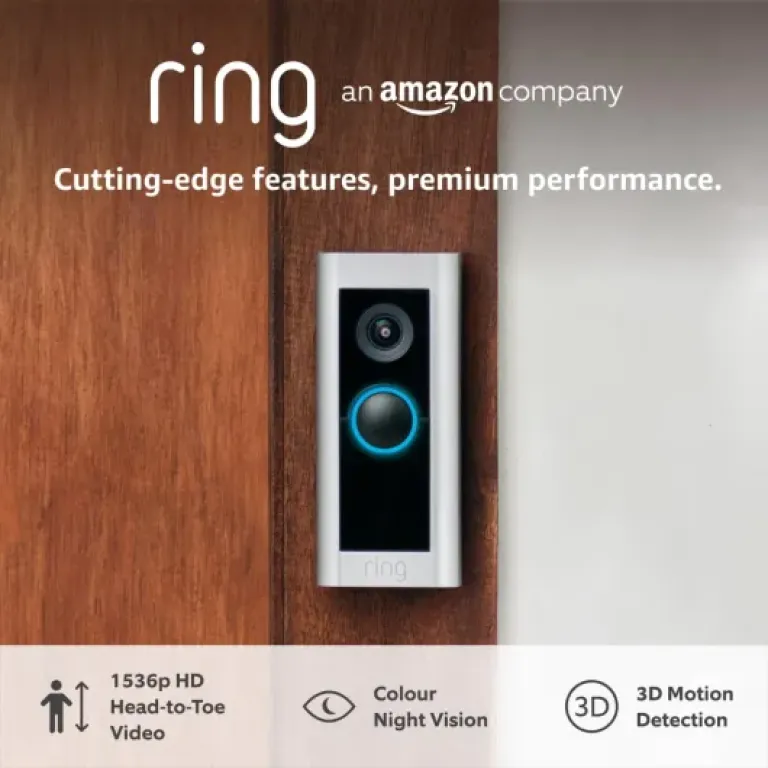

Summary
Editor's rating
Is it worth the money, or should you go cheaper?
Slim, modern, and looks like it belongs on a "smart" house
Power and wiring: no battery drama, but you pay in installation effort
Weather, wear, and long-term use
Video, audio, and motion: how it actually behaves day to day
What you actually get with the Ring Wired Video Doorbell Pro
Does it actually protect your front door or just spam your phone?
Pros
- Very clear 1536p head-to-toe video with good day and night performance
- Reliable wired power with no battery to charge and generally fast, accurate motion alerts
- Strong audio quality and useful features like 3D motion, Bird’s Eye View, and Quick Replies
Cons
- High upfront cost compared to simpler doorbells, plus ongoing subscription needed for full features
- Installation can be tricky if you don’t already have suitable wiring or a compatible transformer

Specifications
View full product page →| Brand | Ring |
A doorbell that’s basically a small security camera
I’ve been using the Ring Wired Video Doorbell Pro (the one that used to be called Pro 2) for a while now, and it’s basically turned my front door into a small surveillance zone. Not in a bad way, just very "always on". If you’re used to a normal push button and ding-dong chime, this is a different world. You get video, motion alerts, people detection, package alerts, the whole thing. It does what it promises, but you need to know what you’re signing up for: wiring, app accounts, and likely a subscription.
First thing: this is a wired-only doorbell. No battery option here. You either hook it into existing doorbell wiring or use the included transformer / plug-in adaptor. That’s good if you hate charging batteries, but it does mean a bit more effort to install. I had an existing transformer, but I ended up using the Ring kit because their warnings about third‑party power are pretty clear: use the wrong thing and you can fry it.
Day to day, it’s basically a mix of good video, fast alerts, and the occasional annoyance from motion notifications when someone just walks past on the pavement. The app gives you plenty of settings to tune this, but you’ll probably spend your first few days tweaking zones and sensitivity. Compared to older cameras I’ve had (Netvue, cheap Chinese Wi‑Fi cams), this one reacts faster and the app feels more polished.
Overall, it’s not perfect, and it’s not cheap, but it’s a pretty solid wired doorbell camera. The main thing I’d flag right away: budget for the subscription if you care about video history. Without that, it’s basically a fancy live-view doorbell with notifications. With it, it turns into an actual security tool you can review after something happens.
Is it worth the money, or should you go cheaper?
Price-wise, this doorbell sits at the top end of the consumer range. It often hovers around the £180–£220 mark, depending on deals. For that money, you’re getting very solid performance, good video, clear audio, and more advanced motion features than the cheaper models. But you’re also paying for the Ring ecosystem and, realistically, a subscription on top if you want the full feature set. If you’re only looking to occasionally see who rang the bell, this is probably overkill and not the best value.
Compared to the cheaper Ring models (like the basic £89 doorbell some reviewers mention), the main benefits are the wired power (no battery), the head-to-toe video, and the 3D motion stuff. If those don’t matter much to you, the cheaper one likely gives you 70–80% of the experience for much less cash. On the other hand, compared to other brands like Google Nest Hello or random budget Wi‑Fi doorbells, this Ring Pro feels faster and more reliable. A few users who switched from Nest said the Ring loads video quicker and sends alerts with less delay, and I’d agree based on my own experience.
Don’t forget to factor in the subscription cost. In a single-house setup, the basic Ring plan isn’t huge per month, but it’s still an ongoing fee. If you have multiple Ring devices or multiple houses, it adds up, although some users say it’s still cheaper than an old-school monitored alarm fee like ADT. If you’re allergic to subscriptions, you’re going to feel a bit annoyed that a lot of the smart features are locked behind that paywall.
So in terms of value: for someone who wants a wired, always-powered doorbell with strong video and motion features and is fine paying a small monthly fee, it’s a good package. For someone on a tighter budget or who hates subscriptions, there are better deals out there, including cheaper Ring models or brands that offer at least some free recording. It’s not a rip-off, but it’s not the bargain of the century either. It’s a solid, premium-ish option that you choose when you know exactly why you want the extra features.
Slim, modern, and looks like it belongs on a "smart" house
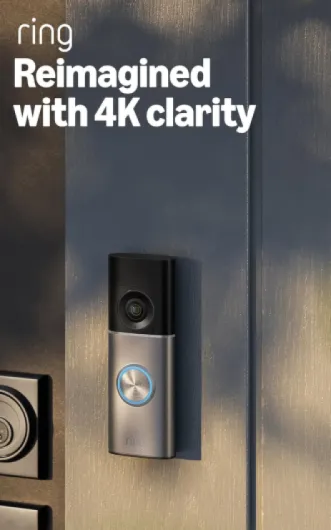
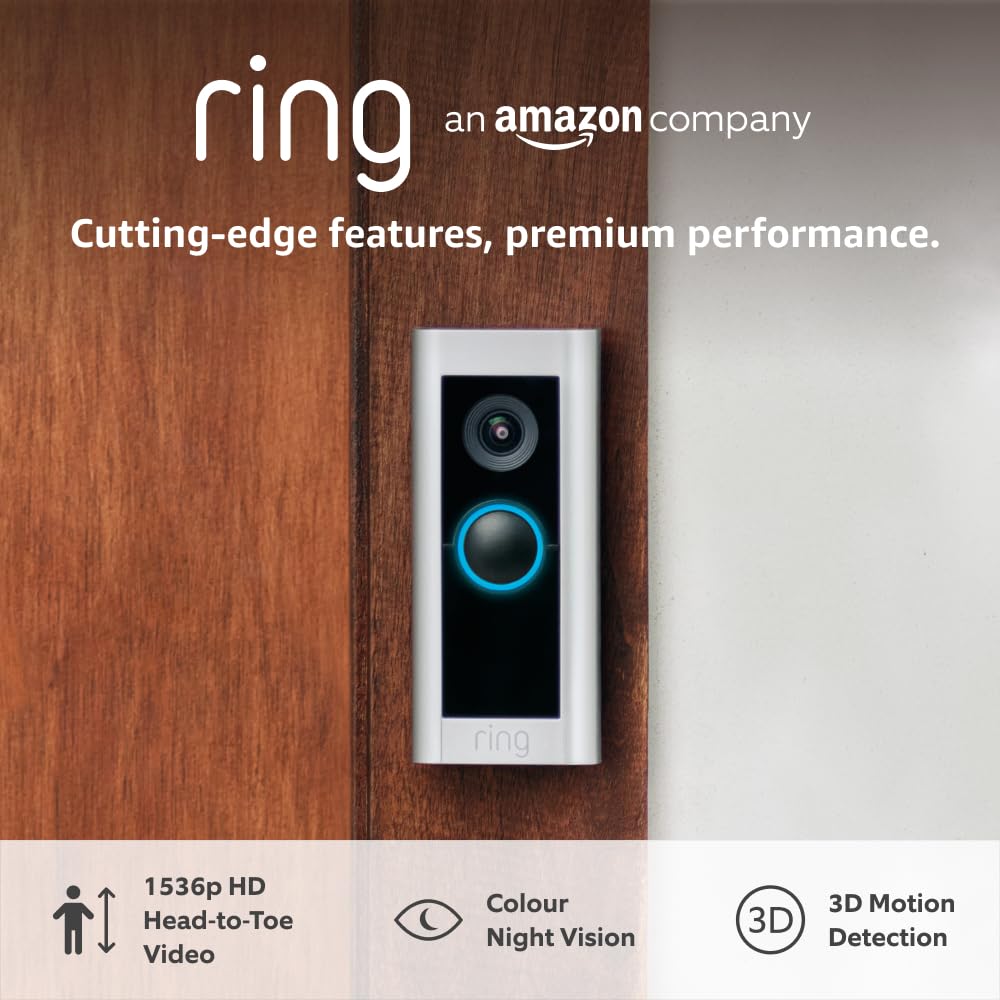
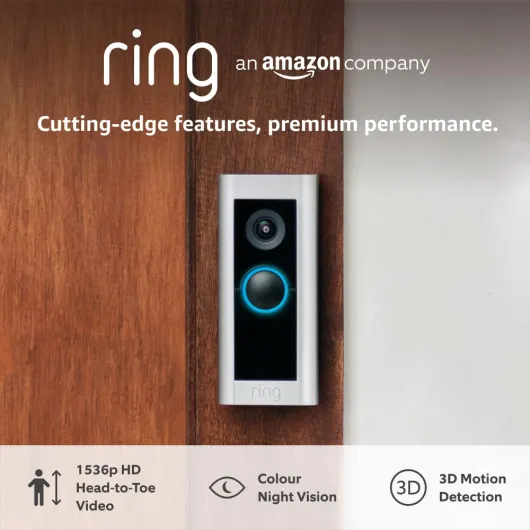
Physically, this thing is fairly compact for what it does: about 11.4 cm x 4.9 cm x 2.2 cm. So it doesn’t look like you’ve strapped a brick to your doorframe. Compared to a chunky battery Ring doorbell, this Pro version looks cleaner and more like a normal wired doorbell, just taller. The satin nickel faceplate is pretty neutral; it doesn’t scream "tech gadget" from the street, which I liked. If the silver look doesn’t match your house, Ring usually sends a voucher for a free extra faceplate in another color (you pay postage). That’s a small thing, but it helps it blend in.
Build quality feels solid. The plastic shell doesn’t feel cheap, and the front button has a clear ring light that glows when it’s ready or when someone presses it. At night, that light actually helps guests find the button, especially if your porch lighting is weak. The camera lens sits at the top and is slightly recessed; mine hasn’t picked up scratches or obvious marks so far, even with some rough weather and the odd spider web.
The mounting system is simple but a bit more fiddly than a standard doorbell. You screw the mounting plate/wedge to the wall, then slide the doorbell on and secure it with a small security screw at the bottom. That screw uses a specific driver bit that Ring includes in the box. It’s not hardcore security, but it will stop someone casually pulling it off. I’ve tugged on it a few times when cleaning and it doesn’t feel loose or wobbly.
One small gripe: the included wedge kit is enough for a basic angle change, but if your door is set back or your wall is at an awkward angle, you might end up wishing for a more flexible multi‑wedge system. Some older instructions and videos show a stackable wedge pack, but this model only came with one corner kit in my case. Not a deal breaker, but keep it in mind if your door is in a weird spot and you need a big correction angle.
Power and wiring: no battery drama, but you pay in installation effort
There’s no battery in this model, which is both its strength and its weakness. On the plus side, you never have to recharge anything. It’s powered either by your existing doorbell transformer (16–24V AC, 10–40 VA) or by the included Ring DIN rail transformer / plug-in adaptor, depending on the version you buy. Once it’s wired correctly, it just runs. I’ve had zero power-related dropouts so far. The app always shows it as online unless my Wi‑Fi itself is acting up.
The downside is installation. If you already have a wired doorbell with a compatible transformer, it’s fairly straightforward to swap the old button for this one and hook into the existing wiring. If you don’t, you’re either running a new cable from a plug-in adaptor to your door (and hiding it along skirting boards and walls), or you’re getting an electrician to wire in the DIN rail transformer to your consumer unit or a junction box. The manual even hints that a professional install might be required depending on local electrical codes. So this is not the kind of thing your gran is going to install by herself in ten minutes.
Ring is very strict in the documentation: use their DC supplies and don’t use random third‑party DC adaptors or garden-light transformers. People online have definitely ignored that and some got away with it, but the warning is clear: wrong power can damage the device and void your warranty. I personally stuck to what Ring recommended because frying a £200 doorbell to save £10 on a transformer felt stupid. Once installed, the transformer runs cool and doesn’t seem overloaded; the actual power draw of the doorbell is low (a few VA), so it’s not like it’s pulling big current.
In short, "battery" life is infinite because there isn’t one, but you trade that for a bit of hassle up front. If you’re renting or you can’t easily run wires, this model is probably not for you. If you own the place and don’t mind a bit of DIY or paying an electrician once, the wired setup is pretty nice long term. No climbing ladders to pull a doorbell off the wall every few months.

Weather, wear, and long-term use
The doorbell is rated for -20.5°C to 48.5°C and is weather resistant. I haven’t hit those extremes, but it’s had a mix of rain, cold, and direct sun and hasn’t complained. No condensation inside the lens, no random reboots, no water ingress so far. The body still looks the same as when I installed it, and the faceplate hasn’t faded yet. That said, it’s plastic with a metal-look finish, so long term I wouldn’t be shocked if it picks up some scuffs or slight discoloration, especially in very strong sun.
The front button and LED ring still work like day one. The click feels the same, and guests haven’t had any issue figuring out where to press. The security screw at the bottom hasn’t stripped yet despite being removed a couple of times for cleaning and curiosity. The included screws and mounting hardware are basic but fine; they’re not rusting or flaking in normal outdoor conditions. I did add my own wall plugs because the ones in the box felt a bit flimsy for my brick wall, but that’s pretty standard with most kits.
On the software side, Ring pushes updates fairly often. I haven’t had any update completely break the device, which is more than I can say for some cheaper smart cameras I’ve used. The app stays usable, and the doorbell keeps working in the background. The only slightly annoying thing is that sometimes after an update, it will log you out or force you to re-verify with a code, but that’s more of an account annoyance than a durability issue.
Long term, I think the bigger risk is less the hardware failing and more Ring changing subscription terms or features. The physical unit feels like it will last years if not abused. It doesn’t run hot, it’s sealed well, and there are no moving parts except the button. So in terms of durability, I’d say it’s pretty solid for an outdoor gadget. Just don’t expect it to survive a direct hit from someone slamming a parcel into it or a kid whacking it with a scooter handle.
Video, audio, and motion: how it actually behaves day to day
In daily use, the video quality is genuinely good, but don’t expect miracles beyond what a phone screen can show. It’s 1536p with a 150° horizontal and 150° vertical field of view. That head‑to‑toe framing is the main difference from cheaper 1080p doorbells. You see from the doormat up to the person’s head, plus some of the surroundings. For parcels, this is very handy; I can see boxes dropped close to the door that my old camera completely missed. Daytime image is sharp, colors are decent, and it handles strong sunlight better than older cameras I’ve used. I’ve had the early morning sun blasting straight at it, and I could still see details around the bright area without everything turning into a white blob.
At night, the color night vision works fine as long as there’s at least some ambient light from a street lamp or porch light. If it’s completely dark, it switches to more standard IR-style footage that’s black and white. Either way, faces are still recognizable at close range. Not cinema quality, but good enough to see who rang the bell or who walked up your path at 2 a.m. The 3D motion detection with radar is the bit that feels more "new". Instead of just saying "motion detected", it logs the path on a little map, so you can see if someone just walked past or actually came up to the door.
Audio is surprisingly strong. The two‑way talk is clear on both ends, and there’s less lag than I had on my old Nest Hello and Netvue doorbell. People outside can hear me without me shouting, and on my phone or Echo the sound from the visitor is crisp, not that tinny, distorted mess you get with cheaper units. This matters when you’re telling a courier to leave a parcel with a neighbour or behind the bin; they actually understand you the first time.
As for motion alerts, they are quick. On my fibre connection (around 300–500 Mbps) and decent Wi‑Fi, I usually get a notification within a second or two of someone stepping into the detection zone. Compared to the older Google Nest Hello I tried, the Ring is noticeably faster to load a live view and start a conversation. That said, you need to tune the motion zones and sensitivity. Out of the box, it can be a bit chatty if your door faces a street. After a couple of days adjusting the zones and setting it to people-only alerts, it calmed down and now behaves more like a smart doorbell and less like a paranoid CCTV system.

What you actually get with the Ring Wired Video Doorbell Pro
On paper, the Ring Wired Video Doorbell Pro is a "premium" model in the Ring lineup: 1536p HD video, head-to-toe view, 3D motion detection, Bird’s Eye View, dual-band Wi‑Fi (2.4 and 5 GHz), and support for Ring’s subscription stuff like people/package alerts and 180‑day video storage. In practice, the main difference you feel versus cheaper models is the better vertical field of view and the more precise motion detection. You can actually see packages on the ground and most of the person at your door, not just their chest and face.
Out of the box, you get the doorbell itself, a satin nickel faceplate, a corner/wedge kit, screws, a screwdriver, and depending on the version you buy, either a DIN rail transformer (for hardwiring) or a plug‑in adaptor with a long cable. No chime included, and that matters: once this is installed, your old mechanical chime usually won’t ring anymore unless you do some extra wiring tricks or buy specific Ring parts. I paired mine with a Ring Chime and an Echo device so there’s actual noise in the house when someone presses the button.
The app setup is fairly standard: you create or log into a Ring account, scan the QR code on the doorbell, connect it to Wi‑Fi, and run through a few basic tests. It does force two‑factor codes and some Amazon account linking if you want Alexa integration, which is a bit of a pain during setup but fine after that. Once it’s in, you see it in the Ring app along with any other Ring devices (cameras, alarms, etc.). I like that you can share access with other family members easily so you’re not the only one getting spammed with alerts.
Feature-wise, you get live view, two‑way talk, color night vision, motion zones, people-only alerts (with subscription), and 3D motion that draws little paths on a satellite map. That radar-style view is not essential, but it’s handy to see exactly where someone walked or if they hung around. It’s overkill for most normal deliveries but could be useful if something sketchy happens outside. So in short: it’s more than just a buzzer with a camera; it’s closer to a small front-door security camera system tied to your doorbell button.
Does it actually protect your front door or just spam your phone?
If you think of this as just a doorbell, it’s overkill. But as a basic security tool for the front of your house, it’s pretty effective. The combination of head‑to‑toe video, instant alerts, and 3D motion means you rarely miss someone coming to the door. I’ve caught delivery drivers who barely tapped the button, neighbours dropping off packages, and even deer wandering across the front path at night. You start to get a feel for how busy your front area actually is. It’s not a full replacement for a proper CCTV system, but for the front door it covers a lot.
Where it really earns its keep is when you’re out. Being able to answer the door from your phone and give instructions is genuinely useful. I’ve told drivers to leave things in a safe place, told friends I’m five minutes away, and once or twice scared off random door knockers by answering from inside the house like I was upstairs. The Quick Replies are also handy if you’re busy; it can play a pre‑recorded message like “Please leave the package” without you touching your phone.
However, there’s a catch: without the Ring subscription, the effectiveness drops a level. You still get live view, notifications, and two‑way talk, but no video history. So if someone does something dodgy and you don’t catch it live, you’ve got nothing to review. With the subscription, you get up to 180 days of recordings, people and package alerts, and more detailed motion data. For security use, that history is pretty important. So yes, the doorbell itself is effective, but it’s clearly designed to be used with the paid service.
Overall, for my use (keeping an eye on deliveries and knowing who comes to the door), it works well. It reduces the chances of missed parcels and gives some peace of mind when I’m away. Just be honest with yourself: if you’re never going to pay monthly for the subscription, you’re not getting the full value out of this higher-end model. In that case, a cheaper Ring or another brand with free basic recording might make more sense.
Pros
- Very clear 1536p head-to-toe video with good day and night performance
- Reliable wired power with no battery to charge and generally fast, accurate motion alerts
- Strong audio quality and useful features like 3D motion, Bird’s Eye View, and Quick Replies
Cons
- High upfront cost compared to simpler doorbells, plus ongoing subscription needed for full features
- Installation can be tricky if you don’t already have suitable wiring or a compatible transformer
Conclusion
Editor's rating
The Ring Wired Video Doorbell Pro is a solid wired doorbell camera for people who actually care about video quality, fast alerts, and not having to charge batteries. The head-to-toe view, clear audio, and 3D motion detection make it more useful than the cheaper, more basic models, especially if you get a lot of deliveries or just want a clear record of who came to your door and when. Installation is a bit more involved than a simple plug-and-play gadget, but once it’s in, it just runs quietly in the background and does its job.
On the downside, it’s not cheap, and the whole thing is clearly built around the idea that you’ll pay for a Ring subscription. Without that, you still get live view and notifications, but you lose video history and smarter alerts, which cuts a lot of the value. If you’re okay with a monthly fee and you either already use Ring stuff or plan to, this model fits nicely into that ecosystem and feels like a decent investment for home security and convenience. If you hate subscriptions or you’re just testing the waters with smart doorbells, I’d probably start with a cheaper Ring model or a brand with more generous free features.