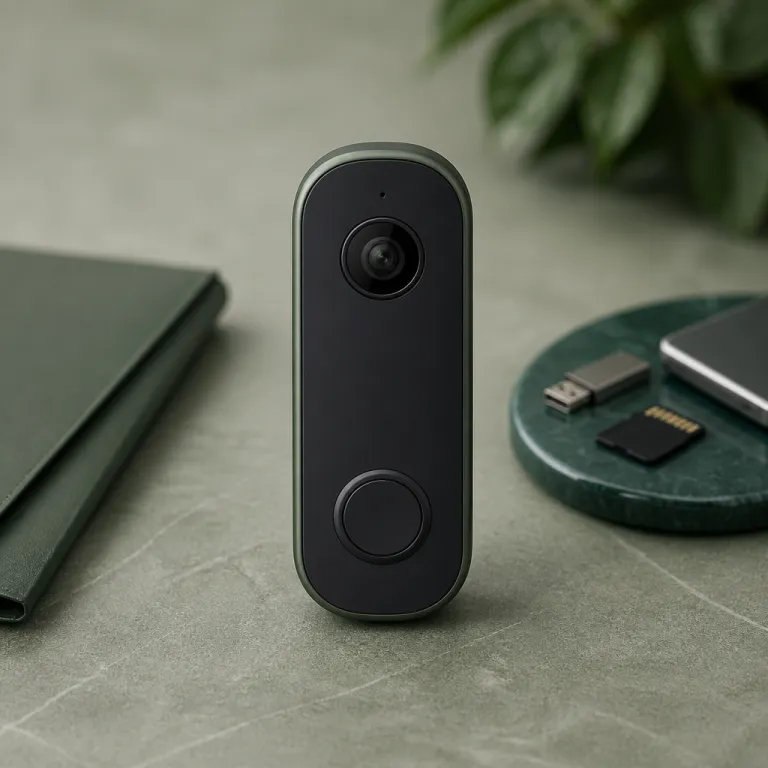
How the Ring doorbell facial recognition lawsuit challenges home security norms
Charles Sigwalt, a Virginia resident, has filed a Ring doorbell facial recognition lawsuit against Amazon and its Ring subsidiary in the U.S. District Court for the Western District of Washington in Seattle (Sigwalt v. Amazon.com Inc., No. 2:24-cv-00395, filed March 2024). He argues that the Ring Familiar Faces feature turns a simple front door security camera into a biometric surveillance system that quietly captures and analyzes the faces of every person who walks up to your home. For first-time buyers weighing a new smart camera at the front door, this lawsuit forces a hard look at how much biometric data a friendly-looking doorbell should really collect and how much privacy people can reasonably expect on a doorstep.
At the center of the case is the Familiar Faces feature, which uses facial recognition technology to build up to 50 facial profiles of frequent visitors such as friends, family, delivery drivers, or neighbors. According to the complaint, these profiles are created from biometric data about people’s faces even when those people never saw a privacy policy, never gave consent, and never agreed to any terms from Amazon Ring or the Ring company itself. The lawsuit claims that people’s privacy and privacy rights are violated because the person being scanned is not the Ring account holder and never clicked any button saying that people consented to this kind of biometric surveillance or to the storage of their face templates over time.
Industry estimates from firms such as Strategy Analytics suggest that Ring cameras already dominate roughly 40 percent of the United States video doorbell market, with about 20 million homes using at least one Ring camera at the front door or on a side wall (Strategy Analytics, “Smart Home Surveillance Camera Market,” 2023). That scale means any data breach or misuse of biometric data could affect millions of people whose faces were captured even though they never bought a Ring device and never dealt directly with Amazon or Ring. For regulators and lawmakers, that reach raises questions about whether existing law on surveillance, consent, and biometric data is strong enough to protect people’s privacy when artificial intelligence quietly runs on cameras mounted above the welcome mat.
From helpful alerts to quiet biometric tracking at the front door
On paper, the Familiar Faces feature sounds like a convenience upgrade for busy households that already rely on Ring cameras for parcel alerts and motion notifications. The faces feature promises to tell a Ring familiar user whether the person at the front door is a known visitor or a stranger, using artificial intelligence to match each face against stored biometric data. In practice, the Ring Familiar Faces lawsuit argues that this feature crosses a line because the people being scanned never had a real chance to refuse or understand how their data would be used, turning a consumer camera into a tool for ongoing facial recognition without clear consent.
The complaint describes a typical scenario: a courier, neighbor, or political canvasser walks up to the front door, the Ring camera records their face, and the software suggests saving that image as a “familiar” profile. Over time, the system can label that person by name whenever they appear, even if they never opened the app or agreed to any biometric processing. Sigwalt’s filing states that “individuals who are not Ring account holders have no meaningful opportunity to consent to, or opt out of, the collection and analysis of their facial geometry,” framing the feature as a one-sided arrangement where visitors are quietly enrolled in a recognition system.
Sigwalt’s complaint points out that the people whose faces appear in these familiar faces lists never accepted the privacy policy, never saw a clear explanation of the feature, and never had a simple way to opt out. The lawsuit frames this as a classic imbalance where the Ring account holder and Amazon as the parent company benefit from richer data while the person being recorded carries the privacy risk without any say. For a visitor, the law usually expects meaningful consent before biometric data such as a face template is captured, stored, and linked to a specific person over time, and the case argues that current Ring practices fall short of that standard.
For anyone considering a new Ring camera, this case highlights a key privacy trade-off that does not show up on an Amazon product page or in glossy marketing. You are not only deciding how much surveillance you want over your own front door but also how much surveillance you will impose on every person who visits, from friends, family, and gig workers to political canvassers and neighbors. Before you even compare where to mount your Ring doorbell for the widest, most useful view, you need to decide whether you are comfortable running a small-scale facial recognition system that other people never explicitly agreed to join and whether that aligns with your own sense of people’s privacy and consent.
Why privacy advocates say Ring’s AI features blur the line with mass surveillance
Privacy advocates see the Ring doorbell facial recognition lawsuit as part of a broader fight over mass surveillance in residential neighborhoods. The Electronic Frontier Foundation and other civil liberties groups have warned for years that a dense network of Ring cameras can create a de facto surveillance grid, especially when law enforcement agencies request or receive footage. When those cameras add facial recognition and Familiar Faces features on top, the risk shifts from simple video recording to automated tracking of specific people over time, with artificial intelligence quietly flagging who appears at which front door.
Amazon has already faced regulatory scrutiny for how Ring employees accessed customer video data, settling a Federal Trade Commission lawsuit for $5.8 million in 2023 after staff were found to have watched footage from indoor cameras without proper limits (In the Matter of Ring LLC, FTC File No. 192 3428). That case did not directly involve facial recognition, but it showed how sensitive raw camera data can be when internal controls fail or when a data breach exposes archives of people’s daily lives. For privacy advocates, the combination of powerful artificial intelligence, large-scale data collection, and a history of surveillance problems makes the Ring facial recognition suit feel less like an isolated complaint and more like a warning about where this technology is heading.
Newer tools such as the Search Party feature, promoted in a high-profile Super Bowl advertisement, deepen those concerns by encouraging people to scan nearby Ring cameras through the Neighbors app to locate lost pets. Critics argue that the same technology could easily be repurposed to locate a specific person, especially if facial recognition or Familiar Faces data were layered on top of these neighborhood-wide searches. When a company with the reach of Amazon Ring normalizes this kind of crowd-powered surveillance, the line between community safety and mass surveillance becomes harder for ordinary people to see and harder for existing law to regulate.
Law enforcement access and the quiet expansion of neighborhood surveillance
One of the most contested aspects of Ring cameras is how often law enforcement agencies seek access to footage, either by asking owners directly or by using legal tools to compel the company to share data. The Ring doorbell facial recognition lawsuit does not only focus on the faces feature but also raises questions about how biometric data and Familiar Faces profiles might be shared or requested in criminal investigations. If a police department can ask Amazon Ring for footage that already tags specific people by name or face, the practical impact on privacy rights is very different from a simple unlabelled video clip that shows an unidentified person at a front door.
Privacy advocates such as the Electronic Frontier Foundation argue that people’s privacy is at risk when law enforcement can tap into a network of privately owned cameras without strong transparency rules. They worry that artificial-intelligence-powered recognition tools could be used to track protesters, undocumented residents, or other vulnerable groups in ways that current law did not anticipate. As EFF lawyers have put it in public commentary, “turning every doorbell into a potential police camera risks normalizing mass surveillance in spaces where people expect a measure of anonymity,” a concern that goes beyond any single company or product.
Homeowners often install Ring cameras for very practical reasons, such as stopping parcel theft or checking whether a garage door is left open, and they may never think about how their devices fit into broader surveillance debates. Yet the same app that lets you review a late-night motion alert can also be used to share clips with neighbors or police, sometimes with only a few taps. Before you dive into tutorials on how to fix garage door sensor problems with a clear step-by-step approach, it is worth pausing to review every privacy setting, disable any faces feature you do not need, and decide how much data you are truly comfortable handing to a company that already sits at the center of so many law and privacy controversies.
What Ring owners and first time buyers should change in their settings today
For people who already own Ring cameras, the Ring doorbell facial recognition lawsuit is a prompt to audit every privacy and data setting in the app. Start by checking whether any Familiar Faces or faces feature options are enabled, and if so, decide whether you really need artificial intelligence to label each person at your front door. Turning off unnecessary recognition tools reduces the amount of biometric data stored about visitors and narrows the impact if a future data breach exposes your account or if law enforcement later seeks access to your footage.
Next, review the privacy policy inside the Ring app and on the Amazon Ring website, paying close attention to how the company describes data sharing with law enforcement and third parties. Many people never read these documents, but they spell out whether Amazon can use your footage to train new technology, to support law enforcement requests beyond your direct control, or to improve other Amazon services. If you are uncomfortable with any clause, you can limit sharing features, reduce how long video is stored, or even reposition your camera so it captures less of the public street and more of your own property, giving passersby a bit more privacy.
New buyers should think about physical placement as much as software settings, because where you mount a Ring camera shapes how many people’s faces you capture each day. A higher angle that focuses tightly on your own doorstep will usually record fewer passersby than a wide shot that covers the entire sidewalk, and guides on where to mount your Ring doorbell for the widest, most useful view can be adapted to prioritize privacy instead of maximum coverage. Pairing your doorbell with a thoughtful window lock strategy that strengthens Ring doorbell security at home can often deliver the safety benefits you want without turning your house into a node in a neighborhood-wide surveillance network or a source of unwanted biometric data about strangers.
Balancing safety, convenience, and the rights of people you film
The Ring doorbell facial recognition lawsuit underscores a simple but often overlooked point, which is that your security choices affect many people who never had a say. Every time your camera records a courier’s face or logs a neighbor walking past, you are collecting data about a person who may not even know that a Familiar Faces profile exists in someone else’s app. Respecting people’s privacy means thinking beyond your own fears about parcel theft and considering how your devices might feel from the perspective of the person being watched, especially when artificial intelligence is analyzing their face.
For some households, that may mean disabling every faces feature and using Ring cameras purely as motion-activated video recorders with short retention periods. Others may decide that limited recognition tools are acceptable if they are transparent with regular visitors, explain how the technology works, and offer to delete any Familiar Faces entries on request. Either way, the lawsuit against Amazon shows that courts are starting to test where the law draws the line between reasonable home surveillance and intrusive biometric tracking that erodes privacy rights for everyone, including people who never consented to be part of a private facial recognition database.
As a first-time buyer, you do not need to avoid smart doorbells altogether, but you do need to treat them as powerful surveillance tools rather than harmless gadgets. Ask yourself whether you are comfortable with a company like Amazon Ring holding detailed logs of who comes to your home, when they arrive, and how their faces look under different lighting conditions. If the answer is yes, then take the time to lock down your settings, limit sharing, and combine your doorbell with simple physical measures so that it becomes, in daily life, not the spec sheet, but the doorbell you forget is even there—and one that respects both your security needs and the privacy of the people you film.