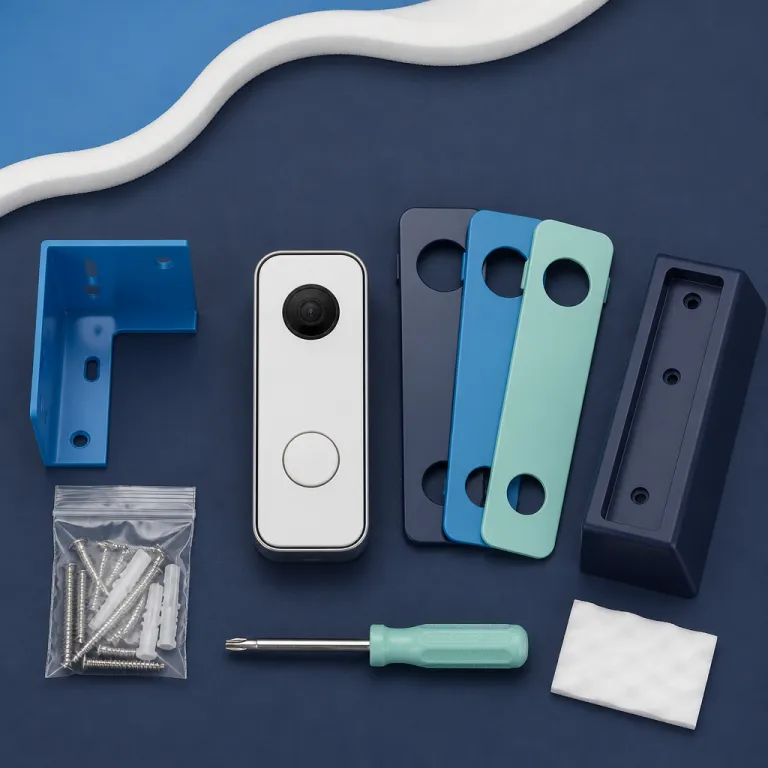
Why ring doorbell accessories matter more than you think
A Ring video doorbell only feels finished when the viewing angle, power, and physical fit all work together. The right combination of Ring doorbell accessories, such as a matching faceplate and a properly sized wedge kit, can turn a frustrating smart doorbell into a quiet, reliable sentry that you barely notice. Get the mount wrong, choose an ill-fitting kit, and even the newest model can feel like an expensive compromise that misses visitors or drains its battery too quickly.
Most people start with a basic Ring doorbell and only later realise that the camera angle, doorbell battery life, or existing wired doorbell cabling do not match their doorway. That is where a carefully chosen wedge kit, corner kit, or replacement faceplate becomes less of a cosmetic extra and more of a problem solver for your specific video doorbell challenges. Think of these accessories as tools to adapt a standard product to your unique doorway, whether you live in a narrow terrace in the United Kingdom or a wide suburban porch in North America.
When you look at Ring doorbell accessory bundles and faceplate plus wedge kit options on Amazon or from Ring directly, the price of each add-on seems modest compared with the main product. Yet the impact on your smart doorbell experience can be dramatic, especially if your wired or battery-powered unit currently shows more wall than visitor. The goal is simple but demanding: create a Ring doorbell setup that shows faces clearly, records usable video, and keeps power stable without constant trips to swap a Ring battery or troubleshoot a wired connection.
Faceplates: cosmetic upgrade or quiet essential ?
Faceplates for a Ring doorbell look like pure decoration at first glance. You scroll through colour options on Amazon, compare the price of each product, and wonder whether a fifteen dollar panel really changes anything. In practice, the right faceplate can make a video doorbell look intentional rather than like a grey gadget bolted beside your front door, especially when the finish echoes your letterbox, handle, or house numbers.
Ring sells faceplates for most doorbell generations, from the basic battery doorbell to the more advanced Doorbell Pro range. Matching the finish to your door trim or handle, whether black, bronze, or satin nickel, often raises what home theatre fans jokingly call the WAF, or partner acceptance factor, because the device blends into the entryway. When a Ring doorbell accessories faceplate and wedge kit are chosen thoughtfully, you get both a better viewing angle from the angled mount and a more discreet presence from the faceplate, which matters if you live in a shared building where neighbours scrutinise every change.
From a technical standpoint, faceplates do not change the performance of a wired doorbell or battery doorbell, and they will not improve video quality or extend doorbell battery life. They do, however, protect the underlying mounting bracket and wiring from casual knocks, and they make it easier to swap styles if you later upgrade to a newer doorbell generation or repaint your door. When you add a faceplate to your cart, treat it as a finishing touch that helps your Ring doorbell look like part of the architecture, not a temporary gadget that might vanish with the next tenant.
Wedge kits and angle mounts: fixing bad camera views
If you only buy one accessory beyond a spare battery, make it a wedge kit or angle mount that actually fixes your camera view. Many front doors sit in recessed alcoves or on side walls, which means a standard mount points your video doorbell straight at brick or at the neighbour’s hedge. A Ring doorbell accessories faceplate wedge kit or dedicated angle bracket is designed to tilt the camera by roughly fifteen degrees, which can be enough to turn a useless frame into a clear shot of faces and parcels.
Ring sells official wedge kits for several models, including the basic Ring Video Doorbell, the battery doorbell, and the wired doorbell versions, and these are shaped to fit the exact mounting footprint. When you choose a wedge kit that matches your specific doorbell generation, you avoid gaps that can let in water or make the mount feel loose over time. This is one reason many installers steer people away from most third party angle mount products on Amazon, because inconsistent tolerances can compromise weather sealing and, in some cases, risk your warranty.
In daily use, a good wedge or angle mount does more than just centre visitors in the frame, because it also affects how motion zones work and how many false alerts you receive. Tilt a video doorbell slightly down and away from the street, and you often reduce passing car notifications while still catching anyone walking up your path. If you are pairing your wired or battery doorbell with a light mounting bracket or clamp, as explained in guides on versatile Ring clamps and mounting options, the wedge kit becomes part of a larger mounting strategy that balances visibility, privacy, and neighbour friendliness.
Corner kits: when your door is on the wrong wall
Some homes, especially older terraces and corner properties in the United Kingdom, put the front door on a side wall that faces a fence or alley. In those cases, a standard mount or simple wedge kit cannot rotate the Ring doorbell far enough to capture visitors approaching from the street. A dedicated corner kit wraps around the outside corner of the wall and effectively turns your video doorbell towards the path people actually use.
Ring’s official corner kit is priced similarly to the wedge kit, and it is available for several doorbell generations, including some Doorbell Pro variants and the popular battery doorbell. When you mount Ring hardware on a corner kit, you are effectively building a small bracket that hugs the masonry and presents the camera at a more natural angle to the approach. This can be especially helpful if your wired doorbell chime and cabling already exit on the side wall, because moving everything to the front face would require more invasive installation work.
From a usability standpoint, a corner kit can transform how quickly your Ring doorbell records motion and how soon you see visitors in the live video feed. Instead of catching only the side of someone’s head as they turn to press the doorbell, the camera sees them walking up, which gives you more time to respond through two way audio. When you compare customer reviews for corner kits and wedge kits, look for verified purchase comments that mention specific doorway layouts similar to yours, because those details matter more than the number of stars alone.
Power accessories: batteries, solar, and wired reliability
Once your camera angle is sorted with a wedge kit or corner kit, the next weak link is usually power. A Ring doorbell accessories faceplate wedge kit will not help if your doorbell battery dies every few weeks or your wired connection drops whenever someone runs the vacuum. Power accessories, especially the quick release Ring battery packs and solar options, are what keep your video doorbell online without constant babysitting.
For battery doorbell models, a second quick release doorbell battery is almost mandatory for busy households, because it lets you swap a fully charged pack in seconds with virtually no downtime. The price of a spare Ring battery is higher than a faceplate or wedge kit, but the time saved and the peace of mind easily justify the purchase for most users. Many experienced owners keep one battery in the doorbell and one on a charger, rotating them every few months so the video doorbell never goes dark.
Solar accessories come in two main forms, which are the solar charger that sits directly under the mount and the larger solar panel that connects via a cable. The solar charger is neater and more compact but needs direct sun on the door area, while the external panel can sit higher or to the side where it catches more light, even in partial shade. If you have a wired doorbell or a hardwired Ring model, you may not need extra power accessories, but it is still worth checking that your transformer meets Ring’s typical voltage requirements of around 16–24 V AC, as described in Ring’s own support material, because underpowered wired systems can cause unreliable video and missed chimes.
Buying smart: Amazon listings, pricing, and what to skip
Shopping for Ring doorbell accessories, faceplates, and wedge kit bundles on Amazon can feel like wading through a sea of nearly identical plastic. You will see unofficial wedge kits, corner mounts, and decorative covers at every price point, often with glossy photos and inflated stars. The challenge is separating genuinely useful accessories from products that either add no value or actively make your video doorbell worse.
One practical rule of thumb is to start with official Ring accessories for anything that touches the mount, wiring, or weather sealing. That means choosing the official wedge kit, corner kit, and no drill mount where possible, especially for a Doorbell Pro or wired model that relies on stable connections. Third party covers that clip over the faceplate or add bulky decorations often block part of the camera or infrared sensors, which can degrade video quality and even interfere with motion detection.
When you browse Amazon or another retailer, pay close attention to customer reviews that include photos and mention the exact doorbell generation and model, such as Ring Video Doorbell Pro 2 or Ring Battery Doorbell Plus. Look for the verified purchase badge, read how people describe installation, and note any complaints about misaligned screw holes or poor fit on the mounting plate. Before you add items to your cart and confirm delivery, ask whether each accessory solves a real problem, such as a bad angle or short battery life, or whether it is just an impulse purchase that will end up in a drawer.
Installation tips, Wi Fi reliability, and living with your setup
Even the best accessories will disappoint if the installation is rushed or the Wi Fi connection is weak. A Ring doorbell accessories faceplate wedge kit needs to sit flush against the wall, with the mounting bracket firmly screwed in and the doorbell body clicking into place without wobble. Take the time to mark holes carefully, use wall plugs where needed, and keep the cable routing tidy for any wired doorbell or hardwired installation.
Network reliability is just as important as the physical mount, because a perfect camera angle means little if the video feed stutters or drops. If your router sits far from the front door, consider using a Wi Fi extender or mesh system, and consult detailed guides on improving Ring doorbell connections with Wi Fi extenders to stabilise the link. For homes with thick stone walls, especially in older United Kingdom properties, placing the router closer to the door or adding a dedicated extender near the hallway can dramatically improve video responsiveness.
Once everything is mounted and connected, live with the setup for a week before making final tweaks, watching how the video doorbell handles real traffic at different times of day. You may find that a slight adjustment to the wedge kit angle or motion zones reduces false alerts from passing cars while still catching couriers at the gate. The aim is not just a technically impressive Ring doorbell, but a front door experience that quietly works in the background so you can forget about the hardware and simply trust that it will capture what matters.
Key figures on Ring doorbell accessories
- Ring’s official wedge kits for popular models are typically designed to angle the camera by around fifteen degrees, which is often enough to shift the field of view from a side wall to the centre of a standard path, based on Ring’s published accessory descriptions and example diagrams.
- Independent home security reviewers commonly report that adding a second quick release battery reduces Ring doorbell downtime during charging to under a minute per swap, compared with several hours of offline time when relying on a single battery that must be removed and recharged.
- Consumer surveys in the smart home sector frequently note that a significant share of video doorbell owners adjust their mounting angle at least once after the first installation, which underlines the practical value of wedge kits and corner mounts for fine tuning the view; these findings are indicative rather than tied to a single study.
- Retail pricing for common Ring accessories often clusters around fifteen dollars for faceplates, wedge kits, and corner kits, while power accessories such as solar panels and chargers typically range from about fifty to sixty dollars at major retailers, according to recent product listings.
- In markets such as the United Kingdom, where many homes have recessed or side entry doors, usage of angle mounts and corner kits is notably higher than in newer suburban developments, according to anecdotal reports from regional smart home installers and fitters.
FAQ about Ring faceplates, wedge kits, and corner mounts
Do faceplates affect Ring doorbell performance or only appearance ?
Faceplates are primarily cosmetic and do not change the core performance of a Ring doorbell, whether it is a battery doorbell or a wired doorbell. They protect the underlying mount and electronics from minor knocks and make the device blend better with your door trim. For most people, the main benefit is visual integration rather than improved video or audio quality.
When should I choose a wedge kit instead of a corner kit ?
A wedge kit is best when your doorbell is on the same wall as the approach path but needs a modest tilt up, down, left, or right. A corner kit is better when the door is on a side wall and you need a much larger rotation to see people coming from the front. If you are unsure, stand where the doorbell will go and imagine a fifteen degree shift for a wedge versus a near ninety degree turn for a corner mount.
Are third party mounts from Amazon safe to use with Ring ?
Some third party mounts work acceptably, but quality and fit can vary widely between products. Poorly fitting mounts may leave gaps that let in water, misalign the camera, or put strain on wiring, which can affect reliability and potentially complicate warranty claims. When in doubt, official Ring wedge kits, corner kits, and no drill mounts are the safer choice, especially for Doorbell Pro or wired models.
Do I need a second battery for my Ring battery doorbell ?
A second quick release battery is not strictly required, but it makes ownership much easier. With two batteries, you can keep one charging indoors while the other powers the video doorbell, avoiding hours of downtime during recharging. This is particularly helpful in colder climates or high traffic locations where doorbell battery life is shorter.
Can I adjust the viewing angle after installing the mount ?
You can make small adjustments by loosening the screws on a wedge kit or corner kit and slightly repositioning the bracket. However, large changes usually require swapping to a different angle mount or adding an extra wedge layer if your model supports stacking. It is wise to test the live video feed on your phone during installation so you can fine tune the angle before tightening everything fully.