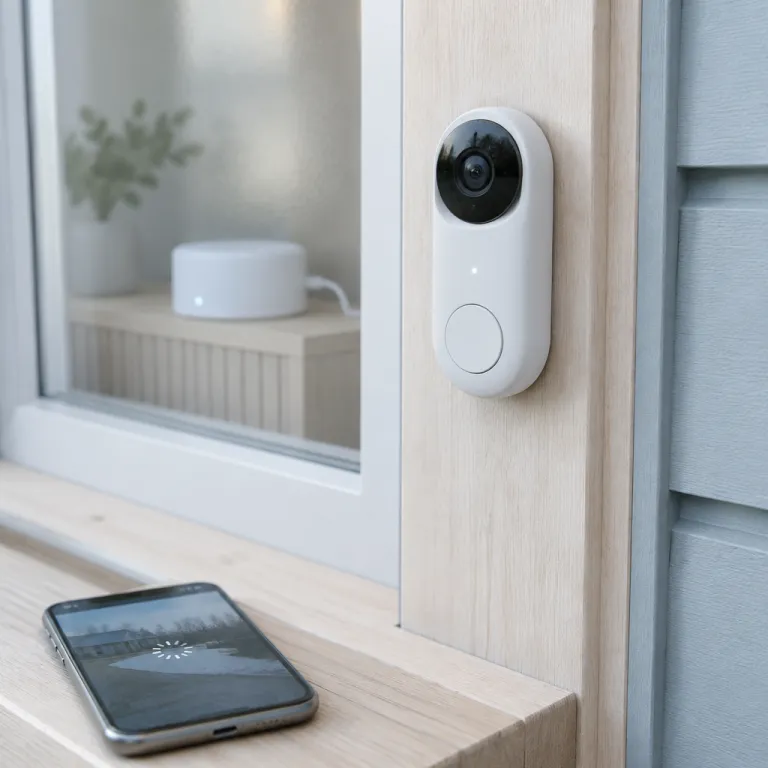
Why Ring Live View feels slow at the front door
When you tap Live View on the Ring app and wait several seconds, it feels like the video doorbell is failing at its most basic job. In reality, most of the ring doorbell live view delay latency fix story starts before any video appears, because the device must wake, connect to WiFi, and negotiate a secure path to Ring’s cloud before it can stream live footage. That chain of events means every extra second of lag usually comes from your home network, not from a single hardware failure in the doorbell itself.
A battery powered Ring doorbell sleeps aggressively to preserve power, so the device needs a short wake period before it can send any live video. A wired video doorbell has constant power from the transformer at the door, which lets it respond faster and often trims a second delay or two from the Live View connection time. If you are chasing a practical ring doorbell live view delay latency fix, deciding between battery and wired power is one of the most underrated installation choices.
Once the device wakes, it must handshake with your WiFi router, request upload bandwidth, and then push video frames out to the internet. That upload speed step is critical, because low upload capacity or unstable signal strength forces the Ring video stream to buffer, which you experience as lag or stutter. When the view takes too long to appear, you are usually seeing the combined effect of a sleepy device, a congested router, and a weak GHz range at the front door.
Choosing and wiring the right Ring doorbell for faster Live View
Start any ring doorbell live view delay latency fix by matching the device to your wiring and habits, not just to a spec sheet. If you already have a mechanical chime and a stable transformer near the front door, a wired Ring video doorbell such as the Ring Video Doorbell Pro line usually offers the quickest Live View response. Constant power means the doorbell live feed can spin up faster, because the device does not need to wake a low battery from deep sleep before sending video.
For renters or doors without existing chimes, battery powered video doorbells remain practical, but you must accept a few extra seconds of lag. You can reduce that delay by keeping the battery well charged, avoiding low power mode, and mounting the doorbell where the WiFi signal strength is strong enough that the view takes less time to stabilize. If you later add a plug in transformer or a Ring solar accessory, you can keep the device out of the low upload and low power danger zone that often worsens Live View performance.
During installation, pay attention to cable gauge, transformer rating, and the path from the router to the door. A transformer that barely meets Ring’s minimum power requirements can cause intermittent hardware failure symptoms that look like random Live View drops or motion alerts that never load. For a step by step wiring walkthrough that focuses on stable power and chime behavior, a detailed weekend Ring install guide from transformer check to first chime can help you avoid subtle mistakes that later show up as Live View lag.
WiFi fundamentals: GHz bands, router placement, and signal strength
The most effective ring doorbell live view delay latency fix usually comes from improving WiFi, not replacing the doorbell. Ring devices can connect to both 2.4 GHz and 5 GHz bands, but the 2.4 GHz range typically penetrates walls better and holds a stronger signal at the front door, even if its theoretical speed is lower. That is why a Ring video doorbell on a solid 2.4 GHz connection often beats a weak GHz 5 GHz link for Live View reliability.
Place your router as centrally as possible, ideally a few metres off the floor and away from dense walls or metal appliances. When the signal must cross several walls to reach the front door, the device health section in the Ring app will usually show a worse RSSI value, which indicates weaker signal strength and a higher chance of lag. If the RSSI is very low, the view takes longer to load, motion alerts arrive late, and the doorbell live feed may freeze after a few seconds.
Modern routers often use band steering to push devices toward the 5 GHz band, which can backfire for a Ring doorbell mounted outside the house. A weak GHz 5 GHz connection may look fast on paper but behave like low upload bandwidth in practice, especially when several smart devices are sharing the same upload speed. For a deeper breakdown of WiFi dead zones, RSSI readings, and practical fixes that actually work with Ring video doorbells, a focused guide on Ring doorbell WiFi troubles and signal strength is worth reading before you start moving hardware.
Fine tuning your network: upload speed, congestion, and extenders
Once the basics are right, the next ring doorbell live view delay latency fix is to audit your internet plan and in home traffic. Ring video streams are mostly limited by upload speed, so a plan with low upload capacity can choke when several devices send video at once. If your family is gaming, backing up photos, and streaming while the doorbell live feed tries to start, every extra megabit of upload bandwidth matters.
Run a speed test from a phone standing near the front door, connected to the same WiFi network as the Ring doorbell. If the measured upload speed is much lower than your plan’s advertised rate, or if the latency spikes wildly, your router may be overloaded or poorly placed, which directly increases the second delay before Live View connects. In those cases, upgrading the router, enabling quality of service for Ring video traffic, or simply moving the router closer to the door can cut lag in half without touching the doorbell itself.
Many people reach for a Ring Chime Pro or another WiFi extender as a quick fix, and it can help when the signal is truly weak. Place the extender roughly halfway between the router and the front door, inside the home where the signal strength is still solid, so the device does not repeat a weak GHz signal. Remember that every extra hop adds a little latency, so the goal is to create a clean, short path for live video rather than a long chain of smart devices all competing for the same low upload bandwidth.
Using the Ring app and Live View settings to reduce lag
The Ring app is more than a remote doorbell button, and it holds several tools for a practical ring doorbell live view delay latency fix. Open the device health page for your Ring doorbell and check the RSSI value, the power status, and the network name to confirm that the device is on the intended GHz band. If you see frequent hardware failure notices, very low signal strength, or a battery that hovers near empty, you have clear leads on why Live View and motion alerts feel unreliable.
Within the Ring app, adjust motion zones and sensitivity so the device is not constantly waking for every passing car. Each unnecessary wake event consumes battery and upload bandwidth, which can leave the device in a low power state or force it to fight for upload speed when you actually need a quick live view. Trimming motion alerts to the true area around the front door keeps the device ready for real visitors and reduces the chance that the view takes too long to appear when someone presses the doorbell.
If you use two way talk frequently, test how quickly the ring video stream connects and how much lag you hear in conversation. A detailed analysis of two way talk quality on Ring doorbells explains how audio and video share the same limited upload bandwidth, which means a choppy call often points back to the same network issues that slow Live View. The goal is a setup where you tap Live View, see the visitor within a couple of seconds, and then forget about the technology because the smart device simply works like a reliable, modern door at the edge of your home.
FAQ
Why does my Ring Live View take so long to connect ?
Live View feels slow because the doorbell must wake, connect to WiFi, and establish a secure path to Ring’s servers before sending any video. Weak WiFi signal, low upload speed, and congested routers each add seconds of delay to that process. Improving signal strength at the front door and ensuring adequate upload bandwidth usually shortens the connection time noticeably.
Is 2.4 GHz or 5 GHz better for Ring doorbells ?
For most homes, 2.4 GHz is better for a Ring doorbell because it travels farther and penetrates walls more effectively. While 5 GHz offers higher theoretical speed, its shorter range often leads to weaker signal strength at the front door. A strong 2.4 GHz connection typically delivers more reliable Live View performance than a marginal 5 GHz link.
Will wiring my Ring doorbell make Live View faster ?
Wiring a Ring doorbell usually reduces Live View lag because the device has constant power. A wired unit does not need to wake a battery from deep sleep, which can save one or two seconds before video appears. You still need solid WiFi and upload speed, but wiring removes one common source of delay.
Can a WiFi extender or Ring Chime Pro fix Live View lag ?
A WiFi extender or Ring Chime Pro can help when the doorbell’s signal is weak or unstable. By placing the extender midway between the router and the front door, you can improve signal strength and reduce dropped connections. However, if your internet plan has very low upload bandwidth, an extender alone will not solve Live View latency.
What RSSI value should I aim for in Device Health ?
RSSI is a measure of WiFi signal strength, and higher values indicate a stronger connection. For a Ring doorbell, an RSSI closer to zero is better, while very negative numbers suggest a weak link. If your RSSI is poor, moving the router, reducing interference, or adding a well placed extender can significantly improve Live View stability.