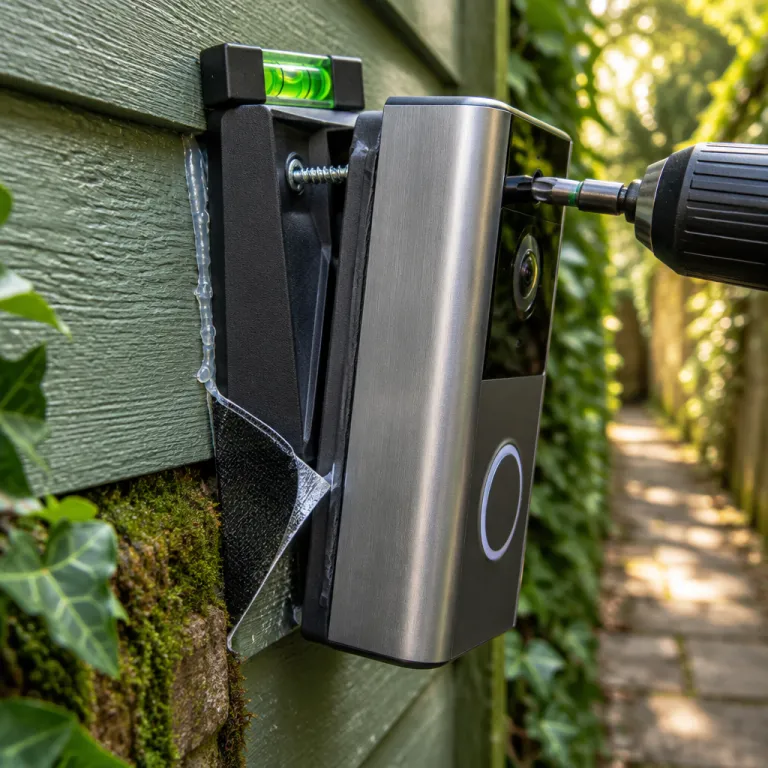
The side door problem: field of view, traffic patterns, and security gaps
A ring doorbell side door entrance installation behaves very differently from a front porch setup. A side entrance often sits in a narrow passage where the field of view is squeezed, while people and pets can approach from both directions along the wall. That combination can leave blind spots in the video and create motion alerts that feel random rather than reassuring.
Before you select any doorbell model for a side entrance, walk the path yourself and note how close visitors pass to the wall. A typical Ring video doorbell has a wide horizontal view but a more limited vertical angle, so mounting too high or too low can cut off faces or packages. Aim for the recommended 1,2 metre mounting height, which helps the motion detection and video framing work together instead of fighting your layout.
Side doors also tend to share space with bins, bikes, and air conditioning units that confuse motion sensors. When you plan a ring doorbell side door entrance installation, imagine how headlights, neighbour foot traffic, and swaying plants will cross the camera view. Your goal is to give the video doorbell a clear line of sight to the approach path while keeping background movement at the edge of the frame, not in the centre.
Think about your existing doorbell if you have one near the side entrance, because its position and the route of the doorbell wires will influence where a new wired doorbell can mount. If the old doorbell wired location is too close to a corner, you may need a corner mount or wedge kit to correct the viewing angle. When there is no existing doorbell at the side entrance, you have more freedom to choose the mounting surface and height, but you must plan power and Wi-Fi coverage more carefully.
Security expectations also differ at a side entrance, where intruders may assume they are less visible. A ring doorbell side door entrance installation should therefore prioritise a clear view of faces and hands rather than a wide scenic shot of the yard. That is why the exact doorbell model, the mount accessories, and the final vertical angle matter more here than they do on a deep, covered front porch.
Finally, think about how this side door camera will work with any other Ring video doorbells you already own. Many Ring ecosystem upgraders start with a front doorbell pro model and later add a battery doorbell or wired doorbell at a side entrance to close security gaps. Planning that multi doorbells layout from the start will help you avoid overlapping motion zones and notification fatigue later.
Choosing the right Ring video doorbell model for a side entrance
For a side entrance, the best ring doorbell side door entrance installation usually starts with the right doorbell model rather than the fanciest one. A Ring Video Doorbell Pro or newer doorbell pro gen is excellent when you already have strong doorbell wires and a reliable transformer, because a wired doorbell never needs a battery swap. If your side door is far from existing wiring, a battery doorbell or hybrid model can be easier to mount and maintain.
Look closely at each video doorbell specification for field view and resolution, not just marketing names. A wider field of view helps cover a long narrow path, while a taller vertical angle helps you see packages left close to the threshold. When you compare video doorbells, prioritise models that balance horizontal coverage with enough vertical angle to capture faces at close range.
Some buyers worry that a wired doorbell will be harder to install at a side entrance than a battery powered unit. In practice, if you already have an existing doorbell on the same side of the house, reusing those doorbell wires can make the installation cleaner and more reliable. You avoid battery maintenance and get more consistent power for advanced features such as pre roll video and higher bitrate recording.
On the other hand, a battery doorbell shines when the mounting surface is brick, stone, or metal where running new wires would be expensive. In that case, you can use wall anchors and mounting screws designed for masonry, then recharge the battery every few months or add a small solar accessory. Many Ring ecosystem users simply add cart to their online order for a spare battery, so the doorbell never sits offline during charging.
Side entrances also benefit from models with flexible motion controls and privacy zones. When you mount a ring video doorbell near a neighbour’s window, you want to be able to mask that area in the view while still monitoring your own path. Choosing a doorbell model with strong software controls can be as important as the physical hardware when you are working in tight spaces.
If you are unsure which ring doorbell fits your layout, a practical approach is to start with a versatile mid range video doorbell that handles most front doors well. A detailed buying guide such as the one on “the Ring doorbell that handles 90 percent of front doors” can help you understand how those strengths translate to a side entrance. Once you know how a given model behaves on a typical doorway, you can adjust your expectations and accessories for the more demanding side door scenario.
Finally, remember that a ring doorbell side door entrance installation should complement your main front door device, not compete with it. If your front door already uses a high end doorbell pro, you may not need the same pro gen hardware at the side entrance. Instead, focus on a model whose view and motion tools solve the specific side path problems you face every day.
Mounting height, corner mounts, and wedges for tricky angles
Getting the mount right is where most ring doorbell side door entrance installation projects succeed or fail. The standard guidance is to mount the video doorbell at about 1,2 metres from the ground, which optimises motion detection for human sized movement. On a side entrance, you often must compromise between that ideal height and the realities of brick courses, siding seams, or existing screw holes.
Start by holding the doorbell model against the wall at the recommended height and checking the live ring video preview on your phone. If you see mostly wall or door frame, you probably need a corner mount or wedge kit to adjust the angle. A corner mount rotates the doorbell horizontally to widen the field view down the path, while a wedge tilts it vertically to correct the vertical angle.
Use a corner mount when the door frame sits deep in a recess or when the path runs sharply to one side. In that case, rotating the doorbell 15 to 45 degrees can bring approaching visitors into the centre of the view instead of the edge. For narrow side yards, this small change in angle can dramatically improve both video clarity and motion reliability.
A wedge kit is more helpful when your only solid mounting surface is higher or lower than ideal. Tilting the doorbell down slightly can keep faces in frame when visitors stand close, while tilting up can reduce false alerts from pets or ground level movement. Many ring doorbell side door entrance installation projects use both a wedge and a corner mount stacked together to fine tune the final view.
When you mark screw holes for the mounting bracket, use a level and take your time. Side entrances often have uneven brick or textured render that can twist the mount as you tighten the screws, so check alignment twice before drilling. If you hit a soft spot or hollow area, switch to longer mounting screws and appropriate wall anchors to keep the bracket secure.
Pay attention to the path of the doorbell wires if you are installing a wired doorbell or upgrading an older doorbell wired unit. You want the wires to exit the wall cleanly behind the mount, with enough slack to connect without pinching when you push the doorbell onto the bracket. A tidy wiring job not only looks better but also reduces strain on the terminals over time.
Once the mount is in place, snap the ring doorbell onto the bracket and tighten the security screws at the bottom. These small screws are easy to drop on a gravel side path, so work over a tray or cloth if possible. If your Wi-Fi signal is weak at the side entrance, run a quick test and consider a dedicated network extender using a guide focused on fixing Ring Wi-Fi dead zones, because a perfect angle is useless if the video cannot upload reliably.
Wired versus battery power for secondary doors and shared transformers
Power choice is one of the biggest strategic decisions in any ring doorbell side door entrance installation. A wired doorbell at the side entrance can share the same transformer as your front door unit, but only if the transformer is rated for the combined load. Many older homes use low capacity transformers that struggle when you add multiple video doorbells, leading to chimes that cut out or devices that reboot.
Check the transformer rating before you add a second doorbell wired unit to the circuit, especially if your front door already uses a power hungry doorbell pro. If the numbers are marginal, upgrading to a stronger transformer or using a dedicated power supply for the side entrance is safer. This avoids voltage drops that can affect video quality, motion reliability, and long term security performance.
A battery doorbell at the side entrance avoids transformer maths entirely, which is why many Ring ecosystem upgraders choose it for secondary doors. You simply mount the bracket, attach the doorbell, and manage the battery through the Ring app, swapping it out every few months. For a side door that sees less traffic than the front, battery life can be surprisingly long, especially if you tune motion zones carefully.
Hybrid models that support both wired and battery operation give you flexibility if you are unsure about future changes. You can start with battery power for a quick ring doorbell side door entrance installation, then connect doorbell wires later when you renovate or run new cable. This approach lets you test the view, motion, and daily use before committing to permanent wiring.
When you run new wires along a side wall, protect them from weather and accidental damage. Use clips rated for exterior use, avoid sharp bends near the doorbell head, and keep the cable away from areas where bikes or bins might snag it. A clean wiring route not only looks professional but also supports the overall security of your system by reducing failure points.
Remember that power choices also affect accessory options such as chimes and smart home integrations. A strong wired setup can support more consistent ring video streaming to smart displays, while a battery focused layout may prioritise energy saving settings. Think about how you want alerts from both front and side doorbells to appear on your phone, smart speakers, and any indoor chimes before you lock in the power design.
Finally, if you plan to travel, review a seasonal security checklist that covers both front and side entrances. A guide on locking down your front door before summer holidays can double as a template for side door checks, from testing motion alerts to confirming transformer health. Treat the side entrance as a first class citizen in your security plan, not an afterthought hanging off the same wires.
Motion zones, privacy, and alert tuning for narrow side paths
Dialling in motion settings is where a ring doorbell side door entrance installation either becomes quietly effective or unbearably noisy. A narrow side path often runs close to the street or a neighbour’s driveway, so the default motion zone can capture every passing car or dog. That constant buzzing on your phone quickly trains you to ignore alerts, which undermines the whole point of the system.
Start by using the Ring app to draw custom motion zones that hug the actual walking path to your side door. Keep the zone edges away from the street and any busy shared spaces, even if that means sacrificing a little field view at the far end. You can always expand the zone later once you see how the video doorbells behave during a typical day.
Next, adjust motion sensitivity rather than relying on the default setting. In a tight corridor, even small changes in sensitivity can dramatically reduce false alerts from swaying plants or shadows without missing real visitors. Test different levels at various times of day, because morning and evening light can change how the camera interprets movement.
Privacy zones are especially valuable when your side entrance faces windows or gardens that are not yours. Use them to block out areas of the view where you have no security interest, which also helps reassure neighbours about how you use the camera. A well tuned ring doorbell side door entrance installation should focus on your door, your path, and your immediate property line.
Linking alerts between front and side doorbells in the Ring app can give you a more coherent picture of movement around your home. For example, you might set the front doorbell pro to send rich notifications with preview images, while the side entrance battery doorbell only sends alerts when someone presses the button. This layered approach keeps you informed without overwhelming you.
Consider scheduling motion alerts differently for workdays and weekends if your side path sees regular family use. You might allow more frequent alerts during the night and early morning, then reduce sensitivity during busy daytime hours. The goal is to make the ring doorbell side door entrance installation feel like a quiet guard, not a hyperactive sensor that constantly cries wolf.
If you notice gaps where motion is not triggering as expected, revisit your mount angle and height. Sometimes a small tweak to the corner mount or wedge can bring the most important part of the path into the motion sweet spot. Treat this tuning process as part of the installation, not an afterthought, because the best security camera is the one whose alerts you actually trust.
Weatherproofing, hardware choices, and long term reliability at side doors
Side entrances often take the brunt of wind, rain, and blown debris, so weatherproofing is a critical part of any ring doorbell side door entrance installation. Unlike a sheltered front porch, a side door may have no overhang, leaving the doorbell exposed to direct spray. Over time, that exposure can test the seals around the camera head, microphone, and button.
Choose a mounting surface that sheds water rather than trapping it behind the bracket. When you drill screw holes, apply a small bead of exterior grade sealant around each one before inserting the mounting screws, especially on rendered or wooden walls. This simple step helps prevent moisture from seeping into the wall cavity and affecting both the doorbell wires and the structural material.
If your side entrance faces prevailing winds, consider a slim rain shield or a slightly recessed mount to reduce direct impact. Make sure any accessory you add does not block the camera view or interfere with the motion sensor, because security always comes first. A well designed ring doorbell side door entrance installation balances protection from the elements with an unobstructed field view.
Hardware quality matters more at a side door than you might expect. Use stainless steel or coated mounting screws and wall anchors rated for exterior use, especially in coastal or humid regions. Cheaper hardware can rust, expand, and eventually loosen the mount, which can change the vertical angle and compromise video framing.
Temperature swings along a side wall can also affect battery performance if you use a battery doorbell. In very cold conditions, battery capacity drops, so you may see shorter intervals between charges during winter. If that becomes a pattern, consider switching to a wired doorbell or adding a small solar accessory where it can catch enough light.
Finally, build inspection into your routine. Once or twice a year, gently check that the ring doorbell is still firmly seated on its mount, the security screws are tight, and no cracks have formed around the mounting surface. A few minutes of maintenance keeps your side entrance camera reliable, so it remains the doorbell you forget is even there until you actually need the footage.
Integrating side and front Ring doorbells into one smart security system
When you already own a Ring front doorbell, a ring doorbell side door entrance installation should feel like an upgrade to the whole system, not a separate gadget. The Ring app lets you group devices by location, so you can see both front and side entrances on a single dashboard. That unified view makes it easier to understand how people move around your property over the course of a day.
Set up linked events so that when someone presses the side door doorbell, your front door chime or smart speakers also announce it. This is especially helpful if the side entrance is closer to your kitchen or garage, where you might not hear the built in chime. You can customise the alert tones so you immediately know whether the ring came from the front or side without looking at your phone.
For smart display users, pin both doorbells to the home screen or favourites list. That way, a single tap shows you live video from either entrance, which is useful when you hear a noise along the side path at night. A well planned ring doorbell side door entrance installation should feel like an extra camera angle in a film, not a separate storyline.
Network reliability becomes more important as you add devices. If your router sits near the front of the house, the side entrance may sit at the edge of Wi-Fi coverage, which can cause delayed notifications or choppy video. In that case, follow a focused guide on fixing Ring Wi-Fi signal strength and dead zones to stabilise both doorbells.
Think about automation too. You might link side door motion to turn on a nearby smart light, while front door motion triggers a different scene that includes indoor lamps. These subtle differences help you understand which entrance is active while also making the property look occupied when you are away.
Finally, review your notification settings after a week of real use. If you find that side door alerts are more frequent but less critical, you can keep them on silent while preserving full alerts for the front door. The aim is a balanced system where the ring doorbell side door entrance installation extends your awareness without adding stress, giving you layered security that feels natural rather than technical.
Key figures on Ring doorbells and side entrance security
- Ring recommends mounting a video doorbell at about 1,2 metres from the ground, which aligns the motion sensor with typical human movement and reduces false alerts from vehicles and small animals.
- Wide angle video doorbells with fields of view around 150 degrees horizontally can cover most standard side paths up to 3 metres wide, while narrower lenses may require more precise corner mounts to avoid blind spots.
- In many residential layouts, side and back entrances account for a significant share of attempted break ins, which is why adding a second doorbell camera can meaningfully increase overall home security coverage.
- Battery powered video doorbells typically last several weeks to a few months per charge at low to moderate traffic side doors, depending on motion settings, temperature, and Wi-Fi strength.
- Upgrading an old low capacity doorbell transformer to a modern higher rated unit can support multiple wired Ring doorbells on the same circuit, improving reliability for both front and side entrances.
FAQ about mounting a Ring doorbell on a side entrance
What is the best height for a Ring doorbell on a side door ?
The best height for a Ring video doorbell on a side entrance is about 1,2 metres from the ground. This height aligns the motion sensor with typical human movement and helps the camera capture faces clearly at close range. Even on a narrow path, starting at this height and then fine tuning with wedges or corner mounts usually gives the most reliable results.
Do I need a wedge or corner kit for a side entrance installation ?
Most side entrances benefit from either a wedge kit, a corner mount, or both. Use a corner mount when the path runs sharply to one side of the door, so you can rotate the camera toward approaching visitors. Use a wedge when you must mount higher or lower than ideal and need to tilt the camera up or down to keep faces and packages in frame.
Should I choose a wired or battery Ring doorbell for a side door ?
If you already have strong doorbell wiring and a capable transformer near the side entrance, a wired Ring doorbell offers consistent power and less maintenance. When wiring is absent or difficult to extend, a battery powered model is usually easier and faster to install. Many homeowners choose wired for the main front door and battery for secondary side doors to balance reliability and flexibility.
How can I reduce false motion alerts on a narrow side path ?
To cut false alerts on a narrow side path, start by drawing custom motion zones that cover only the walkway and door area. Keep the zones away from streets, shared driveways, and busy gardens, then lower sensitivity slightly and test at different times of day. Adding privacy zones over neighbour windows and bright lights can also help the camera focus on relevant movement.
Will a side entrance Ring doorbell work with my existing front door Ring setup ?
Yes, a side entrance Ring doorbell integrates fully with an existing front door Ring system through the Ring app. You can group both devices under the same location, link chimes and smart speakers, and customise notifications so you know which door is active. This combined setup gives you a more complete view of movement around your home without needing separate apps or accounts.