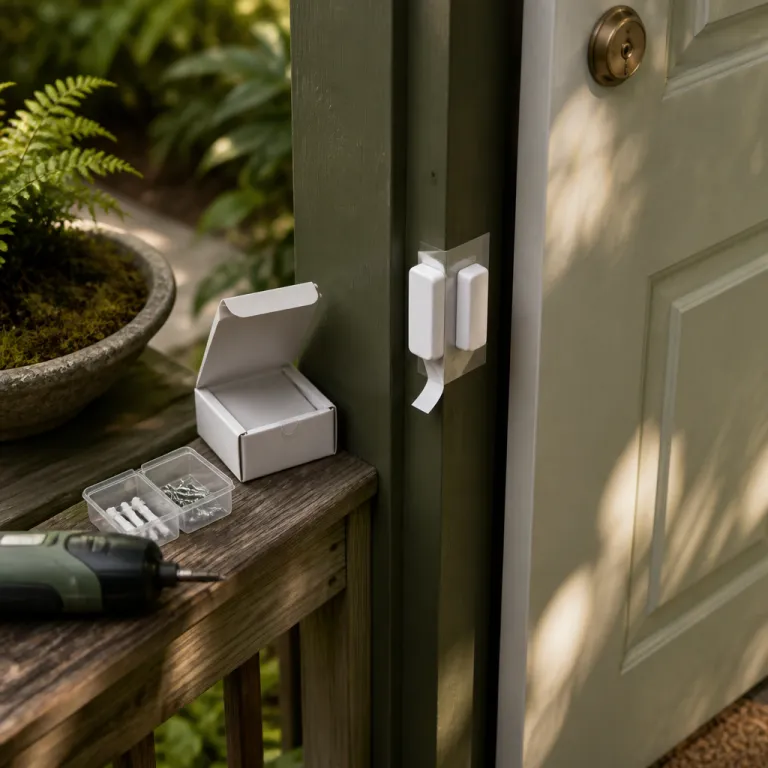

Why a ring door sensor matters more than the camera
A ring door sensor quietly protects the entry point that burglars test first. While a visible Ring video doorbell can deter some intruders, the hidden contact sensor and its instant alarm give you a second protective layer when someone actually opens the door. That combination of camera, sensor, and alarm contact turns a simple smart gadget into a more complete home security system.
At its core, the sensor uses a small magnet and a wireless contact switch to detect when the door separates from the frame. When the magnet moves away from the contact, the Ring Alarm system sends a signal to the base station, which then triggers a siren or a silent push notification through the Ring app. This means the door sensor continues to work even if a thief avoids the camera’s field of view or approaches from the side.
People often focus on star ratings for the visible doorbell product on Amazon, but the quiet performance of the Ring sensors on doors and windows usually matters more during a real break-in. A well-placed door or window contact sensor can alert you before anyone reaches the hallway or bedroom. For a person seeking information, understanding how these sensors work in the background is the first step toward a more resilient security setup.
Planning front door protection with ring alarm contact sensors
Before you install any ring door sensor, map how you actually use your front door throughout a normal week. Think about deliveries, children coming home from school, guests arriving, and how often you open a nearby window or secondary door for ventilation. This practical review of daily activity helps you decide where each contact sensor should sit and how the alarm should respond at different times of day.
For most homes, the main door sensor should be configured as an entry delay zone in the Ring Alarm settings, so you have a few seconds to disarm the system through the app or keypad. Secondary contact sensors on a side door, back door, or on ground-floor windows can be set as instant alarm contact zones, which trigger the siren the moment the magnet separates from the sensor. This layered approach lets the base station treat each entry differently while still keeping the overall security simple to manage.
When planning a holiday, use a front door checklist that combines the Ring app, the door sensor, and your Ring video doorbell into one routine. A practical guide such as this front door Ring setup checklist before vacation shows how to arm the system, set motion zones, and confirm that all contact sensors work correctly before you leave. This kind of preparation turns a basic product purchase into a coherent security strategy rather than a scattered collection of gadgets.
Positioning the door sensor for reliable alerts and fewer false alarms
Getting the placement of a ring door sensor right is more important than many customer reviews suggest. The magnet and the contact sensor must align closely when the door is closed, usually within a few millimetres, or the Ring Alarm may think the door is open and keep the alarm contact in a fault state. If you rush the install and ignore alignment, you will probably see more false alerts and start to distrust the system.
On a solid wooden door, the easiest install usually involves mounting the larger contact sensor body on the frame and the smaller magnet on the moving door edge. For uPVC or metal doors and windows, you may need the thinner part of the sensor on the frame to avoid rubbing, and sometimes you must use the included spacers so the magnet sits at the correct height. Always read the printed guide and the in-app instructions carefully, because the exact distance tolerance can vary slightly between Ring Alarm Contact Sensor (1st Gen) and Ring Alarm Contact Sensor (2nd Gen) models.
People often ask whether a door sensor or a camera does more to stop theft at the front step. Research on porch piracy shows that visible cameras can change behaviour, and you can explore that in this analysis of whether doorbell cameras deter parcel theft. Yet when a thief decides to test the handle anyway, only a correctly aligned contact sensor linked to the base station will trigger an immediate alarm and send a push alert to your Ring app.
Integrating ring sensors with windows and secondary doors
Once the main ring door sensor is in place, the next weak points are usually the nearby window and any side or back doors. Burglars often try a quiet window–door combination, forcing a small opening that avoids the street-facing camera but still grants access to the hallway. Extending your system with extra contact sensors on these doors and windows closes that gap and forces intruders to trigger an alarm earlier.
When you add more Ring sensors, group them logically in the Ring app so you can see at a glance whether every contact sensor is closed before arming the system. For example, label sensors as “front door”, “kitchen window”, or “garage door window” instead of leaving generic names that make it hard to read the status quickly. This simple naming habit becomes critical during a stressful moment when the alarm sounds and you need to know which entry point has changed.
Some people also use contact sensors on upstairs windows for child safety rather than burglary protection, because the alarm contact can send a quiet notification instead of a loud siren. In that case, the product is still a security tool, but the focus shifts from intruders to household safety. The flexibility of the Ring app allows you to adjust each sensor’s mode so that the same hardware supports several different security goals.
Managing power, connectivity, and smart features for long term reliability
Reliability over time depends on more than just where you place the ring door sensor on the frame. Battery life, wireless range to the base station, and how often the sensor communicates all shape whether the system feels dependable or frustrating. If you ignore these technical details, you may face low-battery warnings or missed events at the worst possible moment.
Most current Ring Alarm Contact Sensors use replaceable batteries that can last many months, but frequent openings, cold weather, and weak signal strength can shorten that duration significantly. To protect battery life, avoid mounting the sensor on metal surfaces that block radio signals, and check that the base station sits roughly central to the doors and windows you want to protect. When you read customer reviews on Amazon, pay attention to comments about signal reliability in homes similar to yours, such as apartments with concrete walls or large detached houses.
Some advanced features, such as using Amazon Sidewalk to extend connectivity, require Ring accounts that opt in to that shared network. The phrase “requires Ring Protect” in the product description usually refers to cloud recording and some advanced app features, not to the basic function of the door sensor itself. Always read the small print before you purchase, because a verified purchase review from an Amazon customer who misunderstood the subscription can unfairly lower the star rating of an otherwise solid security product.
Evaluating ring door sensor reviews and building a trustworthy setup
For a person seeking information, the sea of online reviews about every ring door sensor can feel overwhelming. Star ratings on Amazon and other retailers often mix comments about the sensor, the alarm, the app, and even delivery issues into one score. To make sense of this, separate feedback about the physical contact sensors from opinions about the broader ecosystem such as Ring Protect or Amazon Sidewalk.
When you read customer reviews, look for specific details about how the sensors work on real doors and windows rather than vague praise or anger. A helpful Amazon customer with a verified purchase will usually mention the type of door, the distance to the base station, and whether the easy-install instructions matched their experience. Comments that only say “five stars” or “one star” without context tell you almost nothing about how the door sensor will behave in your own hallway.
Pay attention to whether people mention the sensor generation they used, because firmware and hardware improvements can change performance significantly between versions. If several reviews describe the same problem with alarm contact delays or app notifications, that pattern deserves more weight than a single dramatic complaint. By combining careful reading with a clear plan for where to place each Ring sensor, you can build a front door security setup that feels tailored to your home rather than dictated by marketing claims.
Key figures and trends in smart door and window security
- According to data from the Office for National Statistics in the United Kingdom, around 70% of residential burglaries involve entry through a door, which highlights why a correctly configured door sensor is more impactful than adding extra cameras alone (see ONS, “Nature of burglary, England and Wales”, latest release; accessed 2024).
- Analyses based on U.S. Bureau of Justice Statistics victimisation surveys indicate that homes without any visible or audible security system are more likely to be targeted, and studies using National Crime Victimization Survey tables suggest that a monitored alarm with contact sensors can reduce the risk of successful entry by roughly 20–30% compared with similar homes without alarms (BJS, NCVS; methodology summaries accessed 2024).
- Industry surveys from security trade associations report that more than half of new professionally installed systems now include smart app control, meaning that the majority of modern alarm contact sensors are managed through a mobile app similar to the Ring app rather than only through wall-mounted keypads.
- Battery-powered contact sensors typically advertise battery life ranging from one to three years under normal use, but field tests by independent reviewers often find real-world performance closer to 12 to 18 months in busy households where doors and windows open many times per day.
- Market research firms tracking smart home adoption estimate that smart security devices, including door sensors and window sensors, represent one of the fastest-growing segments of the connected home market, with annual growth rates in the double digits and a steady shift from standalone alarms to integrated ecosystems.
FAQ about ring door sensors and front door security
How does a ring door sensor actually detect that a door is open ?
A ring door sensor uses a magnet and a contact sensor that sit very close together when the door is closed. When the door opens, the magnet moves away, the contact breaks, and the sensor sends a wireless signal to the base station. The Ring Alarm then updates the Ring app and, if armed, can trigger a siren or notification.
Where should I place the sensor on my front door for best performance ?
The most reliable position usually puts the larger contact sensor on the fixed frame and the smaller magnet on the moving edge of the door. Both parts must align closely when the door is shut, with only a small gap between them. Avoid mounting on uneven surfaces or thick metal plates that can affect alignment and wireless performance.
Do I need a subscription like Ring Protect for the door sensor to work ?
The basic open and close detection of a ring door sensor does not require a Ring Protect subscription. The sensor can still talk to the base station, trigger the alarm, and send instant alerts through the Ring app. A subscription mainly adds features such as extended event history, professional monitoring in some regions, and cloud recording for cameras.
How often will I need to change the batteries in my contact sensors ?
Battery life depends on how often the door opens, the temperature, and the distance to the base station. Many users report that front door contact sensors last roughly one to two years in normal use before needing a replacement battery. You can reduce battery drain by ensuring a strong wireless signal and avoiding extreme cold where possible.
Can I use the same type of sensor on both doors and windows ?
Most Ring contact sensors are designed to work on both doors and windows as long as the magnet and sensor can align properly. On windows, you may need to use the thinner part of the sensor on the moving sash and the thicker part on the frame. Always test that the Ring app correctly shows open and closed states before relying on the sensor for security.