
Summary
Editor's rating
Is it good value for money?
Chunky, a bit old-school, but practical enough
Battery life: fine on paper, tricky in real life
Build quality and reliability over time
Video, audio and motion detection: decent, but with quirks
What you actually get and how it works day to day
Pros
- Works completely offline without Wi‑Fi, apps or cloud accounts
- Indoor monitor is easy to use and good for older users or non‑techy households
- Decent video and audio quality for identifying visitors, with usable night vision
Cons
- PIR motion detection is unreliable and drains batteries quickly
- Mixed reports on long‑term reliability, with some units failing after a short period
- Installation can be fiddly if you want to wire it to power, and the outdoor unit is fairly bulky

Specifications
View full product page →| Brand | iCreation |
A wireless video doorbell for people who hate Wi‑Fi setups
I picked up this iCreation 2.4G Wireless Video Doorbell mainly because I was tired of app-based models that always depend on Wi‑Fi and cloud accounts. I wanted something simple: press the button, screen rings inside, I see who’s there. No subscription, no app updates breaking everything every three months. On paper, this one ticks those boxes: it uses its own 2.4 GHz connection and comes with an indoor monitor you can carry around.
After using it for a while, I’d say it’s a mixed bag. It absolutely solves the "Wi‑Fi is too weak at the front door" problem, and the fact that you don’t need a smartphone is great for older relatives or anyone who doesn’t care about smart home stuff. But you can feel that it’s from a smaller brand: the reliability over time is a bit hit or miss, and you have to accept some compromises if you go for it.
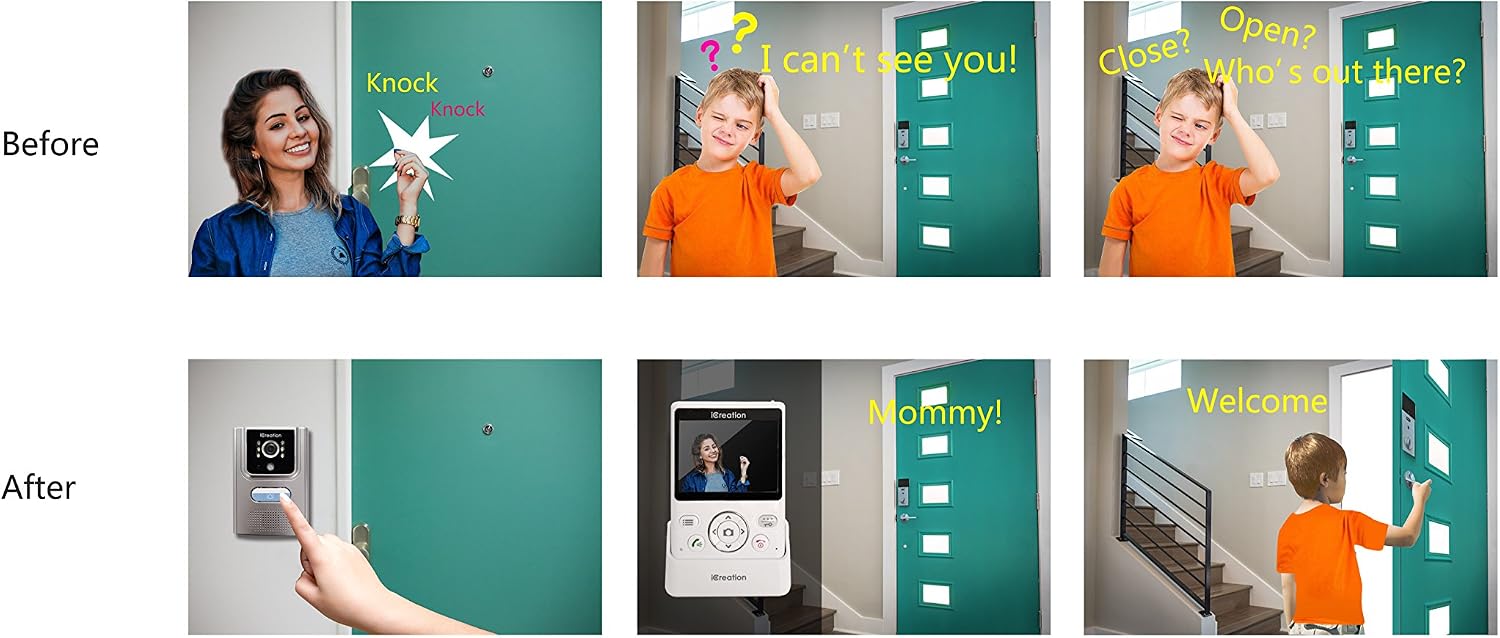
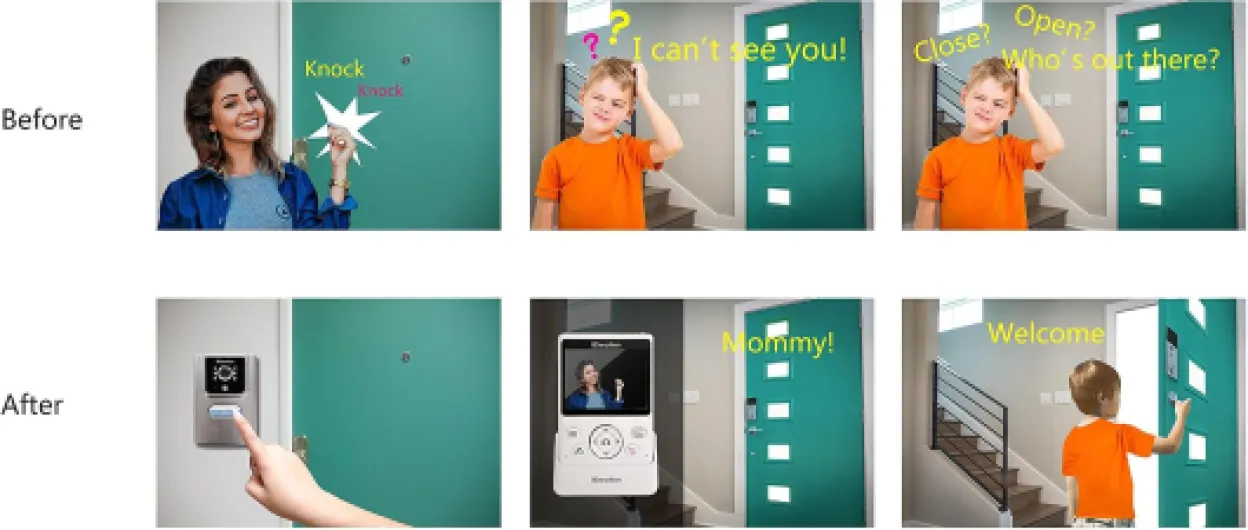
In everyday use, when it works, it’s pretty straightforward. Someone presses the button, the indoor screen lights up, you see the person and can talk to them like a basic video intercom. The video is not cinema quality, but it’s more than enough to identify who’s standing there. Sound is clear enough to have a short chat with a delivery driver or tell someone to leave a parcel somewhere.
Where things get more annoying is the long‑term side: power, motion detection, and the feeling that the whole system is a bit fragile. So if you’re thinking of buying it, I’d say you need to be okay with tinkering a bit and maybe turning off some features like the PIR motion sensor. It’s not a disaster, but it’s not flawless either.
Is it good value for money?
Price-wise, this iCreation doorbell usually sits below the big Wi‑Fi video doorbells that need subscriptions and apps. For that lower price, you get a self-contained system with an indoor monitor, no cloud fees, and no need for a smartphone. If that’s exactly what you’re looking for, the value is decent. You basically pay once, and as long as it keeps working, you don’t have any ongoing costs except batteries if you don’t wire it.
Compared to app-based competitors, you obviously lose a lot of modern features: no push notifications on your phone when you’re away from home, no remote answering from the office, no recordings stored for weeks, no integration with other smart devices. You’re trading all that for simplicity and no subscriptions. For some people (grandparents, people without smartphones, or those who hate cloud stuff), that trade-off is actually positive. For others, it will feel like going backwards.
The problem for value is the mixed reliability and the battery fuss. If you get a good unit and you wire it to power, the price feels fair: you get a basic but effective video intercom that doesn’t depend on your internet. But if you land on a bad unit that dies after a month or two, the value instantly becomes terrible, because you’re basically paying for frustration. The 3.6/5 average rating on Amazon reflects exactly that: some happy users, some very annoyed ones.
Personally, I’d say it’s good value only for a specific type of user: someone who really wants an offline system, is okay with basic video quality, and doesn’t mind doing a bit of DIY to either wire it or tweak the settings (like turning off the PIR). If you’re not in that group and you want something more polished and reliable out of the box, it might be smarter to spend a bit more on a better-known brand, even if it means dealing with an app and maybe a subscription.
Chunky, a bit old-school, but practical enough
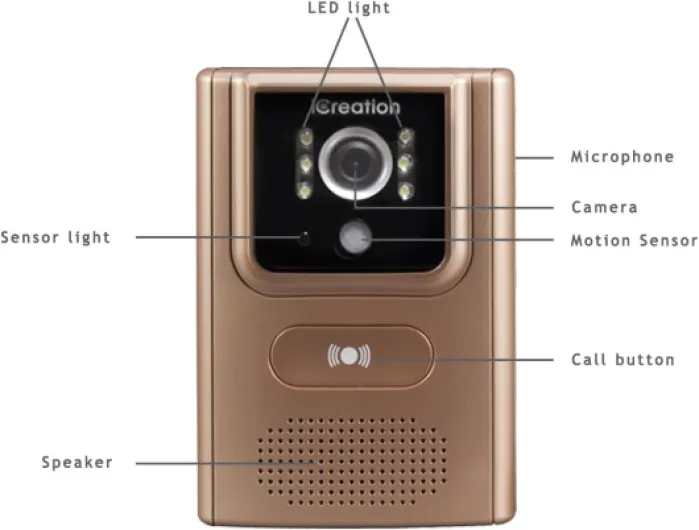
Visually, this doorbell looks a bit like something from a previous generation of gadgets. The outdoor unit is a gold-colored box with a camera on top and a button at the bottom. It’s not ugly, but it doesn’t look modern either. If you’re expecting a sleek, minimal doorbell like some of the big brands, this one feels more "functional box" than stylish gadget. Personally, I don’t really care how a doorbell looks as long as it’s not ridiculous, and this one is acceptable, just a bit dated.
The indoor monitor is basically a small handheld screen with buttons, almost like a cordless home phone with a bigger display. It has a charging base that you plug into the wall. One thing I noticed is that the power plug sticks out quite a bit, and if you want to wall-mount the base unit, routing the cable can be awkward. One of the Amazon reviewers mentioned the same issue: the plug gets in the way and you have to twist or angle it to make it work nicely on a wall.
In terms of usability, the physical buttons are clear and easy to understand. You’ve got simple controls to answer a call, browse stored photos, and go through basic settings. No touch screen nonsense, which in this case is actually a plus: older users or people who hate fiddly menus will find it straightforward. The ring volume is loud enough, and even though you can’t change the ringtone, it’s long and obvious, so you don’t miss it easily.
If I had to sum up the design: it’s practical but not pretty. It looks like security gear, not a design object. The outdoor unit is a bit wide, so on narrow door frames it can be tight to fit. Also, the little security screw that locks it to the mounting plate is tiny and easy to drop during installation. They do include a magnetized screwdriver, which helps, but it still feels like something you can easily lose in the grass. So, design-wise, it gets the job done but doesn’t feel especially polished.
Battery life: fine on paper, tricky in real life
On the spec sheet, the outdoor unit sounds great: 6 AA batteries with up to two years of standby. In practice, it depends a lot on how you use it and what features you leave on. With the PIR motion sensor enabled, the doorbell wakes up more often to take snapshots, and that eats through batteries much faster than you’d think. One user mentioned the batteries lasting only a few days with everything on, and I’m not surprised. If your door faces a busy area, the sensor is constantly triggering, which kills the "2-year standby" dream pretty quickly.
Once you turn off the motion detection and just use it as a regular video doorbell (only waking up when someone presses the button), battery life improves a lot. You’re still not getting two full years in realistic use, but it becomes manageable. Think more in terms of a few months, depending on how many visitors you get. Using decent alkaline batteries is a must; cheap ones will die fast. I wouldn’t even bother with low-end batteries here, you’ll just end up changing them constantly and getting annoyed.
If you can, the best setup is to wire the outdoor unit to a 12V supply or existing doorbell power. That way, you don’t worry about batteries at all. The problem is that the space behind the unit is tight, so running cables and making solid connections is a bit awkward. One reviewer pointed out that there’s not much room between the unit and the backplate, so you can’t stuff a lot of cable in there. You need to be a bit careful and patient during installation, especially if you’re not used to DIY wiring.
Bottom line: the battery story is one of those "in theory vs in practice" things. If you want to rely only on batteries and keep all features on, you’ll be disappointed. If you’re ready to disable the PIR and maybe wire it when possible, then it becomes a non-issue. So yes, it can work on batteries, but you have to tune your expectations and settings, otherwise you’ll think the product is broken when it’s really just chewing through power because of the motion sensor.
Build quality and reliability over time
The unit is rated IP55, which means it should handle rain and dust reasonably well. In normal British-style weather (rain, wind, some cold), the casing seems solid enough. It doesn’t feel like cheap toy plastic, more like standard electronics housing. The buttons don’t wobble, and the mounting plate holds the unit in place properly once that tiny security screw is tightened. So from a pure physical build point of view, it’s okay for outdoor use as long as you don’t expose it to extreme conditions non-stop.
The real question is electronic reliability. Reading through other buyers’ experiences and combining that with my own impressions, it’s a bit of a lottery. Some people have had it running for a good while with no major issues. Others had it die after a month or two, with the system just refusing to turn on or connect properly, even after changing batteries and trying to reset everything. One buyer even went through two units in a short period before giving up and switching brands.
My feeling is that quality control is not as tight as with bigger names. When it works, it works fine, but you can tell the manufacturer is not at the same level as the big doorbell players. The short return window some users mentioned doesn’t help confidence either. If your unit is going to fail, it often shows up fairly early: random disconnections, screen not turning on, or the outdoor unit not waking up when the button is pressed.
So in terms of durability, I’d rate it as average at best. It’s not a cheap toy that falls apart in your hands, but it also doesn’t give you that solid, long-term feeling. If you’re okay taking a bit of a gamble for the price and you install it somewhere you can easily access to troubleshoot or replace, it might be fine. If you want something you install once and forget about for years, I’d be cautious and maybe look at more established brands.
Video, audio and motion detection: decent, but with quirks
On the performance side, the video quality is okay but nothing special. You can clearly see faces at the door, which is the main goal. The field of view is pretty wide (around 130–135 degrees), so you get a good chunk of the area in front of your door. Don’t expect super sharp detail like on some high-end IP cameras, but for checking if it’s the postman, a neighbor, or a random salesperson, it’s absolutely fine. The frame rate is quoted at 25 fps, and in practice the image looks smooth enough with only small delays.
Audio is fairly clear on both sides. I could talk to visitors without having to repeat myself constantly, as long as I was within a normal distance from the indoor unit. There’s a slight lag, like a short walkie-talkie delay, but it’s not dramatic. For quick exchanges such as "leave the parcel by the bin" or "I’m coming", it works. The volume level is decent, and you can adjust it if it’s too loud or too quiet. I didn’t notice crazy echo or constant crackling, but you can tell it’s using basic radio tech, not some fancy HD audio codec.
The part that disappointed me the most is the PIR motion detection. Several users mentioned it and I had the same impression: there’s a delay between the sensor picking up movement and the camera actually snapping a picture. The result is that you often get pictures with nobody in them, just your empty front path or garden. On top of that, the sensor is quite sensitive and triggers on cars in the distance or people walking further away, especially if your door faces a street. So you end up with a lot of useless shots and still miss the person you actually care about.
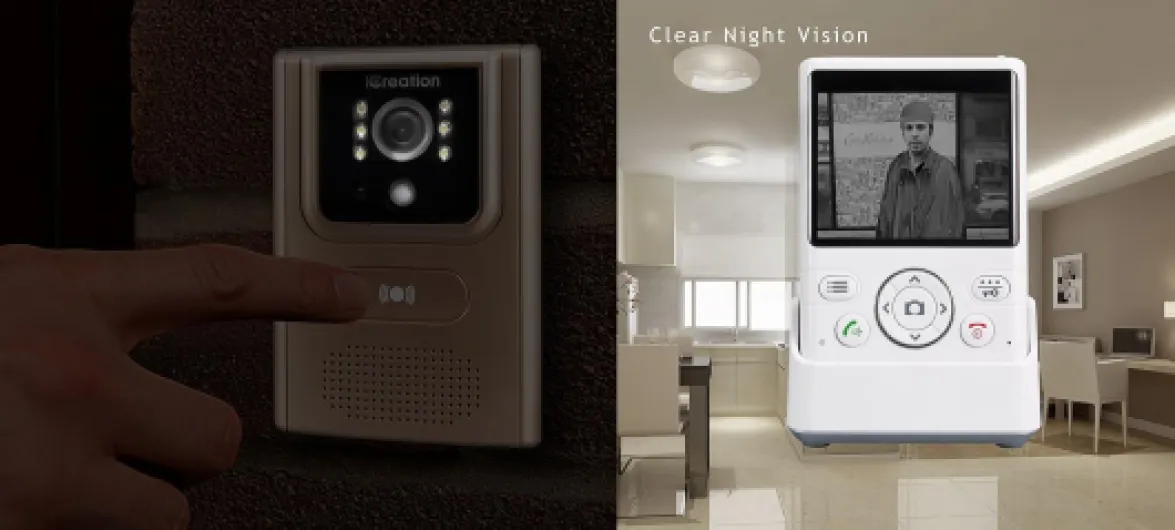
At night, the built-in LEDs give you basic night vision. You won’t get perfect detail in total darkness, but you can still see enough to identify a person at close range. It’s more "greyish and grainy" than clean, but again, for a mid-range, offline unit, it’s acceptable. Overall, I’d say the core function (ring + live video + audio) is reliable when powered correctly, but the motion detection is more of a gimmick than a solid security feature. If you buy it mainly for live answering the door, you’ll be fine. If you want a serious motion-based security system, this isn’t it.
What you actually get and how it works day to day
The kit is basically made of two main pieces: the outdoor doorbell unit with the camera, and the indoor monitor that looks like a small cordless phone with a screen. The outdoor unit runs on 6 AA batteries by default, or you can wire it to a 12V supply or existing doorbell wiring if you want constant power. The indoor screen plugs into the mains and can be carried around thanks to a belt clip, a bit like an old-school baby monitor.
The connection between the two is done through a dedicated 2.4 GHz radio link, not Wi‑Fi. That means no router configuration, no app, no account. You just pair them out of the box and they talk to each other directly. The brand claims up to 50 meters of effective range for video and audio, which in practice is usually enough for a normal house. Through a couple of brick walls, the signal held up fine in my case, and I could still get a picture in the garden.
Function-wise, it does a few things: when someone presses the button, the indoor unit rings and shows live video. There’s also a PIR motion sensor that can trigger snapshots even if no one rings, and the system can store up to 50 photos before it starts overwriting the oldest ones. The idea is that you can see who came by while you were out. In reality, the PIR is a bit too sensitive and a bit slow, so you often end up with photos of an empty path because the person has already walked away.
Overall, the feature set is pretty simple: video call on ring, basic motion snapshots, night vision, and two-way audio. No fancy app notifications, no cloud history, no sharing access with family through a phone. If you’re looking for a pure offline, self-contained system, that’s exactly what it is. If you expect smart notifications on your mobile or integration with Alexa or Google, this is not the right product.
Pros
- Works completely offline without Wi‑Fi, apps or cloud accounts
- Indoor monitor is easy to use and good for older users or non‑techy households
- Decent video and audio quality for identifying visitors, with usable night vision
Cons
- PIR motion detection is unreliable and drains batteries quickly
- Mixed reports on long‑term reliability, with some units failing after a short period
- Installation can be fiddly if you want to wire it to power, and the outdoor unit is fairly bulky
Conclusion
Editor's rating
Overall, this iCreation 2.4G Wireless Video Doorbell is a niche but useful option. It does one thing well: give you a simple video intercom at the door without touching your Wi‑Fi, your router, or your smartphone. The indoor monitor is practical, especially for older people or anyone who doesn’t want to mess with apps. Video and audio are good enough for everyday use, and the built-in night vision means you can still see who’s there in the dark.
On the downside, the PIR motion sensor is more annoying than helpful, and it drains the batteries fast if you leave it on. Reliability over time is also a bit of a question mark, with some units failing early according to a few buyers. It’s not a product I’d blindly recommend to everyone. It’s more of a "if you know what you’re getting into" purchase. If you’re ready to switch off the motion sensor, maybe wire it for power, and accept that it’s a basic offline system, it can be a decent fit.
If you want something plug‑and‑forget with strong long-term reliability and full remote access from your phone, I’d say look elsewhere and spend a bit more. But if your priority is avoiding Wi‑Fi headaches and subscriptions, and you’re okay trading some modern features for that, this doorbell gets the job done at a reasonable price.