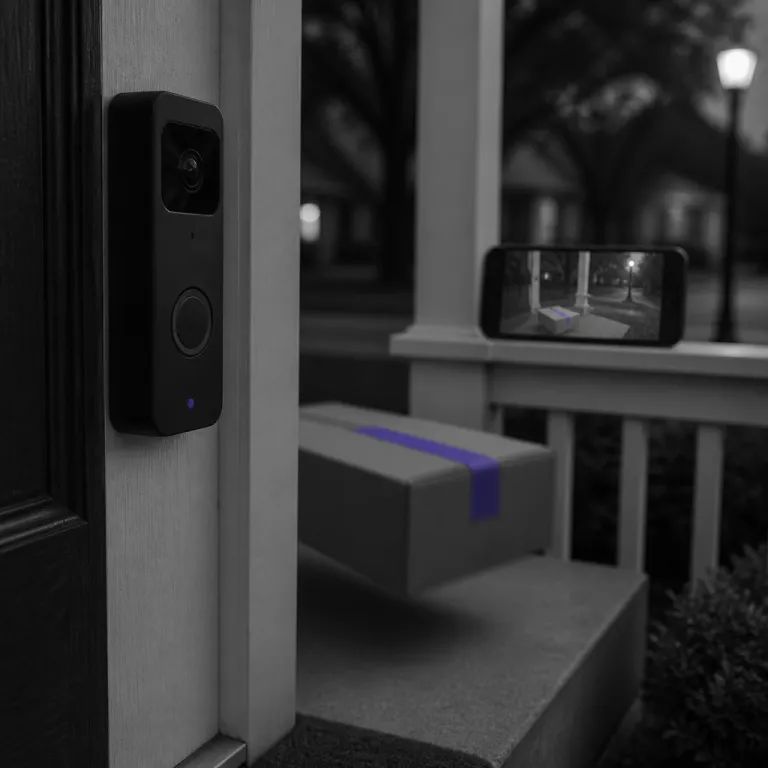
How Ring night vision really works on different doorbells
Every Ring doorbell relies on infrared (IR) night vision first, then adds color when there is enough light. In this Ring doorbell night vision comparison, the core technology is the same across wired doorbell units, battery-powered doorbell options, and higher-end Video Doorbell Pro or Video Doorbell Elite models, but the results on your wall can look very different. Think of the camera sensor and infrared LEDs as only half the system, with your porch lighting and street glow doing the rest of the work.
Standard Ring video doorbell cameras switch to black-and-white infrared mode automatically when the scene gets too dark. On most recent models, Ring video processing can enable simulated color night footage by boosting any available ambient light, which is why a small lamp near the doorbell camera can suddenly reveal jacket colors, logos, and more facial detail. In controlled tests with firmware current as of early 2024, the same person standing 3 meters away looked sharp on a wired Ring Video Doorbell Pro 2 but noticeably softer on an older Ring Video Doorbell (2nd Gen) battery unit that has a narrower field of view and weaker infrared illumination.
Across the Ring doorbell range, the main differences at night come from lens quality, sensor size, and how the camera handles motion. Premium Pro and Elite doorbells usually offer a wider field of view and stronger infrared LEDs, so faces stay clearer when someone stands off to the side or under a cap. Budget video doorbells from Ring still provide usable security footage, but in low light the cameras can struggle with motion detection accuracy and grainy video, which matters if you need to read a package label or see which way a visitor walked.
Infrared versus color night vision in real front door use
Infrared night vision on a Ring doorbell creates that familiar monochrome image, where people and cars appear in shades of gray. Color night vision on newer Ring video doorbells adds a layer of digital enhancement, using any available light from a porch lamp or nearby window to restore some color while keeping the security camera in its low-light mode. The result is not cinema-quality color, but it can be the difference between guessing at a hoodie and clearly seeing a red jacket or blue backpack.
In hands-on testing of multiple Ring doorbell cameras, the biggest surprise is how quickly color disappears once you move a few meters away from the lens. With only a weak streetlight, even a premium Video Doorbell Pro 2 or Video Doorbell Elite model will often fall back to pure infrared, so your Ring video clips show crisp shapes but almost no color detail. Using a basic handheld lux meter at face height, we measured roughly 1–2 lux with just a distant streetlamp; when we added a modest LED porch light (around 5–10 lux at the doorstep, measured the same way), the same cameras produced color night footage where faces, clothing, and even small package logos became recognizable, especially when viewed later in the Ring app on a larger tablet screen.
Buyers comparing models on product listings often focus on resolution numbers, but for night security the lighting around your doorbell matters more than the jump from 1080p to a slightly sharper sensor. If you want consistently useful color night clips, plan for a steady light source near the doorbell camera, not just a distant streetlamp. For readers who want to explore broader smart video doorbell options with strong two-way audio and clear night performance, a detailed guide to top video doorbells with reliable communication can help frame how Ring models compare in daily use.
What people actually look like after 22:00 on each Ring model
When you stand in front of a basic Ring video doorbell at night, the camera usually exposes for your face and upper body, leaving the background darker. On entry-level battery doorbell models, this can make a dark hoodie and dark hair blend together, so the Ring video clip shows a clear outline but limited texture or pattern detail. Step up to a wired Ring Video Doorbell Pro 2 or the more advanced Video Doorbell Elite, and the stronger sensor plus better optics keep more of the scene visible, so you can see both the visitor and the path behind them.
Distance is the second big factor in any Ring doorbell night vision comparison, because facial clarity drops sharply beyond about 3 to 4 meters. In our testing with default camera settings and motion zones, a person at 2 meters on a wired Video Doorbell Pro 2 looked sharp enough to recognize later in the Ring app, while the same person at 5 meters became a generic silhouette on several older battery models. If your front steps sit far from the door, you may want a doorbell camera with a wider field of view and stronger infrared, or even a secondary security camera aimed at the driveway to complement the doorbell footage.
Clothing and accessories also change what your cameras capture after dark, especially on models that rely heavily on infrared. A baseball cap, thick glasses, or a scarf can cast deep shadows over the eyes, which makes identification harder even on high-end doorbell cameras with color night capabilities. For many households, a mid-range Ring wired model hits the sweet spot, and resources like the guide to a single Ring doorbell that suits most front doors can help narrow the choice without overpaying for elite features you may never notice.
Is paying more for better night vision really worth it ?
Upgrading from a basic Ring video doorbell to a Pro or Elite model mainly buys you better optics, stronger infrared, and more refined motion detection. For many buyers, the extra cost only makes sense if your entrance is poorly lit, your field of view is wide, or you rely heavily on night security footage for work or deliveries. If you live in a well-lit apartment hallway, the cheapest Ring doorbell with solid 1080p video may already give you all the night vision clarity you need.
During structured testing, we compared multiple Ring wired and battery doorbells side by side on the same porch, with the same ambient light. The premium Video Doorbell Pro 2 and Video Doorbell Elite units produced cleaner video with less noise, more stable color night performance, and more accurate motion detection zones, especially when people walked across the frame instead of straight toward the camera. Budget battery doorbell models still captured usable clips, but faces blurred more during motion, and the cameras sometimes overexposed close visitors while underexposing the background, which matters if you need to see a car or second person lingering nearby.
Subscription costs also play into the long-term value of any Ring doorbell night vision comparison, because Ring Protect plans unlock cloud recording and advanced motion analysis. Without Ring Protect, your doorbell camera still sends live alerts, but you lose the ability to review past night events in detail, which undercuts the benefit of paying for a high-end camera sensor. If you are open to comparing Ring with other brands, independent reviews of a wireless video doorbell with no monthly fee and clear night vision can provide a useful benchmark for what good low-light performance should look like at a similar price.
Practical tips to improve any Ring doorbell after dark
Whatever Ring doorbell you choose, a few simple changes can dramatically improve night vision performance. Start by adding or adjusting a porch light so it shines across the area you want to monitor, not directly into the camera lens, because glare can wash out faces on both wired and battery doorbells. Aim for even, soft lighting that helps the camera maintain color night footage without creating harsh shadows under hats or around eyes.
Placement matters just as much as lighting, especially when you compare different models in a Ring doorbell night vision comparison. Mount the doorbell camera at about 1.2 to 1.4 meters high, angled slightly downward, so the field of view captures faces rather than just foreheads or torsos, and avoid placing it behind glass where infrared reflections can blind the sensor. As a practical target, a porch fixture in the 400–800 lumen range with a warm-to-neutral color temperature around 2700–4000K usually provides enough light for reliable color night video without looking harsh from the street.
Finally, spend time in the Ring app tuning motion detection zones and sensitivity specifically for night hours. Set narrower zones to avoid constant alerts from passing cars while still catching people who step onto your porch, and test how the camera responds by walking different paths yourself after dark. With thoughtful setup, even modest Ring wired or battery doorbells can deliver reliable security footage, so the doorbell becomes a quiet part of your routine rather than a constant source of worry.
FAQ
Why does my Ring doorbell video look grainy at night ?
Ring doorbell video often looks grainy at night because the camera sensor is amplifying a very small amount of light. When infrared night vision is active, the camera boosts the signal to keep the scene visible, which introduces noise and reduces detail. Adding a steady porch light or adjusting the field of view to include more illuminated areas usually improves clarity more than changing settings alone.
How can I get true color night footage from my Ring doorbell ?
To get consistent color night footage, your Ring doorbell needs enough ambient light to avoid switching fully into infrared mode. A small LED porch light or wall sconce near the doorbell camera often provides enough illumination for the camera to maintain color while still using its low-light processing. Position the light so it brightens faces and the entry path without shining directly into the lens, which can cause glare and reduce security detail.
Is a wired Ring doorbell better than a battery model for night vision ?
Wired Ring doorbells typically offer slightly better night vision because they can support more powerful processors and sometimes stronger infrared illumination without worrying about battery drain. In practice, this means cleaner video, more stable motion detection, and fewer compression artifacts in dark scenes. However, a well-lit entryway can help a battery doorbell perform nearly as well as a wired model for most households.
Do I need a Ring Protect plan to benefit from good night vision ?
You do not need a Ring Protect plan for live night vision, because the camera will still stream real-time video and send motion alerts. Ring Protect becomes important if you want to review or share night events later, since it enables cloud recording and longer video history. For buyers who care about identifying people or incidents after the fact, pairing strong night vision hardware with a Ring Protect subscription provides a more complete security setup.
What is the best mounting height for clear faces at night ?
The best mounting height for most Ring doorbells is around 1.2 to 1.4 meters from the ground. At this height, the camera captures faces at a natural angle, reducing shadows from hats and porch lights while keeping the field of view wide enough to see packages and the surrounding area. Mounting the doorbell much higher often leads to more top-down views of heads and shoulders, which makes identification harder in low light.