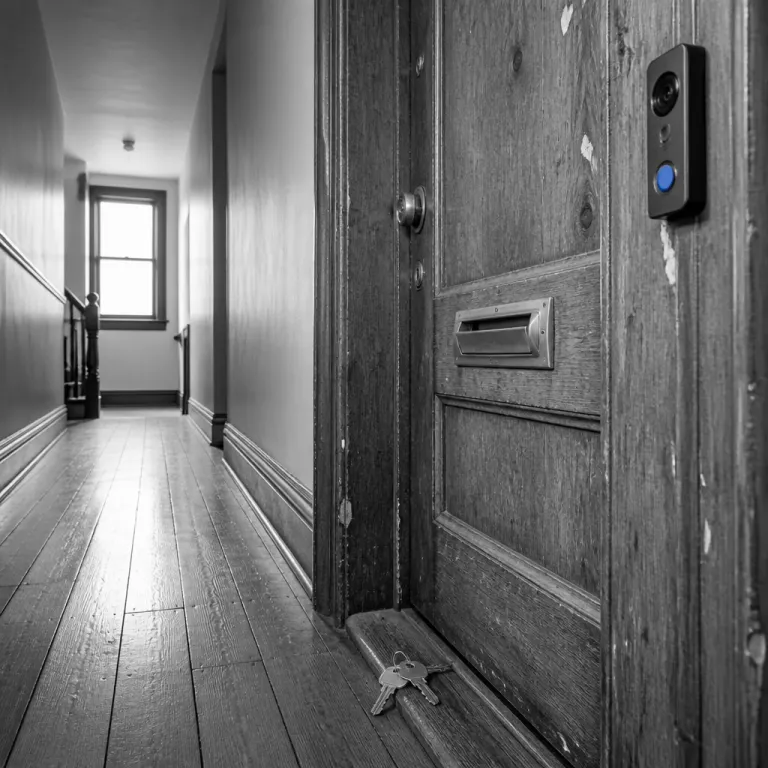
When a landlord installs Ring: who really owns the footage ?
When a landlord installs a Ring doorbell on a rental property, the core question is who controls the video and audio recordings. In most landlord–tenant relationships, the person who buys the device, creates the Ring account, and manages the subscription is treated as the practical owner of the data, even if the camera is mounted at the tenant’s front entry. That means a landlord in a multi-unit building can often review footage unless the lease, a written camera policy, or local privacy rules say otherwise.
For a renter, the first step is to check the lease and any separate house rules or property management handbook for explicit terms about cameras, smart locks, and data handling. Some landlords in the Bay Area and in dense San Francisco neighborhoods now include “smart surveillance” clauses that spell out who can access recordings, how long clips are stored, and whether internal data protection policies limit sharing with third parties. If your lease is silent, general privacy laws and tenant protections in your state fill the gap, but they rarely answer every detail about ownership, retention, and use of Ring footage.
Legal frameworks around doorbell cameras differ sharply between states, especially where biometric data and audio recording are involved. In California, for example, the California Consumer Privacy Act (CCPA), effective January 1, 2020, and its amendment, the California Privacy Rights Act (CPRA), which took full effect in 2023, treat many types of video and associated metadata as “personal information,” giving residents rights to know what data is collected, to request deletion in some circumstances, and to limit certain uses. Other states focus more on physical entry and less on digital surveillance, leaving tenants with fewer tools to challenge how landlords use smart security systems.
Control also depends on who created the Ring account and who pays for cloud storage. If the landlord sets up the account, invites the tenant as a shared user, and pays the subscription, the landlord usually controls deletion, sharing, and export of footage, which can affect what evidence exists in any later legal dispute. When the tenant instead buys the device, links it to a personal account, and moves it between rental properties, the renter typically controls the data, and the landlord’s rights are limited to reasonable rules about installation, building aesthetics, and avoiding damage.
In shared entry spaces and other common areas, privacy expectations become more complex because multiple tenants and visitors appear in the same clips. Landlords often argue that cameras in lobbies, mailrooms, and front gates are part of standard property management and real estate security, but tenant advocates counter that constant monitoring can chill normal use of hallways and shared entry points. Courts tend to balance the security benefits against the intrusion, asking whether the cameras are narrowly focused on doors and package areas or whether they sweep widely across windows, patios, or semi-private spaces.
For renters in San Francisco or elsewhere in the Bay Area, local ordinances and state privacy laws can add extra layers of protection on top of general landlord–tenant rules. Some California cities encourage or require landlords to give clear written notice before installing smart cameras, to limit audio recording in common areas, and to adopt internal policies that restrict sharing footage with law enforcement or commercial partners without a legal basis. Even where such notice is not strictly required, best practice for landlords is to treat Ring footage like other sensitive personal data and to respect evolving expectations around digital privacy in rental housing.
Across the rental property market, disputes over smart doorbells are moving from a niche concern to a mainstream legal issue. Real estate investors who operate multiple buildings now consult counsel about privacy laws and data protection before rolling out standardized surveillance packages. Tenants, in turn, are learning to treat camera clauses as seriously as rent, deposits, and early termination terms when evaluating any rental property.
Tenant privacy laws, state differences, and biometric data risks
Tenant privacy laws were not written with Ring doorbells in mind, yet they now govern how landlords can use these smart cameras. Most states recognize some form of privacy inside the home, while allowing more surveillance in common areas and at the exterior entry of a rental property. The friction comes when always-on cameras capture audio, visitors, and detailed patterns of comings and goings that feel more like tracking than simple security.
In California, the combination of consumer privacy laws and landlord–tenant statutes gives renters stronger tools to question how their data is used. Under the CCPA and CPRA, many California residents can request access to certain personal information, ask for deletion in defined situations, and opt out of some secondary uses that go beyond basic property management and safety. A tenant in San Francisco, for example, may be able to ask a large property management company what categories of video-related data it holds and how long it keeps them, especially if the landlord qualifies as a “business” under the statute.
Audio recording is a separate legal minefield that intersects with smart doorbell use. Some states, such as California, Massachusetts, and Pennsylvania, are “all-party consent” jurisdictions, meaning everyone in a conversation generally must consent to being recorded. Others, including New York and Texas, follow “one-party consent” rules, where only one participant needs to agree. This distinction can affect whether a landlord may lawfully use Ring audio captured at a shared entry in any legal proceeding and how tenants themselves may record interactions at the door.
Biometric data raises even sharper questions, especially as Ring and other smart camera platforms experiment with facial recognition features. A federal class action lawsuit filed in 2022 challenged Ring’s “Familiar Faces” functionality, alleging that the feature collects and analyzes facial recognition data without meaningful consent from everyone captured on camera. When such biometric identifiers are linked to specific apartments in a rental property, the stakes for data protection and privacy compliance become much higher, particularly in buildings with frequent visitors, delivery workers, and gig-economy couriers.
States like California and cities across the Bay Area are actively debating how biometric privacy rights should apply in real estate, particularly in dense urban environments like San Francisco. Some proposals would treat facial templates and similar identifiers as highly sensitive data, requiring explicit consent, short retention periods, and strict limits on sharing with landlords, property management companies, or law enforcement. For tenants, this could mean future rules that specifically restrict facial recognition in common areas and at shared entry points, even where ordinary video cameras remain allowed.
Landlords who operate multiple rental properties across different states face a compliance puzzle. A property management firm with buildings in California, Oregon, and Nevada might need separate policies for each jurisdiction, especially where privacy laws, biometric regulations, and audio consent rules diverge. Failing to adapt Ring usage to local law can expose landlords to legal claims from tenants, visitors, and even delivery workers regularly captured on cameras.
For a tenant, the practical move is to ask targeted questions rather than accept vague reassurances about security. Request written notice that explains where cameras are placed, what areas they cover, how long data is stored, and who can access footage, including any third-party monitoring services or corporate security teams. If your landlord references neighborhood alert tools or community safety features, ask whether clips from your building are ever shared outside the property management organization and under what conditions.
Quick audio-consent snapshot (illustrative only, laws change): California, Massachusetts, and Pennsylvania generally require consent from all parties to record a private conversation, while New York and Texas typically allow recording with the consent of just one participant. Tenants should confirm current rules in their own state before relying on audio captured by a smart doorbell.
Ultimately, disputes over smart doorbells sit at the intersection of traditional landlord–tenant law and modern data protection regimes. Tenants who understand both sets of rules are better positioned to negotiate fair terms, push back on overbroad surveillance, and choose rental properties that align with their comfort level around smart security. Landlords who ignore this shift risk not only legal exposure but also reputational damage in competitive real estate markets.
Shared access, app control, and how much your landlord can see
Once a Ring doorbell is installed on a rental property, the app’s shared-user settings quietly determine how much your landlord can see. If the landlord owns the account and adds the tenant as a shared user, the landlord usually keeps full administrative control, including the ability to view live feeds, review historical footage, change notification settings, and remove users. That structure can undermine privacy if the landlord uses the cameras to track daily routines rather than to secure the entry.
By contrast, when a tenant buys the device and links it to a personal Ring account, the power balance shifts. The renter can then choose whether to add the landlord as a shared user for limited property management needs, such as verifying package deliveries or coordinating maintenance at the entry. In that scenario, access to recordings, retention periods, and sharing with third parties are mediated by the tenant’s choices rather than by the building owner’s preferences.
Shared-user dynamics become especially sensitive in multi-tenant buildings where one Ring camera covers several doors or a common entry. A landlord might argue that this shared surveillance is necessary for security, but tenants may feel that constant monitoring of comings and goings infringes on their reasonable expectations of privacy. Clear written rules about who can access footage, under what circumstances, and for how long can prevent landlord–tenant disputes later.
Ring’s app allows fine-grained control over notifications, motion zones, and access levels, but many tenants never adjust these defaults. If your landlord installed the device, ask whether you can review the app settings together and whether you can limit audio recording, narrow the field of view to your own entry, or restrict who inside the property management company can log in. These small technical changes can significantly improve privacy without undermining the legitimate security interests of landlords and building staff.
Shared access also intersects with broader data protection questions, especially when landlords integrate Ring with other smart systems. Some real estate operators now link doorbell cameras to building-wide surveillance platforms, creating unified logs of entry events across multiple rental properties. Tenants should ask whether their footage is pooled in this way, who inside the organization can see it, and whether any third-party vendors process or analyze the data for security or marketing purposes.
Family sharing adds another layer of complexity for tenants who live with roommates or partners. When several people share a Ring account in a rental property, each user’s preferences about privacy, notifications, and data retention may differ, yet the landlord’s rights remain tied to the primary account holder. Internal household agreements about who can change settings, add users, or share clips can prevent conflict, especially when roommates move out or new people move in.
From a legal perspective, disputes in shared-access scenarios often turn on reasonable expectations. Courts may ask whether a tenant reasonably expected that every late-night entry or visitor would be logged and reviewable by the landlord, or whether the cameras were presented as a limited security measure. Tenants who document their understanding in writing, ideally in the lease or an addendum, are better positioned if disagreements arise later about surveillance overreach.
When you disagree with a landlord’s Ring, and renter friendly alternatives
Sometimes a tenant simply does not want a landlord-controlled Ring watching the front door, even if the device is marketed as a smart security upgrade. The conflict often surfaces when cameras point not only at the shared entry but also at a tenant’s windows, patio, or other semi-private spaces in or near the rental property. In those cases, the landlord’s claimed need for surveillance collides directly with the renter’s interest in privacy and quiet enjoyment.
If you are uncomfortable, start by documenting exactly what the cameras see and how they affect your daily life. Take screenshots from the app, note whether audio is recorded, and record how often motion alerts trigger as you move in and out of the property. Then raise the issue in writing with the landlord or property management company, referencing any relevant privacy laws, local ordinances, or tenant rights in your state.
Negotiation is often more effective than confrontation, especially in tight rental markets. You might propose repositioning the cameras to focus strictly on the entry, disabling audio recording, masking neighboring doors, or shortening the data retention period to reduce the accumulation of sensitive information. Some landlords will agree to give tenants more control over app settings or to adopt written data protection policies that limit how footage is used beyond basic security and building maintenance.
When landlords refuse to adjust, tenants can explore legal options through local tenant rights organizations or housing clinics. In California and particularly in cities like San Francisco, privacy advocates may point to state consumer privacy laws, anti-harassment rules, and protections for quiet enjoyment as tools to challenge overbroad surveillance. Elsewhere, general landlord–tenant law about unreasonable monitoring, retaliation, or constructive eviction may provide a basis to argue that constant recording at the entry violates the tenant’s rights.
Renter-friendly alternatives can also defuse conflict by shifting control to the tenant. Battery-powered Ring models, such as the Ring Battery Doorbell, allow installation without drilling into the property, and the tenant can take the device when moving between rental properties. Peephole-style devices, including newer options like the Peephole Cam 2K, fit directly into an existing door viewer, giving renters smart entry awareness without requiring permanent alterations in many buildings.
These tenant-owned devices change the balance because the renter controls the account, the data, and the sharing settings. Landlords still retain rights to protect the physical property and to set reasonable rules about alterations, but they no longer have direct access to footage unless the tenant grants it. For many renters, this arrangement feels more respectful of privacy while still delivering the practical benefits of smart surveillance.
Across the real estate sector, landlords who embrace transparent policies about cameras, data, and tenant rights are finding it easier to attract and retain renters. Clear written notice, reasonable limits on surveillance in common areas, and respect for privacy laws are no longer optional extras in competitive rental markets. For tenants, understanding how smart doorbells intersect with housing law is the key to choosing not just a rental property, but a living environment where security and dignity can coexist.
Key figures on Ring, surveillance, and tenant privacy
- In a survey published by the Pew Research Center in 2019, around half of U.S. adults reported feeling concerned about the amount of data collected by smart home devices, highlighting why privacy questions around Ring and similar systems now influence rental decisions as much as rent levels or location.
- California’s Consumer Privacy Act, passed in 2018 and effective from 2020, and its later amendments created one of the strongest state-level privacy laws in the United States, giving many tenants in California more leverage to question how landlords and property management firms handle Ring footage and related personal data.
- Studies of urban rental markets show that buildings with visible security cameras in common areas can reduce certain property crimes, yet tenant advocacy groups in cities like San Francisco and across the Bay Area report rising complaints about overbroad surveillance that tracks daily routines rather than just securing the entry.
- Industry reports on real estate technology adoption indicate that a growing share of new rental properties now include some form of smart entry or camera system, which means landlord–tenant disputes about privacy rights and data protection are likely to increase as these systems become standard amenities.
- Legal aid organizations in several states have documented a steady rise in tenant inquiries about cameras, surveillance, and privacy laws over recent years, suggesting that awareness of digital monitoring in rental housing is spreading even among first-time renters.
Quick tenant checklist for Ring and smart cameras
- Ask who owns the device and the account, and who pays for cloud storage.
- Request a written description of camera locations, audio settings, and retention periods.
- Confirm whether your state is a one-party or all-party consent jurisdiction for audio.
- In California, ask whether the landlord is a CCPA/CPRA “business” and how you can exercise access or deletion rights.
- Document any agreement about repositioning cameras, limiting audio, or restricting landlord access in a lease clause or addendum.
Sample lease clause language (for discussion with a lawyer or tenant counselor): “Landlord may install exterior security cameras focused on common entry points. Cameras will not be directed into the interior of the Premises or onto windows, balconies, or patios in a manner that unreasonably intrudes on Tenant’s privacy. Except in emergencies or as required by law, Landlord will access stored footage only for legitimate security, maintenance, or legal purposes and will retain footage no longer than thirty (30) days unless preservation is reasonably necessary for an investigation, insurance claim, or legal proceeding.”