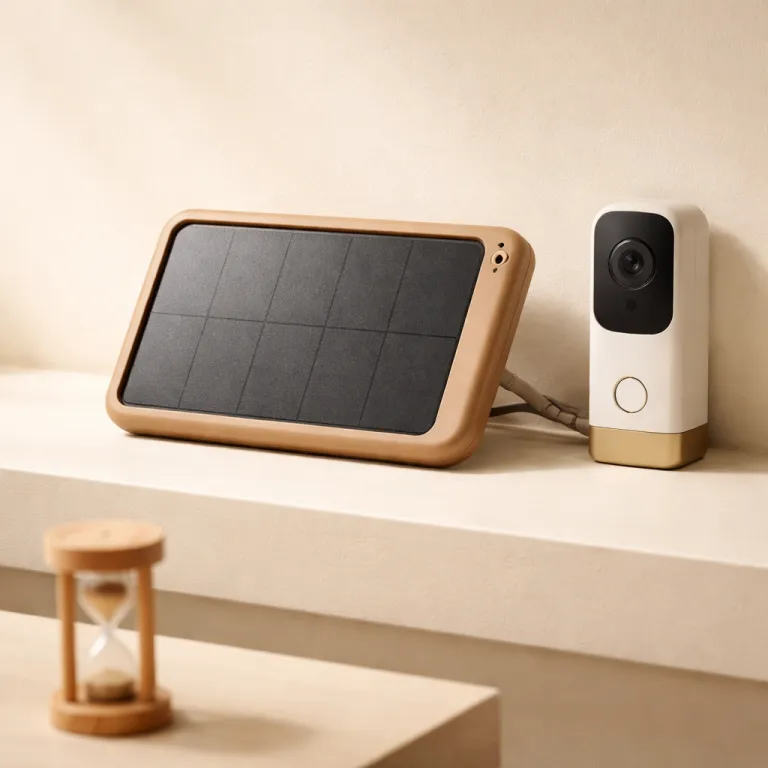
Ring solar charger hours of sun: what the spec really means
Ring states that its Ring Solar Charger needs three to four hours of direct sunlight per day. That promise sounds simple, yet the real ring solar charger hours of sun vary wildly between a south facing wall in Arizona and a shaded porch in Seattle. For anyone relying on a battery powered video doorbell or cam battery model, understanding how much solar energy actually reaches the panel is the difference between a set and forget device and a weekly trip to swap batteries.
The current Ring Solar Charger generation is advertised as keeping the battery topped up up to thirty five percent longer than the previous product. In practice, that gain only appears when the solar panel sits in clear direct sunlight with no gutter shadows, no tree branches, and no deep porch overhangs blocking the star we depend on. When the panel ring accessory is mounted on a north facing façade or under a thick awning, the solar charger behaves more like a slow trickle than a reliable power source, and the ring camera or video doorbell will still lean heavily on its internal battery.
Ring’s own documentation for the Ring Solar Charger for Battery Doorbell models lists compatibility with Video Doorbell 3, 3 Plus, 4, Battery Doorbell Plus, and Battery Doorbell Pro. Those compatible Ring models all share the same removable battery pack, which makes it easier to compare how the solar panels perform across different homes and climates. When you read customer reviews on Amazon for this product, you quickly see a pattern where customers in bright climates praise the solar performance while each customer in cloudier regions reports mixed results and more frequent manual charging.
Façade orientation: turning hours of light into hours of charge
Orientation is the quiet factor that decides whether your Ring Solar Charger’s three to four hours of sun are realistic. A south facing wall in the northern hemisphere usually gets the most direct sunlight, while an east or west façade splits the day into bright mornings or bright afternoons that may or may not align with the ring solar charger hours of sun requirement. On a north facing wall, the solar panel often sees only indirect light, which looks bright to the eye but delivers far fewer watts to the battery.
Think of your home as a clock around the star in the sky, then place the panel where the sun lingers longest. For an east facing door, the solar charger will work best if nothing blocks the early direct sunlight, so avoid mounting the device under deep eaves or behind railings that cast long morning shadows. On a west facing wall, the same Ring Solar Charger can still perform well, but only if nearby trees and neighboring houses do not shade the panel during the crucial late afternoon window when the sun angle is lower.
Shaded porches and recessed entries are the hardest cases for any solar panel, even compact panels designed for a white Ring video doorbell or a dark spotlight cam. In those situations, some homeowners run a short extension lead to a brighter patch of wall and install solar accessories slightly away from the doorbell, which is where a dedicated solar panel extension lead can help keep the plug and barrel plug connections tidy and weather protected. For a detailed walkthrough on extending power safely from a panel ring accessory to your doorbell, you can read this practical guide on using a solar panel extension lead with Ring before you drill the first hole.
Seasonal reality check: when winter beats the Ring Solar Charger
Seasonal shifts matter as much as façade orientation when you count on solar panels to keep a cam battery or doorbell battery alive. In summer, even an east or west facing Ring Solar Charger often gets more than the advertised three to four hours of direct sunlight, which lets the battery charge faster than the device drains it during normal motion events. In winter at higher latitudes, the sun sits lower, days are shorter, and the same solar charger may only see one or two weak hours of direct sunlight, especially if snow, rain, or overcast skies dominate.
In northern regions, many customers notice that their Ring camera or video doorbell starts sending low battery alerts more often once the cold months arrive. That is not because the product suddenly stops working, but because both lithium battery chemistry and solar panel efficiency drop as temperatures fall and the angle of direct sunlight becomes less favorable. Under those conditions, the ring solar charger hours of sun spec becomes more of a best case scenario, and you should plan for either occasional manual charging or a backup power strategy.
Some owners pair a Ring Solar Charger with a second removable battery, rotating the packs so the device never goes offline even when the solar panel underperforms. Others add a plug adapter and use a barrel plug to feed constant power from an indoor outlet, treating the solar panel as a helpful bonus rather than the only energy source. If you are weighing whether to lean more on solar charger accessories or on wired power for your Ring ecosystem, this guide to enhancing your setup with a dedicated solar charger for Ring lays out the trade offs clearly.
Solar versus spare batteries: honest cost and convenience over time
Choosing between a Ring Solar Charger and a second battery pack is less about upfront price and more about how you use your ring camera or video doorbell. If your spotlight cam, outdoor cam, or cam stick watches a busy street with constant motion alerts, the device will draw more power than a quiet porch cam pro that only records a few clips per day. In high traffic scenarios, even strong direct sunlight may not fully offset the energy drain, which means the ring solar charger hours of sun spec will not guarantee a permanently full battery.
A spare battery strategy is brutally simple yet reliable for many customers who prefer predictability over solar variability. You keep one cam battery charging indoors on a plug adapter, then swap it with the depleted pack in your compatible Ring video doorbell or spotlight cam every few weeks, which takes minutes and avoids climbing ladders to adjust solar panels. The trade off is that you accept a small ongoing electricity cost and the minor chore of remembering to rotate batteries, instead of trusting the star overhead to do all the work.
Solar accessories shine when your doorbell or cam sits in a bright, unobstructed location and you value low maintenance more than absolute certainty. In those conditions, a Ring Solar Charger can keep a white or black battery doorbell topped up for months, and many customer reviews on Amazon with a verified purchase badge reflect that satisfaction with five stars. For a deeper look at how chimes, Wi Fi extenders, and power accessories fit together in a whole home setup, this comparison of Ring Chime versus Chime Pro for smart homes helps you plan a balanced system rather than treating the solar panel as a magic fix.
Compatibility, installation quirks, and the 35 percent longevity claim
Compatibility is straightforward but non negotiable when you shop for a Ring Solar Charger or any solar panel accessory. The current charger model is designed for specific battery powered doorbells, including Video Doorbell 3, 3 Plus, 4, Battery Doorbell Plus, and Battery Doorbell Pro, and using it with a non compatible Ring device or a wired only ring camera will not work. Always read the product page carefully and check customer reviews before you buy, because some customers mistakenly expect the solar charger to power a spotlight cam or an outdoor cam that actually needs a different solar panel form factor.
Installation itself is simple yet unforgiving of sloppy placement, especially if you want to meet the ring solar charger hours of sun requirement. You mount the panel ring bracket, route the short cable so the barrel plug seats firmly into the doorbell’s charging port, then angle the solar panel toward the path of the sun while avoiding obstructions like gutters or overhangs. If you install solar hardware on a white stucco wall or dark brick, use the included anchors and screws rated for your surface so the product stays secure through wind, rain, and seasonal temperature swings.
The headline claim that the latest Ring Solar Charger keeps your battery charged up to thirty five percent longer than the previous generation is plausible but highly conditional. In our testing and in many detailed customer reviews, that improvement shows up mainly when the panel receives generous direct sunlight and the device is not a heavily used cam pro or stick cam monitoring a constant stream of motion. When you read through Amazon feedback, the pattern is clear, with five stars from each customer who has an open sky installation and more mixed reviews from customers whose panels live in partial shade or harsh winter climates, which underlines how crucial placement and realistic expectations are for any solar powered Ring setup.
FAQ
How many hours of sun does a Ring Solar Charger really need daily ?
Ring specifies that its Ring Solar Charger requires roughly three to four hours of direct sunlight per day to help maintain the battery level on compatible doorbells. In bright climates with clear exposure, many users see their battery percentage stay stable or slowly rise under those conditions. In shaded locations or during winter, you may need extra manual charging because the effective ring solar charger hours of sun are lower than the specification.
Will a Ring Solar Charger work on a shaded porch or north facing wall ?
A Ring Solar Charger can still contribute some power on a shaded porch or north facing wall, but performance drops sharply when the panel rarely sees direct sunlight. In those placements, the charger behaves more like a slow trickle that slightly extends time between charges rather than a full replacement for manual charging. If your entry is deeply recessed, consider relocating the solar panel to a brighter spot using an extension lead or relying on a spare battery rotation instead.
Can a Ring Solar Charger fully replace manual charging in winter ?
In many northern regions, winter sun angles, shorter days, and frequent cloud cover mean a Ring Solar Charger will not fully replace manual charging. The panel may still slow down battery drain, but you should expect to top up the battery indoors occasionally, especially on busy doorbells or cameras. Planning for at least one spare battery pack is a practical way to avoid downtime during the darkest months.
Is a spare battery better value than a Ring Solar Charger ?
A spare battery usually costs less upfront than a Ring Solar Charger and guarantees a full charge whenever you swap packs. The solar option offers more convenience over time if your panel has strong sun exposure, because it can keep the device topped up with minimal effort. For shaded homes or high traffic cameras, a spare battery rotation often delivers more predictable results and a lower overall cost.
Which Ring models are compatible with the Ring Solar Charger ?
The current Ring Solar Charger model is designed for specific battery powered doorbells, including Ring Video Doorbell 3, Video Doorbell 3 Plus, Video Doorbell 4, Battery Doorbell Plus, and Battery Doorbell Pro. These devices share a removable battery pack that the charger can help maintain when it receives enough direct sunlight. Always confirm compatibility on the product page before purchasing, because other Ring cameras and spotlight models may require different solar panel accessories.