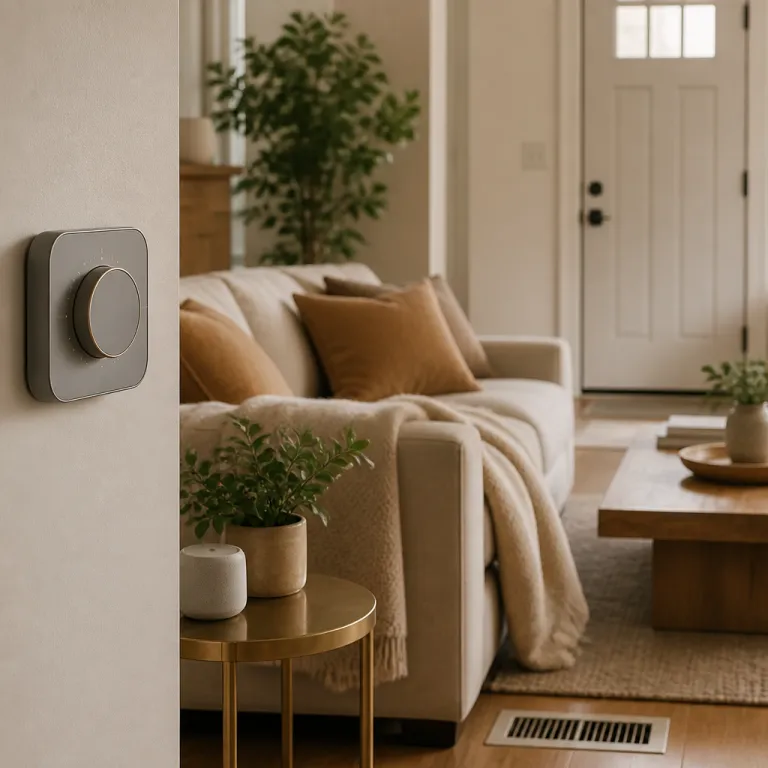
From ring doorbell to ring thermostat strategy in the smart home
Many households start with a Ring doorbell and only later think about a ring thermostat strategy. As the smart home grows, the same people realise that linking a thermostat, smart lighting, and a security device into one ecosystem will change how they manage comfort and safety every day. A carefully planned approach to thermostats and smart thermostats turns a simple Ring Alarm setup into a coordinated home platform.
When you already use the Ring app to check your doorbell, adding thermostat-style control inside the same interface feels natural. The app can become a central hub where you tap to adjust temperature, skim customer reviews of each product, and see which device is online or offline. This shift from a single Ring device to a family of thermostats and smart thermostat options is where serious energy savings and better temperature control begin.
People often ask whether a Honeywell thermostat or Honeywell Pro smart thermostat will work with their existing Ring Alarm system. The answer depends on whether the device is compatible with the Ring app, works with Alexa, and can talk to services such as Google Assistant or an energy provider portal. Before buying any product from Amazon or another retailer, you should check whether the thermostat, smart thermostat, or wider smart thermostats range is clearly marked as ENERGY STAR certified and able to integrate with your preferred app, Alexa, or Google Assistant ecosystem.
Once you understand the basics, you can compare a thermostat ring style setup with other brands that offer similar temperature control. Some Amazon smart bundles combine a Ring doorbell, a compatible thermostat, and a Pro Wave hub that links everything to your router. These kits usually highlight features such as professional installation, app-based control, Alexa voice commands, and ENERGY STAR certified performance that will reduce wasted energy over time.
How apps, voice assistants, and ring thermostat control work together
The real power of any ring thermostat approach lies in the software that connects it all. A modern smart thermostat is not just a wall-mounted device; it is a connected product that relies on the Ring app, the Alexa app, or another control app to manage schedules and scenes. When these apps are set up correctly, they will let you adjust temperature from anywhere, link your Ring Alarm to heating rules, and automate temperature control based on whether someone has pressed the doorbell or triggered a motion alert.
For many users, the Alexa app and the Google Assistant app become the main way to talk to their thermostats. You can say that a Honeywell thermostat works with Alexa when you can use control Alexa commands such as asking for the current temperature or telling the system to raise it by two degrees Celsius. The same smart thermostats often integrate with Google Assistant so that a quick voice request will change the settings without needing to tap the screen of the app Alexa interface on your phone.
Ring has been expanding its software ecosystem beyond security, and that affects how a thermostat ring strategy fits into the home. A recent analysis of the Ring Appstore vision explained how turning the doorbell into a platform could reshape home security and automation, and you can read more about this in an article on the Ring Appstore platform for home security. As this platform grows, it becomes easier for a smart thermostat, a Pro Wave bridge, and other devices to share data, which will help your energy provider offer better tariffs and allow the Ring app to show more detailed ENERGY STAR style insights.
When you compare apps, pay attention to how quickly each one responds when you tap a control. Some cheaper thermostats feel slow, while a well-designed Honeywell or Honeywell Pro model will usually update the device within a second or two. Fast feedback, clear icons, and reliable links to the Alexa app or Google Assistant are not luxuries; they are essential for a ring thermostat setup that you can trust every day. If you notice long delays, frequent disconnections, or scenes that fail to run, treat those as early troubleshooting signals that may point to Wi-Fi coverage gaps, outdated firmware, or a misconfigured skill in the Alexa or Google Assistant account.
Professional installation versus DIY for thermostat ring integrations
Connecting a thermostat to an existing Ring Alarm and doorbell system raises a practical question about installation. Many people are comfortable adding a battery-powered Ring camera but hesitate when they see the wiring behind an old thermostat on the wall. At that point, choosing between professional installation and a careful do-it-yourself approach becomes a key decision that will affect safety, warranty coverage, and long-term reliability.
Most smart thermostat manufacturers, including Honeywell and Honeywell Pro installers, offer clear wiring diagrams that show which cable goes to which terminal. If your current thermostats use only two thin wires and your boiler or heat pump is older, a professional will often be the safer choice because they can add a Pro Wave bridge or extra relay where needed. Professional installation also helps when you want the thermostat ring integration to trigger heating when the Ring Alarm is disarmed or to lower temperature when the system is armed away.
Some Amazon smart bundles include vouchers for professional installation, which can be useful if you are replacing several thermostats at once. A trained professional can check that each device is ENERGY STAR certified, that the Ring app recognises every thermostat, and that the Alexa app and Google Assistant both see the new product correctly. This level of care reduces the risk that a mis-wired Honeywell unit will short a circuit or that a smart thermostat will fail to respond when you tap a command in the app.
Garage and outbuilding heating often complicate matters, especially when you already use a smart opener. A detailed guide on how a Ring garage door opener transforms smart garage security and control shows how closely access control and temperature control can be linked in these spaces, and you can explore that in the section on smart garage security and control. When you extend your ring thermostat strategy to such areas, a professional will usually need to confirm that the extra thermostats, Pro Wave modules, and other devices are correctly powered and safely enclosed.
Energy efficiency, Energy Star labels, and working with your energy provider
One of the strongest arguments for a ring thermostat approach is the potential for lower energy bills. A smart thermostat can learn your patterns, reduce heating when nobody is home, and pre-warm rooms before you arrive, which will cut wasted kilowatt hours over the heating season. When several smart thermostats work together under the Ring app or another central app, the system can fine-tune temperature control room by room instead of heating the entire home at once.
When you shop for a Honeywell thermostat or any other brand, the ENERGY STAR label is a quick way to judge efficiency. Devices that are ENERGY STAR certified have passed independent tests showing that they can reduce energy use compared with standard thermostats, especially when combined with features such as geofencing and adaptive schedules. Many Amazon smart listings highlight the number of stars in customer reviews alongside the ENERGY STAR logo, which helps you see both technical performance and real-world satisfaction at a glance.
Some energy provider programmes now offer rebates when you install a qualifying smart thermostat or a set of thermostats that can be controlled through an app. These programmes sometimes integrate directly with the Alexa app, Google Assistant, or the Ring app so that your energy provider can run demand response events, briefly lowering temperature in exchange for a bill credit. If you join such a scheme, make sure that your thermostat ring configuration still respects your comfort preferences and that you can override any automatic change with a quick tap or a simple control Alexa voice command.
Beyond rebates, the data from your smart thermostats can reveal patterns that you might otherwise miss. For example, you may notice that one device always calls for heat longer than others, which could signal poor insulation or a failing valve that will need attention. By combining ENERGY STAR certified hardware, a capable app Alexa interface, and clear reports from your energy provider, a ring thermostat strategy turns raw temperature readings into actionable insights.
Third party smart devices, ring alarm, and whole home scenarios
Once a thermostat is linked to your Ring Alarm and doorbell, the next step is to think about the wider smart home. A ring thermostat strategy works best when it coordinates with lighting, blinds, and other device categories rather than acting alone. This is where third party smart thermostats, Pro Wave bridges, and compatible sensors start to matter for anyone who wants a seamless experience.
Consider a scenario where the Ring Alarm is set to away mode and all doors are locked. In that case, your thermostats should automatically lower the temperature, while the smart thermostat in the main living area might switch to an energy-saving schedule that your energy provider recommends. When someone returns and disarms the Ring Alarm through the Ring app or the Alexa app, the thermostat ring configuration can raise the temperature again so that rooms feel comfortable by the time coats are off and lights are on.
Third party integrations also extend to platforms beyond Amazon smart ecosystems. Many Honeywell thermostat models work with Alexa and Google Assistant at the same time, which means you can use control Alexa commands in the kitchen and Google Assistant commands in a home office without changing any wiring. The key is to ensure that each device, from the smallest sensor to the main smart thermostats, appears correctly in the Ring app and that a single tap can still override any automation when needed.
Apple users often ask whether a ring thermostat strategy can coexist with HomeKit scenes. A detailed guide on integrating Ring doorbell with Apple HomeKit explains how bridges and unofficial workarounds can bring Ring devices into Apple-centred homes, and you can find that in the section on integrating Ring with Apple HomeKit. When you follow such an approach, you can create scenes where a single tap closes blinds, arms the Ring Alarm, and adjusts thermostats, even though the underlying products come from several different brands.
Evaluating products, customer reviews, and long term reliability
Choosing the right thermostat for a ring thermostat strategy means looking beyond glossy marketing claims. A serious buyer will compare technical specifications, check whether each product is ENERGY STAR certified, and read customer reviews that mention real-world temperature control performance. This process takes time, but it reduces the risk of ending up with thermostats that look smart on paper yet feel frustrating in daily use.
On Amazon and other retailers, you will often see a star rating next to each Honeywell thermostat or Honeywell Pro model. Pay attention not only to the average number of stars but also to how recent the reviews are and whether they mention the Ring app, the Alexa app, or Google Assistant compatibility. Comments that describe how quickly a device responds when you tap a command, how stable the Wi-Fi connection is, and whether the thermostat works with Alexa reliably are far more valuable than short one-line praise.
Long-term reliability also depends on software support. A smart thermostat that receives regular firmware updates through the app Alexa interface is more likely to stay secure and compatible with new features from your energy provider or from the Ring Alarm ecosystem. Before you commit, check whether the manufacturer offers clear support channels, whether professional installation partners are available in your area, and whether the device can still operate as a basic thermostat if the internet connection or the Ring app goes down.
Finally, think about how your needs might change over the next decade. If you plan to add more smart thermostats, a heat pump, or solar panels, a flexible thermostat ring configuration will adapt more easily than a closed system. By combining careful reading of customer reviews, attention to ENERGY STAR labels, and a realistic view of how you will use control Alexa or Google Assistant commands, you can choose a thermostat that will serve as a reliable part of your smart home rather than a short-lived gadget.
Key statistics on smart thermostats, energy savings, and adoption
- According to the United States Environmental Protection Agency, ENERGY STAR certified smart thermostats can deliver average heating and cooling savings of about 8% compared with standard programmable models, which translates into meaningful annual bill reductions for households with gas or electric heating. See the EPA’s ENERGY STAR smart thermostat savings methodology for details, which explains the sampling approach, baseline assumptions, and how the 8% figure is calculated across different climates.
- Market research from firms such as Statista shows that tens of millions of smart thermostats are now installed worldwide, with adoption growing steadily as more homes add smart speakers like Amazon Echo and Google Nest devices that work with Alexa and Google Assistant voice control. Recent Statista charts track this growth year by year and highlight how penetration is highest in regions where broadband and smart speaker ownership are already common.
- Studies by utilities participating in demand response programmes report that when customers allow their energy provider to make small, temporary temperature adjustments through connected thermostats, peak electricity demand during hot days can be reduced by 10% or more in participating regions. Many of these results are published in utility demand response pilot summaries that describe event frequency, average temperature setbacks, and the measured impact on grid load.
- Consumer surveys from organisations such as Consumer Reports indicate that reliability, ease of use in the app, and clear integration with existing platforms like the Ring app and the Alexa app rank higher in customer satisfaction than advanced automation features that are rarely used.
FAQ about ring thermostat strategies and smart home integration
Can I connect any smart thermostat to my Ring system ?
Not every smart thermostat will integrate directly with Ring, so you need to check whether the specific Honeywell thermostat or other brand supports the same protocols and platforms as your Ring Alarm and Ring doorbell. Many devices work with Alexa or Google Assistant but still rely on separate apps, which means they can coexist in the same home without being fully linked inside the Ring app. Always confirm compatibility on the manufacturer website before purchasing.
Do I need professional installation for a thermostat ring setup ?
If your existing wiring is simple and you are comfortable turning off power at the breaker, you may be able to install a basic smart thermostat yourself by following the instructions in the app Alexa or manufacturer guide. However, when multiple thermostats, heat pumps, or underfloor heating loops are involved, professional installation is strongly recommended to avoid damage and ensure safe operation. A professional can also verify that the device is ENERGY STAR certified and correctly linked to your Ring Alarm or other smart systems.
How much energy can a smart thermostat save in a typical home ?
Independent testing of ENERGY STAR certified smart thermostats suggests average savings of around 8% on heating and cooling costs compared with standard programmable thermostats, though actual results vary with climate, insulation, and user behaviour. Greater savings are possible when you combine features such as geofencing, occupancy detection, and integration with an energy provider demand response programme. Using the Ring app or Alexa app to monitor and adjust schedules regularly will help you reach the upper end of potential savings.
Will my smart thermostat still work if the internet goes down ?
Most modern thermostats, including many Honeywell thermostat models, are designed to keep basic temperature control running even when Wi-Fi or cloud services are unavailable. You will usually lose remote access through the Ring app, Alexa app, or Google Assistant, but you can still adjust settings directly on the device. Once the connection is restored, the thermostat will sync schedules and data back to the app.
Is it safe to share thermostat data with my energy provider ?
Utility demand response programmes and energy analytics services typically use aggregated and anonymised data to manage loads and offer recommendations, and they are subject to regional privacy regulations. Before enrolling, you should read the terms carefully to understand what information is shared, how long it is stored, and whether you can opt out later. If you are comfortable with those conditions, sharing data through your smart thermostat can unlock rebates and help stabilise the grid during peak demand events.