
Summary
Editor's rating
Is it worth the money once you factor in the subscription?
Looks, build, and how it fits on the door
Build, weather resistance and long‑term worries
Video, motion detection and night vision: solid but not magic
Wi‑Fi, app experience and Alexa integration
What you actually get and how it works day to day
Pros
- Always‑on wired power via plug‑in adaptor, no battery recharging hassle
- Clearer 2K video with a very useful tall 1:1 field of view for seeing people and parcels
- Radar‑based 3D Motion Detection reduces many false alerts once configured
Cons
- Ring subscription is basically required to get full value from the device
- Doorbell call and notifications have a noticeable delay of a few seconds
- Full retail price feels high, especially if you also buy a chime

Specifications
View full product page →| Brand | Ring |
A wired Ring doorbell that actually feels like an upgrade?
I’ve been using the Ring Wired Video Doorbell Plus (the newest gen, with the plug-in adaptor) for a few weeks now. Before this, I had a battery Ring doorbell and a cheap no-name Wi‑Fi cam by the door, so I kind of knew what to expect and what usually annoys me: laggy notifications, blurry faces, and batteries dying at the worst time. I bought this one mainly for the always‑on power and the 2K image, and also because I’m already stuck in the Ring ecosystem with a couple of cameras and an Echo Show.
In day‑to‑day use, it does what it’s supposed to do: I see who’s at the door, I can talk to them, and it records motion clips fairly reliably. It’s not perfect though. There’s still a bit of delay on notifications, the subscription isn’t cheap, and the whole “Retinal 2K” marketing is a bit oversold. It’s clearer than the older 1080p models, yes, but we’re not talking some huge leap where you can zoom like in a crime show and read every number plate from across the street.
What surprised me in a good way is the field of view and the radar‑based motion detection. The 1:1 aspect ratio and 140° x 140° view means I can see people from head to toe and also parcels left on the ground, which my older Ring couldn’t handle as well. The radar stuff helps cut down on cars triggering alerts every two minutes, once you spend a bit of time tuning it. So from a security and convenience point of view, it’s pretty solid.
Overall, my feeling after these weeks is: it’s a good wired doorbell if you’re already into Ring and Alexa, and you’re fine paying the subscription. If you hate subscriptions or expect totally instant alerts like a wired intercom, you’ll probably be a bit annoyed. It gets the job done, but there are a few trade‑offs you should know before buying.
Is it worth the money once you factor in the subscription?
On price, this is where things get a bit mixed. The full price around the 160 range feels slightly high to me for a doorbell, especially when you add in the cost of a Ring subscription to really make use of it. One of the Amazon reviewers got it for about 119 during a sale and said that felt reasonable but they wouldn’t pay the full 160. I’m in the same boat. At the lower promo price, the combo of 2K video, radar motion, and wired power feels like good value. At full price, it’s still decent, but not a bargain.
The real catch with value is that without a subscription, you lose most of what makes this doorbell interesting. No video history, no saving clips of suspicious activity or deliveries, and fewer smart alerts. So you’re basically committing to an ongoing cost if you want to get the full benefit. Compared to some cheaper brands that offer local storage or cheaper cloud plans, Ring is on the higher side, but it also has a more polished ecosystem and better Alexa integration. If you already have other Ring devices, adding one more actually improves value since one subscription can often cover multiple devices, depending on the plan you pick.
Another small point: the Ring Chime is sold separately and, for what it is, feels a bit overpriced. Personally, I’m fine just using phone notifications and Echo announcements, so I skipped the chime. If you have family members who don’t carry a phone all the time or you want a classic “doorbell sound” in the house, you’ll probably end up buying it, which adds even more to the bill. It works fine, but it’s not strictly necessary.
Overall, I’d say the value is pretty solid if you: 1) buy it on sale, 2) already use Ring or Alexa, and 3) accept the subscription as part of the package. If you’re starting from scratch and hate subscriptions, you can definitely find cheaper or more flexible options. This one is more for people who want a relatively polished, set‑and‑forget solution and are okay paying a bit more for that convenience.
Looks, build, and how it fits on the door
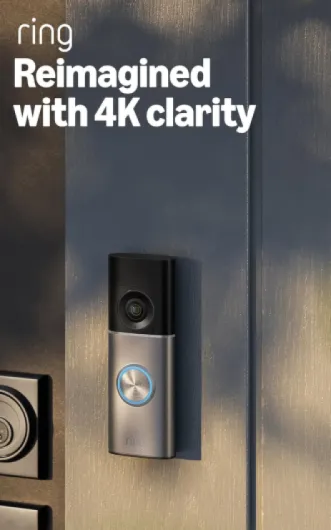
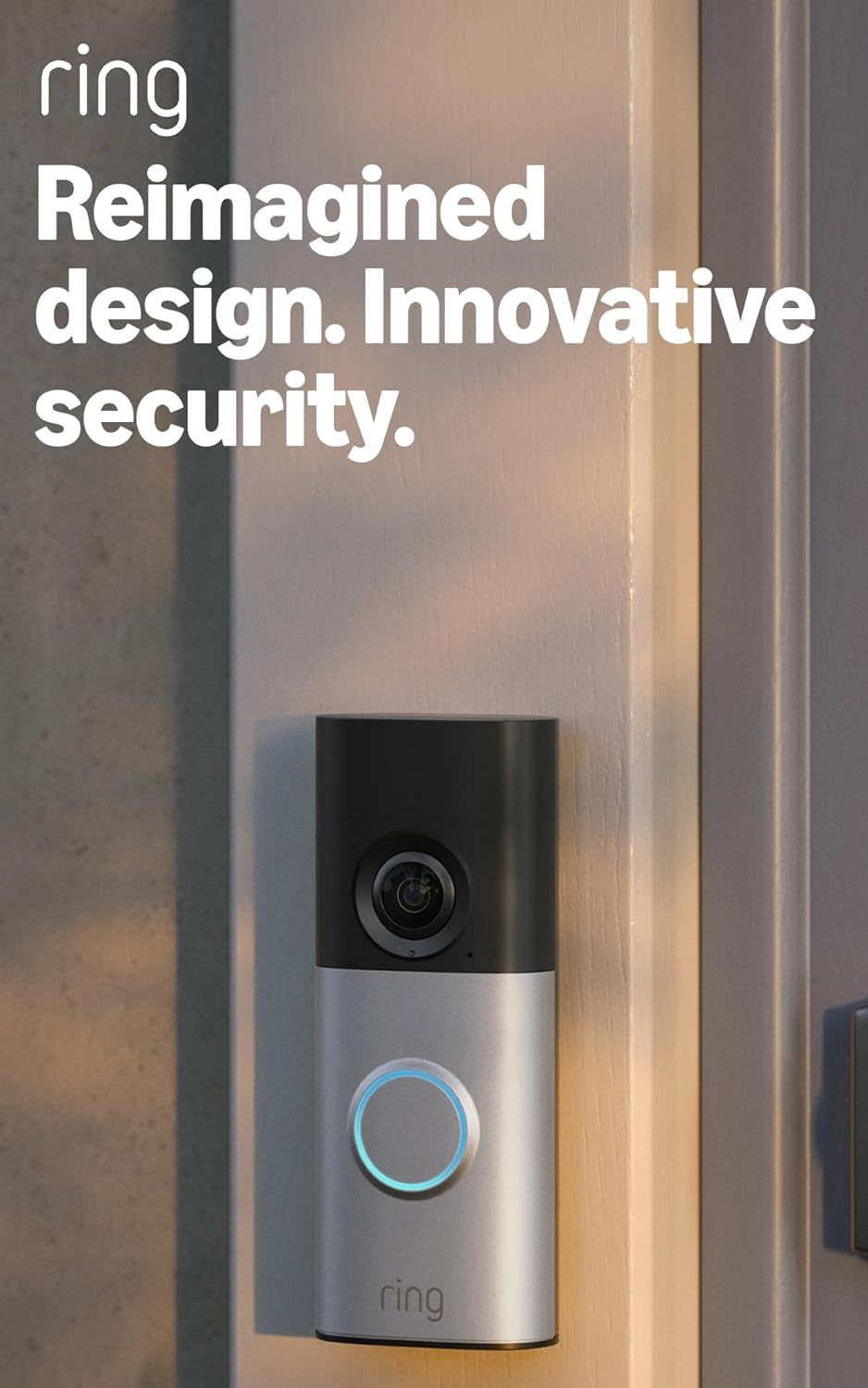
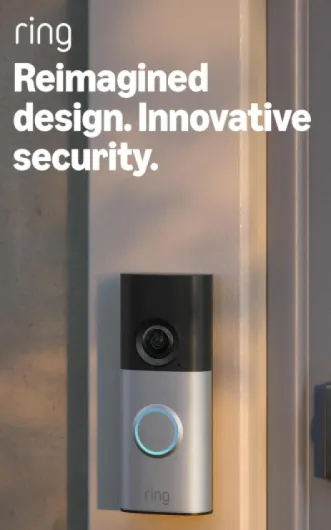
Design‑wise, the Wired Video Doorbell Plus is pretty typical Ring. Rectangular, Nickel Silver finish, camera up top and big button with an LED ring at the bottom. It’s not tiny, but it’s slimmer than some of the older battery models I’ve seen, and it doesn’t look cheap. On my door frame it takes up a noticeable space but doesn’t look ridiculous. If you already own Ring stuff, it basically matches the same style, so it blends in well.
The dimensions are around 13.26 cm tall, 5.36 cm wide, and 3 cm deep without the wall mount. In practice, it sits quite flat to the wall and doesn’t stick out like some chunky battery models. The mounting plate is simple: screw it into the wall, clip the doorbell on. There’s a release pin you need to remove it, so it’s not something you can just yank off easily, which is reassuring. There’s also Ring’s theft protection in the warranty, but obviously you don’t want to test that on purpose.
Build quality feels solid enough for outdoor use. It’s weather resistant and rated to work from about -20°C to 48.5°C. I haven’t hit those extremes, but it’s been through rain and some cold nights without any issue so far. The front plastic around the camera lens doesn’t feel fragile, and the button has a clear click and bright LED ring that’s hard to miss, even for visitors who aren’t used to video doorbells. The only thing that looks a bit basic is the plastic housing at the back, but once it’s mounted you don’t see that anyway.
One thing to keep in mind is the field of view and aspect ratio. The 140° x 140° and 1:1 ratio means the image is basically square, so you see a lot vertically as well as horizontally. In practice, that means I can see shoes and packages on the floor and also people’s faces even if they stand close. Compared to my old 16:9 Ring, this is a clear improvement in terms of what you can actually see around the door. It does make the image look a bit unusual if you’re used to normal wide video, but functionally it’s better for a doorbell.
Build, weather resistance and long‑term worries
I haven’t had this doorbell for years obviously, but based on the few weeks of use and my experience with other Ring products, I’d say the durability seems decent. It’s rated as weather resistant and designed to handle rain, cold, and heat within the -20°C to 48.5°C range. Mine’s been through several rainy days and some chilly nights without any fogging of the lens or weird behaviour. The button still clicks the same, and the LED ring is as bright as day one.
One thing to watch out for is direct sunlight. Ring mentions that long exposure to direct sun can warm the device up and affect performance. On a sunny day, mine did feel quite warm to the touch in the afternoon, but I didn’t notice any shutdowns or warnings in the app. Still, if your door is south‑facing and gets hammered by sun all day, I’d keep that in mind. Mounting it slightly under a porch or some sort of cover would probably help with both sun and rain.
The wired nature with the plug‑in adaptor actually helps durability in one sense: there’s no battery to degrade over time. With my old battery Ring, battery life slowly got worse, and recharging became a bit of a chore. Here, as long as the adaptor is plugged in and the cable isn’t damaged, it just stays on. The 6 m cable is long enough to route it in a way that avoids sharp bends or places where it can be easily yanked. The included clips help keep it tidy, though they’re nothing fancy.
There is a one‑year limited warranty plus theft protection, which is reassuring but not spectacular. Most issues with electronics like this show up in the first year anyway. What I do like is that Ring has been around for a while, and I still have older 1080p Ring cams running fine after several years outdoors. That doesn’t guarantee this model will be the same, but it gives some confidence. My only concern long‑term is more on the software side: if Ring changes subscription pricing or features later, you’re a bit locked in. Hardware‑wise, though, it feels like it should hold up fine with normal use.
Video, motion detection and night vision: solid but not magic
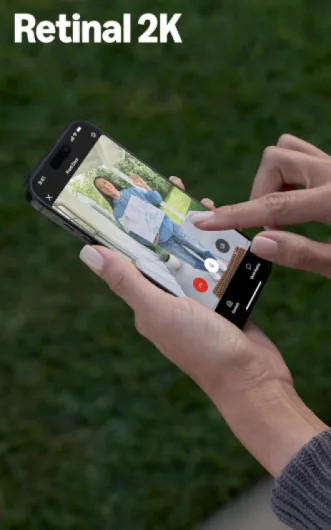
On the performance side, this is where I was the most curious. The big promise is Retinal 2K video, radar‑powered 3D Motion Detection, and better night vision. Compared to my old 1080p Ring, the image is definitely sharper in good daylight. Faces are clearer, and small details like logos on jackets or package labels are easier to read without zooming like crazy. That said, let’s be honest: it’s not some huge leap like going from SD to HD. When you zoom in, you still lose detail pretty quickly, and it’s definitely not on the same level as a real 4K camera, despite one reviewer confusing the naming.
Motion detection with the 3D Motion Detection and radar is actually one of the stronger points. You can set motion zones and also a distance where it starts tracking. After a bit of tweaking, I managed to cut out most of the false alerts from cars passing by while still catching people walking up to the door. Compared to my cheap camera that triggered on every leaf moving, this is a big quality‑of‑life improvement. It’s not perfect – occasionally it still fires on someone walking on the far side of the pavement – but overall, the alerts are much more relevant.
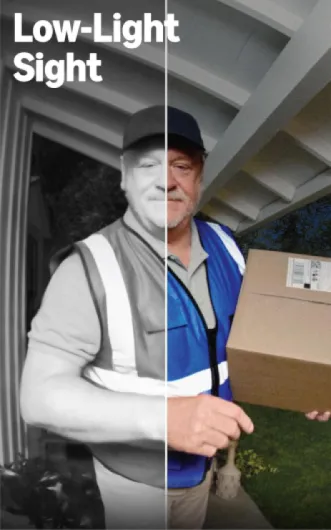
Night vision is where opinions seem to differ. On my side, the Adaptive Night Vision gives a clear monochrome image when it’s properly dark, and the detail is decent. Faces are recognizable, and movement is clear. In low light, the Low-Light Sight sometimes keeps things in colour, which looks nice and helps with some details. But it’s not consistent: depending on the street lighting and how the camera decides to handle exposure, it can flip to monochrome earlier than you’d expect. One Amazon reviewer mentioned the image going monochrome even with fairly good street lighting, and I can see how that would be annoying if you expect colour all the time at night.
As for latency and notifications, on my fibre connection (and decent Wi‑Fi) I usually get a motion alert within 1–3 seconds of someone entering the zone. Doorbell press notifications sometimes take a bit longer, and it’s true that a few times I’ve already reached the door before my phone “rings” with the call. This lines up with user reviews. It’s still usable, but don’t expect real‑time intercom speed. Live View loads in a couple of seconds most of the time; occasionally it spins for 5–6 seconds, which is annoying if you’re in a hurry. Overall: good performance for a consumer doorbell, but not flawless.
Wi‑Fi, app experience and Alexa integration
Connectivity has been fairly stable for me, but you do need a decent internet connection. Ring recommends at least 10 Mbps upload for 2K devices, and I’d say that’s realistic. On my line (around 100 Mbps up), the stream is smooth most of the time. When I tested it on a slower connection at a friend’s place, the video occasionally dropped quality and there were more delays. So if your Wi‑Fi is weak at the door or your upload is poor, you might not get the full benefit of the 2K video.
The doorbell supports Wi‑Fi 6 (802.11ax) and both 2.4 GHz and 5 GHz. I first set it up on 2.4 GHz because of range, then moved it to 5 GHz once I added a mesh node closer to the front door. On 5 GHz with good signal, Live View loads faster and the image seems more stable, so if you can, I’d recommend putting an access point fairly close to where the doorbell is. In terms of drops, I’ve had maybe one or two short disconnects over a couple of weeks, which isn’t dramatic.
The Ring app is still a bit cluttered but functional. You can tweak motion zones, set schedules, change notification tones, and choose whether you want people‑only alerts (with subscription). The timeline view to scroll back through events is handy when you’re trying to see exactly when a parcel was dropped off. The AI tagging (like “person detected”) is handy when it’s right, but not something I’d rely on 100%. Sometimes it misreads shadows or passing vehicles. It’s more like a filter than a security feature to me.
Integration with Alexa is one of the reasons to stick with Ring. On my Echo Show, I can say “show the front door” and the live video pops up after a couple of seconds. When someone rings, my Echo devices announce it and I can answer from the Echo Show with two‑way talk. This works fairly well in practice, though again there’s a slight delay. If you’re deep into Google Home instead of Alexa, this doorbell makes less sense since Ring is clearly tuned for Amazon’s ecosystem. Overall, the connectivity and app side are pretty solid, as long as your Wi‑Fi and internet are up to it.
What you actually get and how it works day to day
This version I’m using is the Wired Video Doorbell Plus with Plug-In Adapter. So no messing with existing doorbell wiring or transformers: you literally plug the 6 m cable into a normal indoor socket, run the cable through the wall or around a frame, and the doorbell stays powered 24/7. In the box you get the doorbell, the plug‑in adaptor, mounting screws, basic tools, cable clips, and the usual Ring sticker. No chime included – that’s separate, and honestly a bit overpriced for what it is.
Setup through the Ring app is pretty straightforward. I added it like my other Ring devices: scan the QR code, connect to Wi‑Fi (it supports dual‑band and Wi‑Fi 6), then set motion zones and link it to Alexa. It took me roughly 20–30 minutes in total including drilling and routing the cable in a neat way. From then on, it shows up in the app like any other Ring camera: you get Live View, Two‑Way Talk, history timeline, and motion settings. The 30‑day free trial of the Ring subscription kicks in automatically, which is handy to test if the cloud recording and person alerts are worth paying for.
In everyday use, the workflow is simple: someone walks up, you get a motion alert; someone presses the bell, your phone rings via the app and your Echo devices announce it if you’ve set that up. Tap the notification, and you’re in Live View with audio. There is a small delay – usually a couple of seconds on a decent connection. A few times I’ve already opened the door by the time the “call” screen pops up on my phone, which matches what some Amazon reviews mention. It’s not unusable, but if you expect zero delay like a wired intercom, that’s not what this is.
One important thing: without a Ring subscription, this doorbell is basically just a live camera with instant alerts. You can’t go back and rewatch events or store clips. With the plan, you can store up to 180 days of video, get people‑only alerts, and a few extra AI bits (like basic event descriptions). The AI descriptions are hit and miss: sometimes it correctly says “person at your door”, other times it mislabels things or gets confused. It’s a nice bonus but not something I’d rely on for anything serious. So the real product is kind of the doorbell + subscription combo, not just the hardware.
Pros
- Always‑on wired power via plug‑in adaptor, no battery recharging hassle
- Clearer 2K video with a very useful tall 1:1 field of view for seeing people and parcels
- Radar‑based 3D Motion Detection reduces many false alerts once configured
Cons
- Ring subscription is basically required to get full value from the device
- Doorbell call and notifications have a noticeable delay of a few seconds
- Full retail price feels high, especially if you also buy a chime
Conclusion
Editor's rating
After living with the Ring Wired Video Doorbell Plus for a while, my overall take is that it’s a good, no‑nonsense wired doorbell that does what most people need: clear enough video, reliable motion alerts once tuned, and the comfort of always‑on power. The 2K image is a step up from older 1080p Rings, the square field of view is genuinely useful for seeing parcels on the ground, and the radar‑based motion helps cut down on random alerts from traffic. It integrates nicely with Alexa and other Ring devices, so if you’re already in that ecosystem, it fits right in.
It’s not perfect though. Notifications and call alerts still have a few seconds of delay, so don’t expect instant intercom behaviour. Night vision is decent, but the colour/mono behaviour in low light isn’t always consistent and some users clearly find that annoying. And the value question really depends on your tolerance for subscriptions and whether you catch it on sale. Without a Ring plan, you lose video history, which in my opinion is half the point of having a video doorbell.
I’d recommend this to people who: already use Ring or Alexa, want a wired solution without touching their existing doorbell wiring, and are okay paying a monthly fee for cloud storage and smart alerts. If you’re on a tight budget, hate subscriptions, or want totally instant, hard‑wired intercom behaviour, I’d look at other brands or even a more basic wired doorbell. For most everyday use though – deliveries, visitors, and a bit of extra peace of mind – it gets the job done pretty well.