
Summary
Editor's rating
Value for money: good if you hate subscriptions, less good if you want plug‑and‑play
Design and build: compact and discreet, but not premium
Power and wiring: no battery, so know what you’re getting into
Build quality, weather resistance and long‑term feel
Video, motion detection and app: decent once tuned, clunky at first
What the EZVIZ DB1C actually offers in real life
Pros
- Local microSD storage up to 256 GB, so you can avoid monthly cloud fees
- Wired power means no batteries to charge and continuous recording
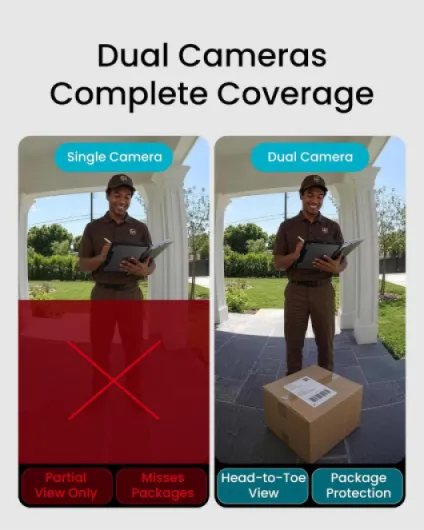
- Good 170° vertical field of view that clearly shows visitors and packages
Cons
- Installation and wiring can be confusing if you don’t already have a compatible doorbell setup
- App and documentation are clunky and don’t always match, making setup more painful than it should be

Specifications
View full product page →| Brand | EZVIZ |
A wired doorbell for people who hate subscriptions
I’ve been using the EZVIZ DB1C wired video doorbell for a few weeks now, and I’ll be honest: this thing is not the easiest product to get going, but once it’s up and running, it mostly just does its job. I wanted something that didn’t lock me into a monthly fee like Ring, and that could use my existing doorbell wiring. On paper, the DB1C ticks all those boxes: 1080p video, dual‑band Wi‑Fi, microSD slot up to 256 GB, and no forced subscription. In reality, it’s a bit more nuanced than the product page suggests.
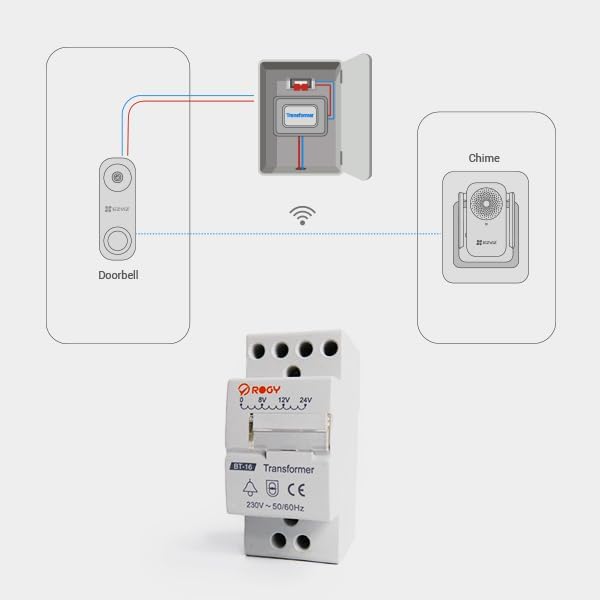
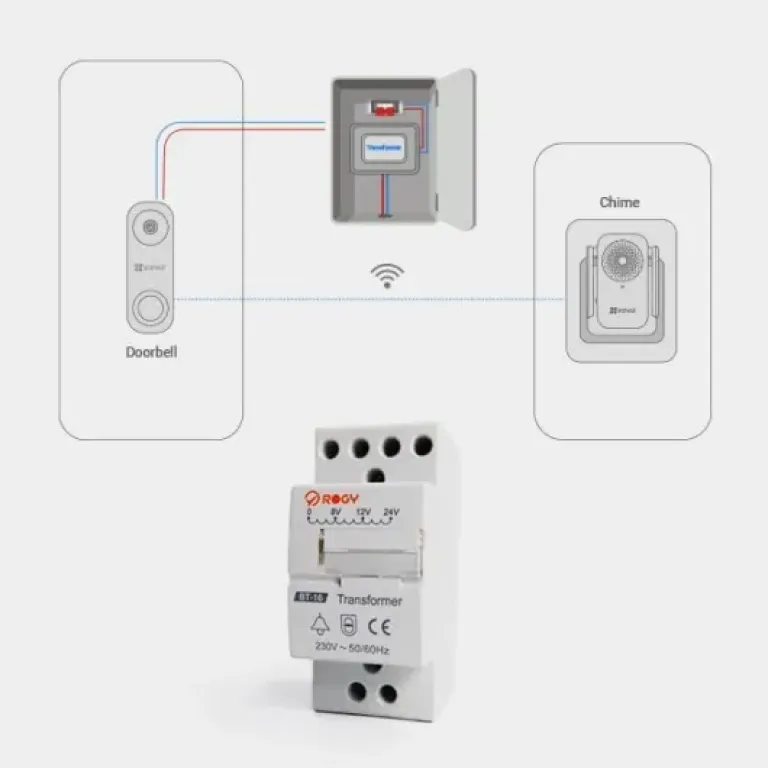
First thing to know: this is 100% a wired doorbell. No battery option, no quick stick-on install. If you don’t already have 12–24V doorbell wiring and a transformer, you’re either buying and fitting one or paying someone to do it. If you’re comfortable with basic electrics, it’s manageable. If not, you’ll probably find the process annoying and the documentation a bit vague. That’s the first big filter: this is not for people who want a 10‑minute setup.
Once installed, though, my experience has been mostly positive. The app is not the cleanest or most intuitive I’ve ever used, but after a bit of trial and error, it works: I get alerts, I can talk to people at the door, and I can check recordings from the SD card without paying a subscription. Compared to Ring or Nest, it feels a bit more "DIY" and less polished, but you’re also not being nagged constantly to pay for cloud.
If I sum it up: it’s a pretty solid wired doorbell for people who are okay fiddling a bit with setup and settings. If you want something super simple with perfect instructions and a slick app, you might get frustrated. If you mainly care about local storage, decent image quality, and not having to charge batteries, this one makes sense.
Value for money: good if you hate subscriptions, less good if you want plug‑and‑play
On the value side, the EZVIZ DB1C sits in a kind of middle ground. It’s usually cheaper than a Ring Pro once you factor in Ring’s subscription, but more expensive than the random no‑name doorbells on Amazon. The key point is this: if you actually use the local SD storage and avoid the cloud subscription, it becomes good value over time. I’m recording to a 128 GB card, and that gives me plenty of history without paying a monthly fee. If you compare that to Ring or Nest, which are basically half‑useless without a subscription, this is where the DB1C starts to look attractive.
Where the value takes a hit is the installation and learning curve. If you have to pay an electrician or a "pro installer" because the wiring or the app setup is confusing, you’re suddenly not saving much. The manual is honestly poor: it skips steps, doesn’t match the app screens, and doesn’t explain some weird behaviours (like the phone call routing complaint some users mentioned). If you’re tech‑savvy and comfortable with wiring diagrams, you’ll shrug and figure it out. If not, you’ll be annoyed and might regret not buying something more plug‑and‑play.
Compared to Ring, I’d say: Ring is easier, smoother, and the app is better, but you pay for it every month. The DB1C is more rough but cheaper in the long run if you rely on local storage. Compared to cheap off‑brand doorbells, the DB1C feels more trustworthy, with better encryption, a known manufacturer (Hikvision), and a more stable app, even if the UX is clunky. That matters if you care about where your video is going and how it’s stored.
So overall, I’d score the value as pretty good for people who are willing to tinker a bit and who want to avoid subscriptions. If you know you’ll end up paying someone to install it or you hate messing with apps and settings, the value drops and you might be better off with a simpler, maybe even battery‑powered option.
Design and build: compact and discreet, but not premium
Design-wise, the EZVIZ DB1C is pretty simple. It’s a slim vertical rectangle, about 12.8 x 4.6 x 1.9 cm, so it doesn’t look bulky on the door frame. There’s a big button at the bottom with a light ring around it and the camera and sensors up top. It’s not ugly, but it’s not something you’re going to admire either. It just looks like a modern doorbell camera, nothing more. The plastic feels decent but a bit on the light side; it doesn’t scream "high-end" but it also doesn’t feel like a cheap toy.
Installation from a physical point of view is straightforward: you screw the bracket to the wall or door frame, then the doorbell clips onto it and is secured with a small screw at the bottom. The kit includes a masonry drill bit and wall plugs, which is handy if you’re going into brick. One annoyance: the cover for the SD card slot is held by tiny grub screws, and the box doesn’t include the right screwdriver bit to open them. So you might find yourself digging through your toolbox or buying a precision screwdriver set just to insert the SD card. That’s the kind of detail that makes it feel a bit half-baked.
From a practical standpoint, the 170° vertical field of view is the best part of the design. You really do see a lot: tall people, kids, and parcels on the floor all in the same frame. My door is slightly recessed inside a cove, and the camera still manages to capture the entire porch and a good chunk of the front path. The button ring light is clear enough at night so visitors know where to press, and the doorbell itself is not too flashy, so it doesn’t wreck the look of the entrance.
In short, the design is functional and discreet. It won’t impress anyone, but it doesn’t look cheap either. The biggest gripe I have is the small hardware details (like the SD card cover screws) and the fact that for a product aimed at DIY users, they could have thought a bit more about including all the right tools and clearer markings. But once it’s on the wall, you stop thinking about the design and just use it.
Power and wiring: no battery, so know what you’re getting into
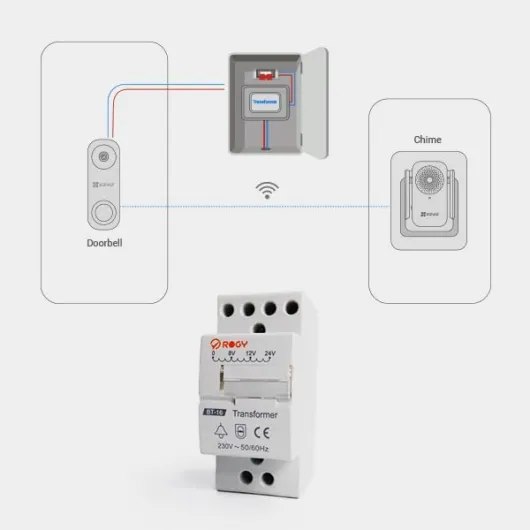
This section is basically about power, because there is no battery at all in the EZVIZ DB1C. It’s a hardwired unit that needs 12–24V from your existing doorbell transformer. If your house already has a classic wired doorbell with a transformer, you’re in luck: you can reuse that setup (with the included power kit) and it’s mostly just a matter of swapping the button for the camera. If you don’t have any of that, you’re looking at either hiring someone or installing a transformer yourself, which is not something everyone will be comfortable with.
In my case, I had an old wired bell, so I used the existing transformer. Connecting the two terminals on the back of the DB1C is straightforward electrically, but the documentation could be clearer. The manual is a bit vague, and if your current chime wiring is not standard, you might end up searching online or watching YouTube videos to figure it out. This is where some of the negative reviews make sense: the company doesn’t explain clearly enough that you really need to check your wiring before buying.
The upside of the wired setup is obvious once it’s done: no batteries to charge, no power saving modes, no downtime. The doorbell is always on, always recording, and you don’t have to climb a ladder every few months. Power consumption is low (it’s a 7 Wh unit), so it’s not going to blow your energy bill. It also worked fine through a few bad weather days; no random reboots or drop-outs due to power issues.
If you want a simple "stick it on the wall and charge once every few months" product, this isn’t it. If you’re comfortable with wiring or you already have a transformer and a wired chime, then the hardwired design is actually a plus. Just be very clear with yourself: this is not a battery doorbell, and the brand doesn’t make that painfully clear in the manual until you’ve already bought it.
Build quality, weather resistance and long‑term feel
In terms of durability, I’d say the DB1C feels decent for the price, but not bulletproof. The unit is light (around 100 g), and the casing is plastic, but the assembly seems tight and there are no obvious gaps around the lens or button. It’s rated IP65, which means it should handle rain and dust easily. Mine is fitted in a slightly sheltered cove, so it doesn’t get hammered by rain directly, but it has been through a few wet and windy days with no issues: no fogging on the lens, no moisture inside, no weird behaviour.
The button feels okay. It has a clear click and doesn’t feel mushy. That matters more than you’d think because guests are pressing that thing all the time. The LED ring still lights up properly, and there’s no sign of water getting in around the edges. The bracket holds the unit firmly; it doesn’t wobble when you press the button. The only part that worries me slightly long-term is again the tiny screws for the SD card cover. They’re easy to lose, and if you strip them, you’ll hate yourself when you need to change the card.
From a software point of view, the doorbell has been stable. It hasn’t crashed or needed a reset in the time I’ve used it. Firmware updates are done through the app and take a few minutes; I did one update and it went through without drama. That’s important because some cheaper brands have a habit of breaking things with updates. Here, it’s been uneventful, which is good.
Will it last for years on an exposed wall? Hard to say yet, but the combination of the IP65 rating and the fact that it’s from Hikvision (who at least know how to build security cameras) makes me reasonably confident. It doesn’t feel like a tank, but it also doesn’t feel fragile. I’d call it "solid enough for normal home use". If you’re in a very harsh climate (coastal salt, direct sun all day, heavy storms), I’d keep an eye on the plastic and the lens over time, but for a typical UK/European house, I don’t see any obvious red flags.
Video, motion detection and app: decent once tuned, clunky at first
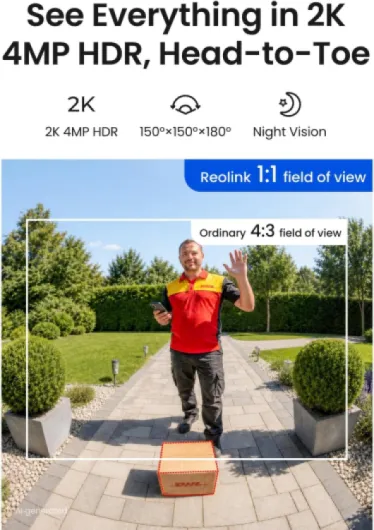
On the performance side, I’d describe the DB1C as "pretty solid once you’ve spent an evening swearing at the app." The video quality is good enough for a 1080p doorbell. During the day, faces are sharp, and I can read number plates of cars parked right in front of my house if I pause the video. The 170° vertical view is genuinely helpful; I can see parcels on the floor clearly. Night vision with the 5 m IR range is okay: faces are recognisable at the door, and the area immediately in front of the house is visible. Don’t expect miracles if your street is very dark, but for identifying who rang at 11 pm, it’s fine.
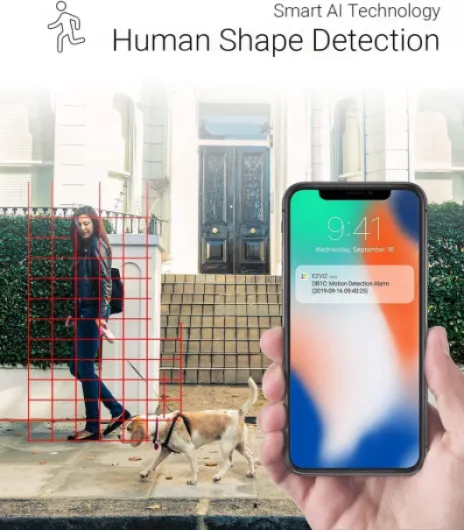
The motion detection is where you’ll probably spend the most time tweaking. By default, it’s a bit too sensitive, especially if you’re near a road or a busy path. The "human detection" AI helps filter out some false alerts from cars and trees, but it’s not perfect. I had to lower the sensitivity and adjust the detection area in the app to stop getting pinged every time a car drove past. Once tuned, it’s usable: I mostly get alerts when someone walks up to the door or lingers at the gate, which is what I want. You can also turn off the human-only filter if you actually want to see cars or animals.
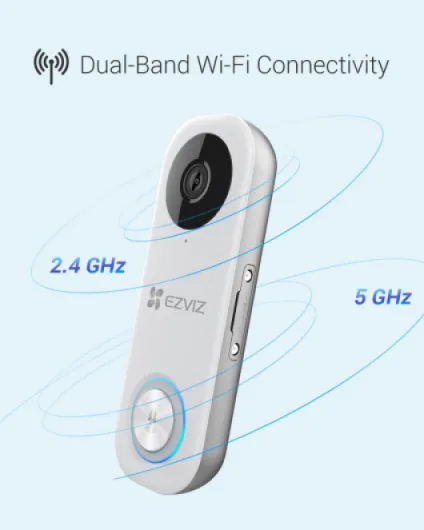
The app is the weak spot. It works, but it feels messy. The instructions in the paper manual don’t always match what you see on the screen, and some options are buried in odd menus. Initial setup on Wi‑Fi (I tried both 2.4 and 5 GHz) took a couple of attempts; the QR code pairing is a bit temperamental. Once it’s connected, the live view loads reasonably fast on my home network and is still acceptable over 4G. Two-way audio is usable: there’s a slight delay, but I can talk to delivery drivers without shouting. It’s not studio quality, but they hear me and I hear them.
In everyday use, when someone rings, my phone gets the call notification within a second or two. Answering and seeing the video works most of the time, with the occasional freeze that clears after a few seconds. Compared to Ring, the experience feels a bit rougher, but again, you’re not paying a monthly fee. If you’re patient enough to adjust sensitivity, zones, and notifications, the performance is good enough for home use. If you’re expecting perfect AI detection and a super polished app, you’ll probably be disappointed.
What the EZVIZ DB1C actually offers in real life
On paper the EZVIZ DB1C looks loaded: 1080p video, 170° vertical field of view, human detection, 2.4/5 GHz Wi‑Fi, local microSD up to 256 GB, IP65 weather rating, and compatibility with Alexa/Google Assistant. In practice, most of that checks out, but none of it feels particularly premium or fancy. It’s more like: it all works, but you’ll have to tweak a few things to get it how you like it. Out of the box, you get the doorbell, a mounting bracket, screws, a drill bit, and a power kit for the chime circuit. No chime is included; you either use your existing wired chime or buy their separate one.
The camera quality is fine for a 1080p doorbell. Faces are clear enough at normal door distance, and the vertical view is genuinely useful. I can see from the top of a tall visitor’s head down to packages on the ground. It’s not cinema quality, but for checking who rang and what they’re holding, it’s more than enough. Night vision with the IR LEDs is also decent. In my case, I can clearly see people at my door and the immediate area of the porch up to around the claimed 5 meters, as long as there isn’t a bright light shining directly into it.
The big selling point for me was local storage with no monthly fee. I stuck in a 128 GB microSD card (don’t go super cheap; the app gets fussy with low‑quality cards), set it to continuous recording plus motion alerts, and that’s been working reliably. The app lets you scrub through the timeline and jump to motion events. It’s not the smoothest interface, but it gets the job done. You can also subscribe to their cloud if you really want to, but the whole point for me was to avoid that.
Overall, the product is exactly what it says on the tin: a wired smart doorbell with local storage and dual‑band Wi‑Fi. The downside is that the whole ecosystem (app, documentation, menus) feels a bit rough around the edges compared to better‑known brands. If you’re okay with that and you want to avoid subscriptions, it’s a reasonable compromise.
Pros
- Local microSD storage up to 256 GB, so you can avoid monthly cloud fees
- Wired power means no batteries to charge and continuous recording
- Good 170° vertical field of view that clearly shows visitors and packages
Cons
- Installation and wiring can be confusing if you don’t already have a compatible doorbell setup
- App and documentation are clunky and don’t always match, making setup more painful than it should be
Conclusion
Editor's rating
The EZVIZ DB1C is a wired video doorbell that does what it promises once you’ve pushed through the rough setup and slightly messy app. The video quality is good enough, the 170° vertical view is genuinely handy, and the night vision is fine for normal home use. The big plus is the local microSD storage up to 256 GB, which lets you avoid monthly cloud fees entirely if you want. Combined with dual‑band Wi‑Fi and a weather‑resistant IP65 build, it ends up being a solid everyday solution for people who care more about function than polish.
Where it stumbles is user-friendliness. The paper manual is weak, some of the app screens don’t match the instructions, and the initial Wi‑Fi pairing and motion tuning can be frustrating. If you’re not comfortable with basic wiring or fiddling with settings, you may find the whole experience annoying, especially compared to something like Ring. There are also small design misses, like the tiny SD card cover screws and the lack of a proper tool for them, which make it feel less thought‑through than it could be.
I’d recommend the DB1C to someone who: already has a 12–24V wired doorbell, hates paying subscriptions, and doesn’t mind spending an evening tweaking motion zones and app settings. If you want something that your parents can install and use in 15 minutes without swearing, this is probably not it. For me, once everything was dialled in, it’s been reliable and low‑maintenance, and for that reason I’d say it’s a decent buy, just not a perfect one.