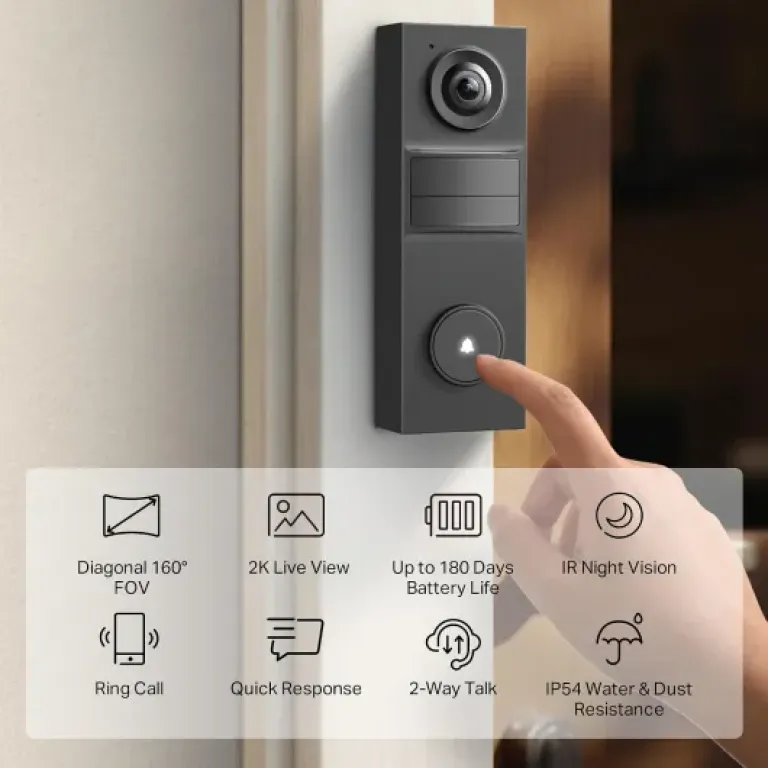

Summary
Editor's rating
Is the Tapo D205 worth the money?
Compact, discreet, and a bit basic
Battery life: what “up to 180 days” really looks like
Build quality and weather resistance over time
Video quality, detection, and app experience in real life
What you actually get with the Tapo D205
Pros
- 2K video and wide 160° view with clear person detection and decent night vision
- Local microSD storage and AI person detection with no mandatory subscription
- Compact, discreet design and relatively easy setup with a straightforward app
Cons
- Real-world battery life closer to 2–3 months than the advertised 180 days in many setups
- No chime or microSD card included, and bracket is slightly annoying for frequent recharging
- Performance heavily depends on having strong Wi‑Fi at the door, may require an extender

Specifications
View full product page →| Brand | Tapo |
A budget doorbell that actually makes sense
I’ve been using the Tapo D205 for a few weeks now, and I’ll be straight: I bought it because I was tired of doorbells that force you into subscriptions. I just wanted a camera on the door, clear picture, reliable alerts, and ideally no monthly fee. On paper, this one ticks a lot of those boxes: 2K video, battery powered, supports microSD, and works with Alexa/Google. So I gave it a shot.
Setup was done in about 15–20 minutes including drilling and messing with the wedge. The Tapo app walked me through everything step by step, so I never had to dig through a PDF. I already had a Tapo/Kasa account from other smart plugs, so connecting it was basically just adding another device. No weird pairing issues, it showed up in the app and on my phone notifications right away.
The first thing I noticed in daily use is that the person detection and notifications are actually usable. I’ve had other brands where the doorbell dings my phone every time a car passes or a tree moves. With the D205, once I set the activity zone and person-only alerts, it calmed down a lot. Not perfect, but way less spammy than some pricier models I tried.
Overall, the first impression is that this is a pretty solid mid-range doorbell: not fancy, not loaded with premium-feeling hardware, but it gets the job done. If you want something that just works and doesn’t trap you in subscriptions, it’s worth a look. If you want ultra-polished hardware and instant responses every single time, you might feel some of its limits.
Is the Tapo D205 worth the money?
From a value for money point of view, the Tapo D205 sits in a nice spot. It’s not the cheapest no-name doorbell out there, but it’s clearly cheaper than the big brands that basically force you into subscriptions. The key thing here is that you can run it with just a microSD card and still get person detection and proper recordings, without paying monthly. If you want cloud or hub storage, it’s there as an option, but you’re not locked into it.
Compared to something like Ring or Nest, you’re giving up some polish and ecosystem features, but you’re keeping your running costs much lower. The big win is: AI person detection and local recording without recurring fees. One user even mentioned pairing it with the Tapo H500 hub and a 1 TB drive to store a month of footage with zero subscription, which is a pretty decent setup if you want more capacity.
On the downside, there are compromises. You don’t get a chime in the box, so if you want a traditional indoor sound and not just phone notifications, that’s extra. The bracket design is a bit annoying if you recharge often. And you need solid Wi‑Fi or maybe a Wi‑Fi extender, which adds to the total cost if your router is far from the door. Also, if you plan to fully rely on cloud footage, the subscription cost can add up over time just like with other brands.
Overall, I’d say the value is pretty solid if your goal is: one-time purchase, microSD storage, and basic smart features with no ongoing fees. If you like everything super integrated with a premium ecosystem and don’t mind subscriptions, you might lean towards a different brand. But for most people who just want a competent, low-hassle doorbell that doesn’t bleed money every month, this one makes sense.
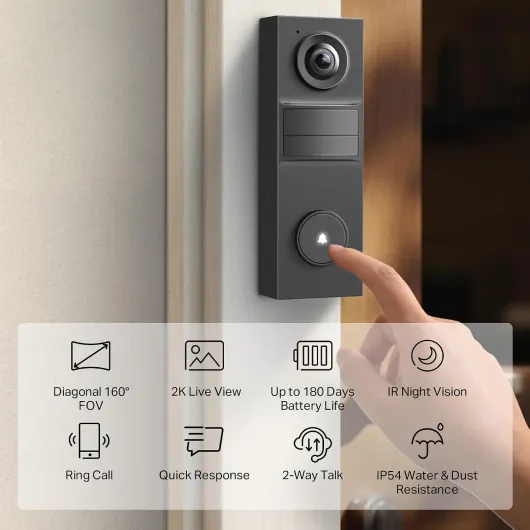
Compact, discreet, and a bit basic
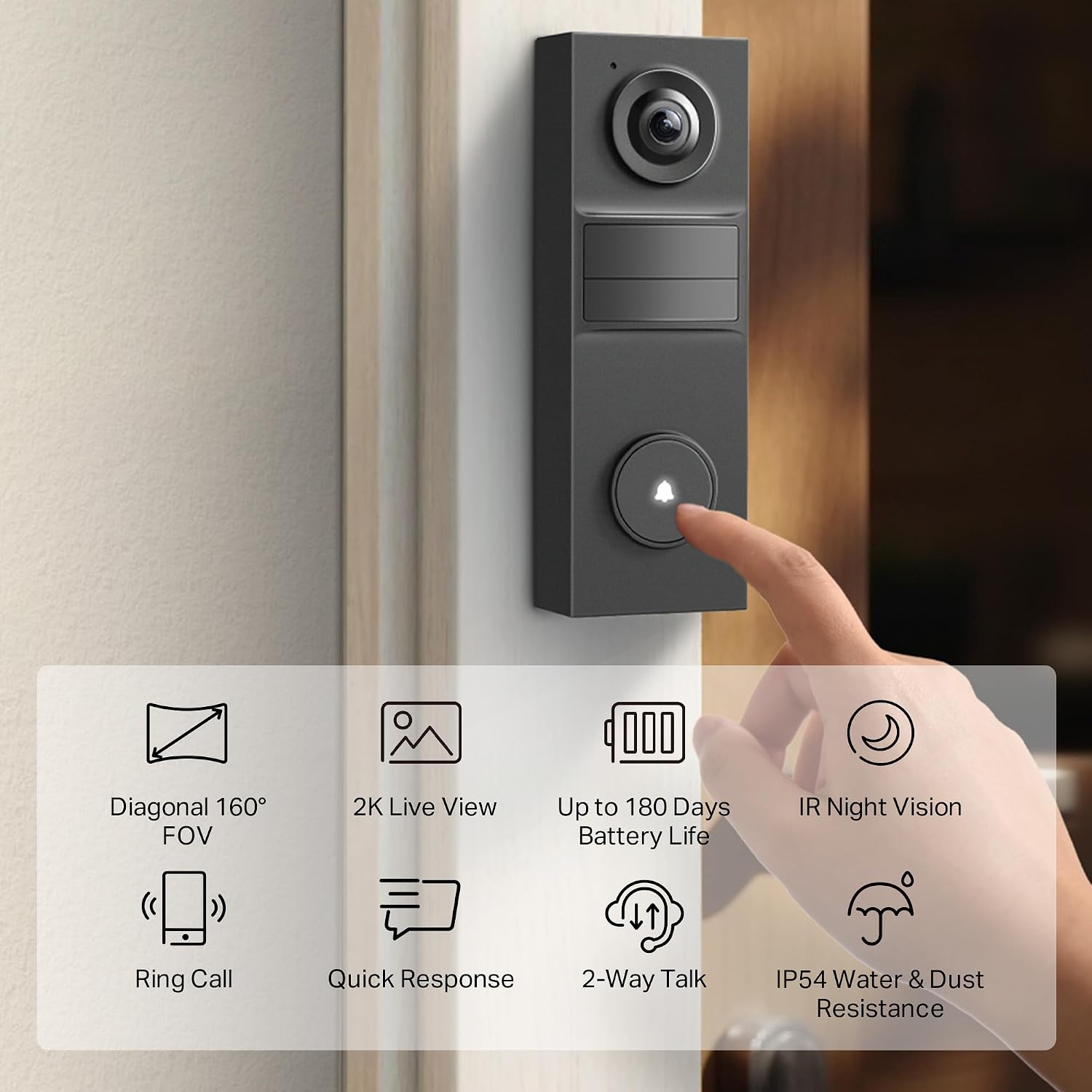
The design is compact and low-key, which I actually like. It’s about 14 x 4.6 x 3 cm, so it doesn’t look like a huge gadget slapped on your door frame. In black, it blends in fairly well, especially on darker doors or brick. There’s a big button with an LED ring and the camera at the top. It looks modern enough, but nothing fancy or premium. It feels like a solid plastic device, not fragile, but you’re not getting a metal body or anything high-end.
Mounting is straightforward: you screw in the bracket (or use the adhesive if you trust it), then slide the doorbell down onto it until it clicks. There’s also a wedge if you need to angle it a bit, which helps a lot if your door is recessed or the default angle only shows half your walkway. The bracket is not my favorite part. It holds the unit firmly, but taking the doorbell off with the detaching pin is a bit fiddly. If you plan to remove it often to charge, you’ll get used to poking around the bottom to release it.
One thing I liked is the stealth mode aspect. The LED ring is there if you want it, but you can basically keep the doorbell looking pretty plain and not like a glowing gadget. That’s handy if you live in an apartment or don’t want it drawing attention every time it detects motion. The ports (USB‑C and microSD) sit underneath, protected by a rubber flap once the unit is on the bracket, so they’re not exposed to rain directly.
Overall, the design is practical and discreet, not flashy. It does the job and doesn’t scream “expensive camera” from the street. On the downside, the mounting system could be a bit easier for frequent removal, and there’s no built-in chime or physical volume control for visitors—everything is basically app and phone based unless you buy extra gear.
Battery life: what “up to 180 days” really looks like
This is where marketing numbers and reality always differ a bit. Tapo claims up to 180 days with the built-in 5,200 mAh battery. In practice, how long it lasts depends heavily on how busy your front door is and how you configure motion detection. With motion recording on, person detection, and a decent number of visitors and delivery guys, you’re not hitting 6 months. For me, with around 10–20 events per day and occasional live views, I’m looking at more like 2–3 months between charges, which is still perfectly acceptable.
The good thing is, you can tweak settings to stretch the battery. Lowering the detection sensitivity, shortening clip length, and reducing how often it records can easily add a few extra weeks. If you live on a quiet street or in an apartment with fewer triggers, you might get closer to the advertised number. If you’re right on a busy sidewalk, forget 180 days; you’ll be recharging more often unless you really tighten the zones.
Recharging itself isn’t hard but it’s slightly annoying. You have to pop the doorbell off the bracket with the little pin, then plug in the USB cable. If your front door is high up or awkward to reach, this gets old. That’s where the Tapo solar panel support comes in. I didn’t test the panel personally, but the idea is clear: plug it in once and let the sun handle it. If your door area gets decent sunlight, that’s probably worth the extra cost just to avoid climbing out and removing the unit every couple of months.
Overall, the battery life is good but not magic. It does better than some older cheap doorbells I’ve used that needed charging monthly, but the 180-day claim is very optimistic for most real-world setups. Plan for every 2–3 months, maybe 4 if you’re careful with settings or have low traffic. If that sounds like too much hassle, either go for the solar panel or look for a wired doorbell instead.

Build quality and weather resistance over time
The D205 is rated IP54, which basically means it handles dust and splashes/rain from any direction, but it’s not meant to be dunked in water. I’ve had it mounted outdoors through some decent rain and wind, and it’s held up fine so far. No water inside the lens, no weird condensation, and all buttons and audio still work. The rubber flap on the bottom that covers the USB‑C and microSD slot sits fairly snug once it’s on the bracket, so it doesn’t flap around or leave a big gap.
The plastic body feels sturdy enough for a doorbell in this price range. It’s not heavy, but it doesn’t feel cheap and hollow either. I wouldn’t expect it to survive someone hitting it with a hammer or trying to rip it off, but that’s true for most consumer doorbells. The mounting bracket holds it tight; it doesn’t wobble or rattle, even when pressing the button. If someone really wants to steal it, they probably can with tools, but again, that’s normal for these devices.
Temperature-wise, it handled cold and rain without any glitches on my side. No random reboots, no battery dropping from 50% to 0% overnight. Battery will always suffer more in cold weather, so if you live somewhere with harsh winters, just expect slightly shorter intervals between charges. The camera lens hasn’t scratched or fogged up for me yet, though I don’t have kids poking at it or anything.
Long-term, I’d say durability is decent for the price. It’s not built like a tank, but it doesn’t feel like a toy either. If you mount it securely, don’t keep yanking it off the bracket, and protect your Wi‑Fi equipment from the elements, it should easily last several years. Just don’t treat the IP54 rating like it’s fully waterproof—if it’s in a spot with direct, heavy sideways rain all winter, maybe give it at least a small overhang or some basic protection.
Video quality, detection, and app experience in real life
In daily use, the 2K video quality is genuinely good for the price. Faces are clear enough to recognize, even a few meters away. The 160° field of view covers my entire entry path plus a chunk of the front yard. You’ll get a bit of the usual fisheye effect on the edges, but nothing crazy. During the day, colors are decent and you can easily see what’s going on. At night, the infrared kicks in and switches to black and white. It’s not pretty, but it’s perfectly usable to see who’s at the door or if someone is hanging around.
The AI person detection works better than I expected. Once I set activity zones, it almost stopped triggering on cars in the street or trees moving. It still picks up the odd thing now and then, but compared to some older doorbells I’ve used, the false alerts are much lower. You can also tweak sensitivity in the app, which helps dial it in. People walking toward the door get picked up early enough that I get a notification before they press the button in most cases.
Notifications to the phone are fairly quick, but not instant 100% of the time. On good Wi‑Fi, I usually get a ping within 1–2 seconds of motion or doorbell press. Sometimes it takes 3–5 seconds, especially if my network is busy. The “phone call” style ring when someone presses the doorbell is actually handy: your phone basically rings like a call, and you can answer and talk right away. Two-way audio is clear enough; there’s a small delay, but visitors hear me fine and I hear them fine. Not studio quality, but good enough for deliveries and casual chats.
The app itself is simple and usable. You can scroll through the timeline, filter events, and jump into live view without too much lag. Recording playback from SD is okay; scrubbing isn’t super smooth like some premium systems, but it works. If your Wi‑Fi is weak near the door, you will have issues: choppy video, slow live view, and missed notifications. A Wi‑Fi extender fixed this for me. So performance is strong enough if your network is solid; if not, expect some frustration until you improve the signal.

What you actually get with the Tapo D205
On paper, the Tapo D205 is a battery-powered 2K video doorbell with a 160° field of view, Wi‑Fi connection, IP54 weather resistance, and support for microSD cards up to 512 GB. The advertised battery life is “up to 180 days”, but that’s in ideal conditions with light usage. In real life with motion clips, live views, and notifications, expect quite a bit less, but still decent.
In the box you get the doorbell itself, the mounting bracket, a horizontal wedge, screws and anchors, a foam pad, a 3M adhesive strip if you don’t want to drill, a tiny detaching pin to remove the doorbell from the bracket, and a short USB adapter cable for charging. There’s no chime included, and no microSD card. So if you want local storage, you’ll need to buy a card separately, or pair it with their hub/H500 if you want more storage and no subscription. Cloud storage is available via Tapo Care, but that’s optional and paid.
The doorbell connects over Wi‑Fi, and you manage everything through the Tapo app on your phone or tablet. It supports Alexa and Google Assistant, plus HomeKit, but realistically most people will just use the app for notifications and live view. One nice bonus is AI person detection without fees, so you don’t have to pay extra just to filter out random motion. That’s something some big-name brands still charge for, which is annoying.
Functionally, the D205 is aimed at people who want a simple, low-maintenance doorbell: you charge it every few months, it records to SD or cloud, and you answer visitors from the app like a phone call. It doesn’t try to be a full security system or do fancy object recognition beyond people. If you’re okay with that, it’s a pretty practical package. If you expect super advanced features or a built-in chime and wiring options, you’ll feel the corners they cut to keep the price down.
Pros
- 2K video and wide 160° view with clear person detection and decent night vision
- Local microSD storage and AI person detection with no mandatory subscription
- Compact, discreet design and relatively easy setup with a straightforward app
Cons
- Real-world battery life closer to 2–3 months than the advertised 180 days in many setups
- No chime or microSD card included, and bracket is slightly annoying for frequent recharging
- Performance heavily depends on having strong Wi‑Fi at the door, may require an extender
Conclusion
Editor's rating
The Tapo D205 is a practical, no-nonsense smart doorbell. It gives you clear 2K video, a wide field of view, working person detection, and local storage via microSD, all without forcing you into a subscription. The app is straightforward, installation is manageable even for non-DIY people, and once it’s dialed in with zones and sensitivity, it quietly does its job in the background. Battery life in real life is more like 2–3 months than 6, but that’s still acceptable for a wireless unit, and the option of adding a solar panel is there if you want to forget about charging.
It’s not perfect. The mounting bracket is a bit fiddly for frequent removal, there’s no chime in the box, and you’re relying a lot on your phone and Wi‑Fi quality for a smooth experience. If your signal at the door is weak, you’ll likely need an extender. Also, if you’re looking for super polished hardware or advanced smart features beyond basic person detection, this isn’t the one. But for the price, and especially for people who are fed up with monthly fees, it hits a good balance.
I’d recommend the Tapo D205 to: renters, apartment dwellers, and homeowners who want simple security at the door with low ongoing costs. If you want a fully wired, always-on, ultra-responsive system and don’t mind paying for a big-brand ecosystem, you might want to look higher up the price ladder. For most everyday users, though, this is a pretty solid, budget-friendly way to finally see who’s at the door without turning it into a subscription project.