
Summary
Editor's rating
Smart doorbell that’s good, but only if you accept the subscription
Value for money: good hardware, but the subscription and install cost add up
Design and build: looks modern, feels solid, but not tiny
Power and installation: no battery, so you need to think about wiring
Video, motion detection and night vision: pretty solid if your Wi‑Fi keeps up
What you actually get and how it works day to day
Does it actually make your entrance safer and more convenient?
Pros
- Sharp 2K video with a very wide 1:1 field of view (good for seeing people and packages)
- Wired power means no battery to recharge and more reliable uptime
- Good integration with Alexa and the included Chime makes it easy to hear and see visitors anywhere in the home
Cons
- Most of the interesting features (video history, better security use) require a paid Ring subscription
- Installation can be tricky and may require an electrician for the hardwired setup
- Not great value if you want a one-time purchase with no ongoing fees

Specifications
View full product page →| Brand | Ring |
Smart doorbell that’s good, but only if you accept the subscription
I’ve been using this Ring Wired Video Doorbell Plus with the 3rd gen Chime for a little while now, and I’ll be blunt: it’s decent hardware, but the whole thing is clearly built around the subscription. Without the Ring plan, you lose a big chunk of what makes this doorbell interesting. You still get live view and notifications, but no video history, no way to go back and see who was at your door two hours ago. For a security device, that’s a pretty big limitation.
In daily use though, the doorbell itself does the job. The video is sharp enough, the field of view is wide, and motion alerts are fairly accurate when you spend some time tuning the settings. The Chime is handy if you don’t want to rely only on your phone, especially in a bigger home or if you tend to leave your phone on silent. It connects quickly and the sound is loud enough to hear from another room.
Where I started to get a bit annoyed is the constant feeling that the app is nudging you towards the paid plan. Every time something happens, you’re reminded that you could be saving the video or checking history if you just subscribed. The 30-day free trial is nice to get a feel for it, but once it stops, the product feels half-locked. If you hate subscriptions, this will bug you pretty fast.
Overall, my first impression is: solid wired doorbell with good tech, but not really designed for people who want a one-time purchase and then forget about it. If you’re okay paying every month for cloud storage and extra features, it makes more sense. If you’re not, there are simpler options that might fit you better, even if the video quality isn’t as good.
Value for money: good hardware, but the subscription and install cost add up
On paper, the Ring Wired Video Doorbell Plus with 2K video, radar motion detection, Wi‑Fi 6 and the extra Chime looks like a pretty solid package. The problem is when you look at the full cost over time. You’re not just buying a doorbell; you’re basically signing up for a service. The Amazon review you shared saying "if you don't subscribe then your doorbell is no good" is a bit harsh, but I get where they’re coming from. Without the plan, you lose video history, which is a key part of the value.
If you factor in: the price of the doorbell + chime kit, possibly a professional install (if you go the hardwired transformer route), and then the monthly or yearly Ring subscription, the total starts to climb. Compared to some cheaper brands that offer local storage on a microSD card with no mandatory subscription, Ring ends up more expensive in the long run, even if the app and ecosystem are more polished. It really depends on whether you care about local storage vs cloud and how much you value the smoother app experience and Alexa integration.
On the positive side, the hardware doesn’t feel cheap, the video quality is clearly above entry-level, and the motion features are more advanced than what you get on budget models. If you’re already in the Ring or Alexa ecosystem, the integration makes it feel more "worth it" because everything works together nicely. If this is your first smart doorbell and you don’t plan to add more Ring devices, the value is less obvious.
So in terms of value for money, I’d say: good if you fully buy into the Ring ecosystem and accept paying the subscription. If you’re looking for a one-off purchase with no ongoing fees, then it’s not great value, and you might be happier with something that records locally, even if the image quality and app are a bit less polished.
Design and build: looks modern, feels solid, but not tiny
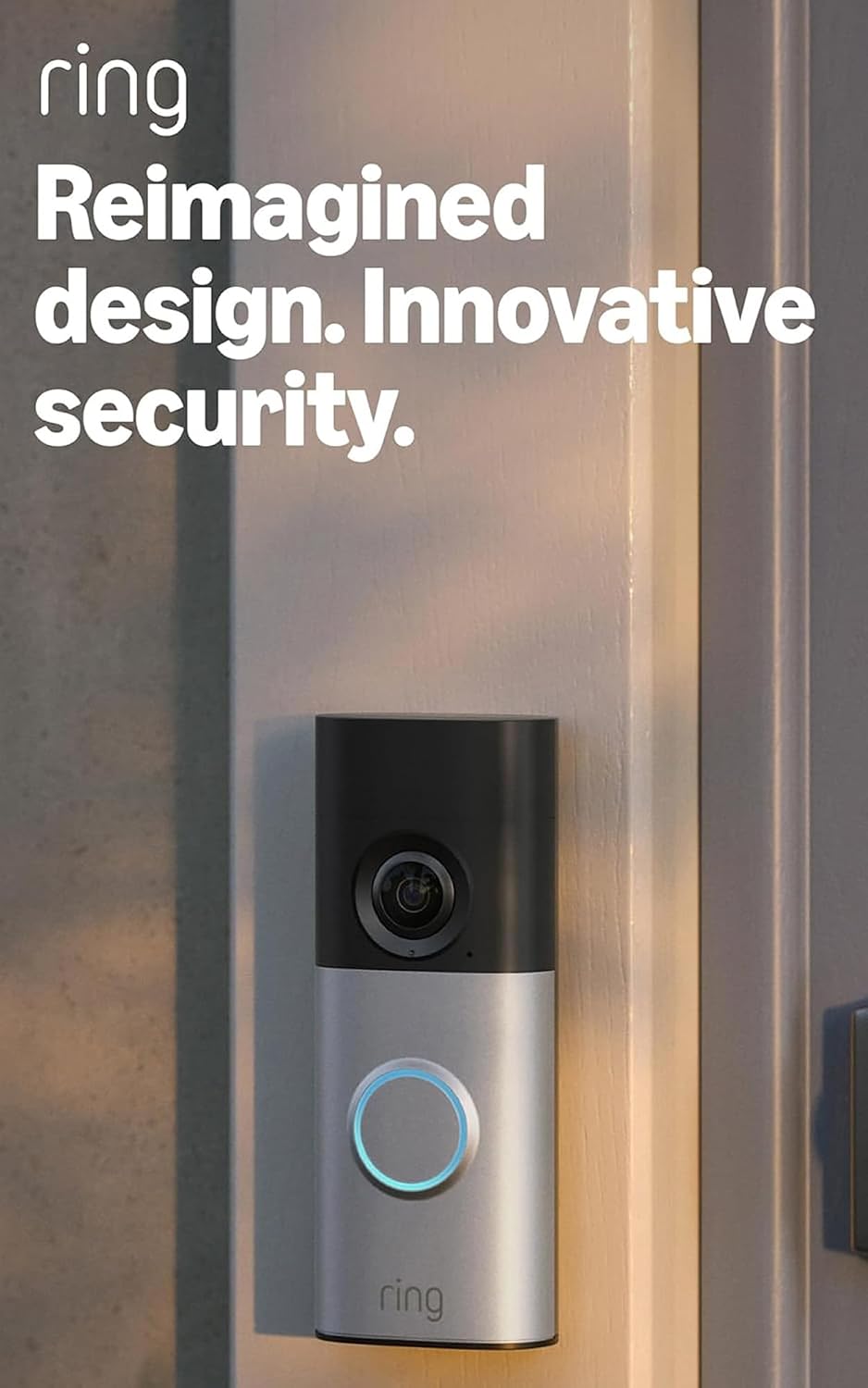
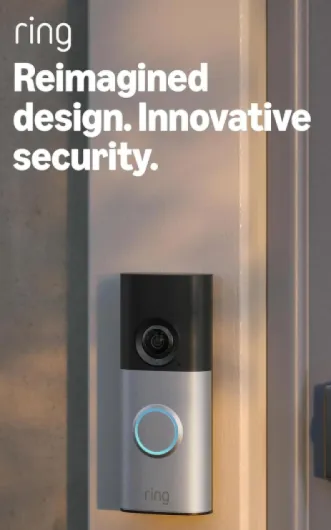
Design-wise, this doorbell is pretty much what you’d expect from Ring: rectangular, clean, and fairly neutral. The color is "Nickel Silver", so it has that brushed metallic look with a big round button at the bottom and the camera up top. It’s not ugly at all, but it’s not something you stare at and go "wow" either. It looks like a modern gadget stuck next to your door, which is fine. The size is around 13.26 cm tall and 5.36 cm wide, so it’s not small – if you have a narrow door frame, you’ll want to measure first.
The build feels pretty solid in the hand. The front doesn’t flex, the button has a clear click, and it doesn’t feel cheap. Ring usually does okay on this. It’s weather resistant and rated to handle from -20°C to about 48.5°C. I didn’t throw water at it or anything, but mounted outdoors it handled normal rain and some sun without any drama. They do warn that direct sunlight and heat can affect performance, so if your door is in full sun all day, keep that in mind.
The Chime is more discreet: a little white box that plugs straight into the wall. It doesn’t take up much space and doesn’t attract attention. It’s basically a speaker with some vents and a Ring logo. It doesn’t feel premium, but it doesn’t feel flimsy either. You plug it in, connect it via Wi‑Fi or Bluetooth during setup, and then forget it’s there until it rings.
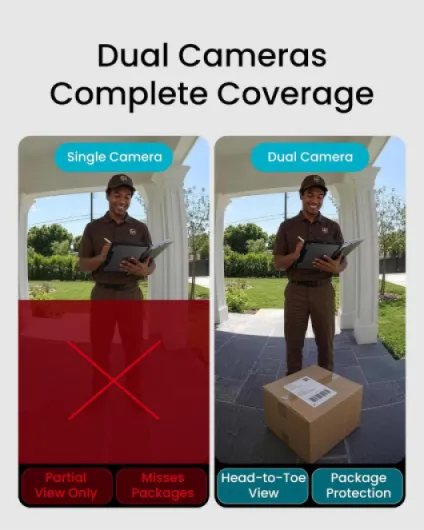
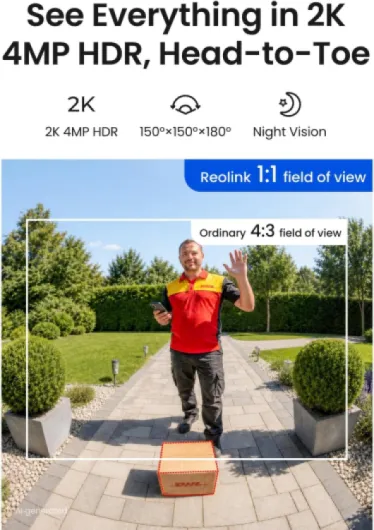
One thing I liked is the 1:1 aspect ratio on the video. Because the field of view is 140° both horizontally and vertically, you can see people head-to-toe and also see packages right under the door. From a practical standpoint, that’s more useful than just a wide horizontal view. So overall: design is practical, modern enough, and feels durable, but it’s not super compact and you clearly see it’s a tech gadget, not a hidden camera or a classic doorbell.
Power and installation: no battery, so you need to think about wiring
Important detail: this is not a battery doorbell. It’s wired only. That means you either connect it to your existing doorbell transformer (16–24 VAC, ideally 30–40 VA) or you use the included DIN rail transformer (for the hardwired kit) or a separate Ring plug-in adapter (for the plug-in version). If you’re not comfortable with electrical stuff or your current doorbell wiring is a mystery, you might end up needing an electrician, which adds to the cost.
The good side of being wired is you never have to worry about charging a battery or the doorbell dying because someone forgot to recharge it. Once installed correctly, it just stays on. For something like a front door camera, I actually prefer that. But you have to be okay with the initial hassle. Ring themselves pretty much say that for the hardwired version, professional installation is recommended to comply with local regulations, so that tells you it’s not just "plug and play" for everyone.
For the plug-in adapter option (if you buy that version or add the adapter later), installation is simpler: you run a cable from a nearby indoor socket to the door and connect it to the doorbell. It’s less clean visually because you have a visible cable, but it avoids messing with your electrical panel. If you live in a rental, this is probably the safer route, as long as your landlord is okay with you drilling a small hole.
So there’s no battery performance to talk about here, but in terms of power reliability, wired is hard to beat. Once it’s in, it’s stable. Just be ready: this is not a 10-minute, no-tools setup for everyone. If you want something you just stick on the wall with adhesive and recharge every few months, this is not the right model.
Video, motion detection and night vision: pretty solid if your Wi‑Fi keeps up
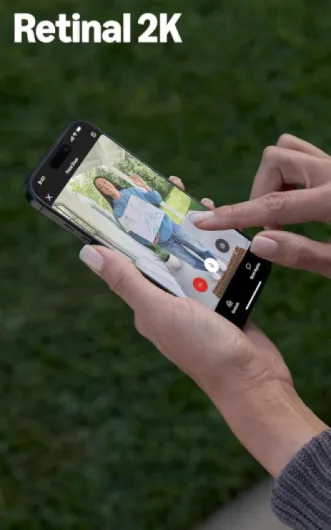
The main selling point here is the Retinal 2K video, and to be fair, the image is quite sharp when your internet is good. Faces are easy to recognize, text on jackets or boxes is readable most of the time, and the wide field of view covers the whole entrance area. Ring says you need at least 10 Mbps upload, and that’s not a joke; with weaker upload, the video compresses, and you lose some of that extra clarity. On a decent connection, you really see the difference compared to older 1080p models.
Motion detection uses their 3D radar system plus customizable zones. In practice, this meant fewer useless alerts from cars passing in the street, once I dialed in the zones. Out of the box, it was a bit too sensitive: branches moving, people walking on the sidewalk, that kind of thing. After 2–3 days of tweaking the distance and zones, I got it to a point where most alerts were actually relevant. You still get an odd false alert, but it’s not spammy once tuned.
Night performance is decent. The "Adaptive Night Vision" keeps things fairly balanced – you don’t get a blown-out bright spot right in the center and pure black everywhere else. It’s not as bright as a floodlight cam, obviously, but for a doorbell, you clearly see who’s there. The "Low-Light Sight" with near dark colour is nice in that in very low light (not total darkness), you can still see some colours instead of pure black and white. It’s not magic, but it’s better than what I’ve seen on cheaper cameras that go straight to noisy grey footage.
Latency (the delay between someone ringing and you seeing them on your phone) was generally fine on a stable Wi‑Fi 6 network: a couple of seconds at most. Sometimes, if the phone was on mobile data or Wi‑Fi was a bit choppy, there was a longer delay or the stream took time to load. That’s pretty standard for cloud-based cameras. In short: performance is good when your internet is good, and the extra motion features actually help cut down on junk alerts if you’re willing to spend 10–15 minutes tuning them.
What you actually get and how it works day to day
The kit I looked at is the Ring Wired Video Doorbell Plus (newest gen) bundled with the Ring Chime (3rd gen). So you’ve got the doorbell itself, which needs power from your existing doorbell wiring or a Ring plug-in adapter (sold separately for some setups), and then the Chime that plugs into a normal wall socket indoors. It’s not battery powered; this is a wired system, which is good for reliability but a bit less flexible during installation.
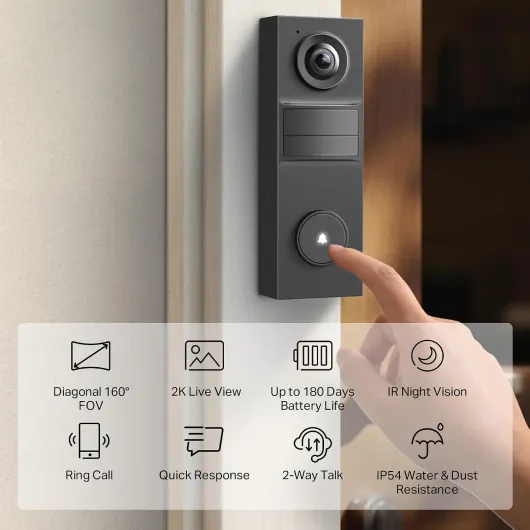
On paper, the key features are: Retinal 2K video (so sharper than basic 1080p), a wide 140° x 140° field of view, 3D radar-based motion detection, night vision, two-way audio, and Wi‑Fi 6 support. It also hooks nicely into Alexa devices, so if you’ve got an Echo Show, the video pops up there when someone rings. In practice, the Alexa integration is one of the more polished parts; you can literally say "Alexa, show me the front door" and it just works, assuming your Wi‑Fi is solid.
The catch is the subscription side. With the free 30-day trial, you can save videos for up to 180 days, get people detection alerts, and rewatch everything. Once that trial ends, you lose the video history unless you pay. Live view still works, motion alerts still come through, and you can answer the door from your phone, but if you miss a call or a notification, there’s no way to check what happened earlier. For a product that is partly sold as "protect more", that’s a bit of a letdown if you don’t want to pay monthly.
So in terms of what you "really" get: if you’re ready to subscribe, you get a fairly complete video doorbell system that covers the basics well and adds some extra motion smarts. If you want something you just buy once and forget about fees, this starts to look more like an expensive doorbell camera that’s only working at 60–70% of what it could do. That’s the trade-off you have to accept with Ring.

Does it actually make your entrance safer and more convenient?
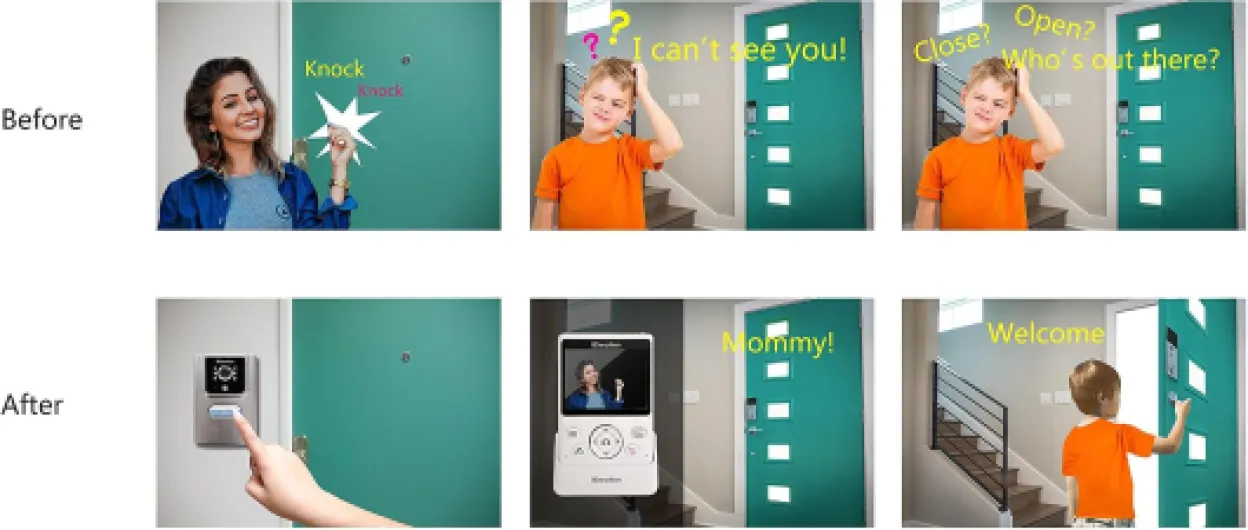
From a pure "does it help in real life" angle, I’d say yes, but with some conditions. The big plus is being able to answer your door from anywhere. Whether you’re upstairs, at work, or away, you see who’s there and can talk to them. Delivery drivers, random door knockers, neighbours – it’s just nice to be able to say "leave it by the plant" or "I’m not interested" without actually opening the door. The two-way talk is clear enough both ways; I never had anyone say they couldn’t hear me.
For security, it’s useful mainly if you keep the subscription. With the plan, you have video history, which means if something happens at night or while you’re away, you can scroll back and actually see it. Without the plan, if you miss the notification in the moment, that event is gone. No recording, no proof. So the effectiveness as a "security" device drops a lot once the free trial ends if you don’t pay. It turns into more of a glorified peephole with live video.
Compared to a basic wired doorbell, it’s obviously more convenient. You get motion alerts even when no one rings, you can check live view if you hear a noise outside, and the Chime makes sure you hear the door regardless of where your phone is. Alexa integration also adds to the convenience: having it automatically show the door camera on an Echo Show when someone rings is actually useful, especially in a kitchen or living room.
The downside is you need to babysit the settings a bit at the start. If you leave everything on default, you might get more alerts than you’d like. And if your internet is weak or unstable, the whole experience gets frustrating, with slow loading and sometimes frozen frames. So I’d say: effective for everyday use if you have good Wi‑Fi and accept the subscription model. If not, you lose a big part of why you’d buy a connected doorbell in the first place.
Pros
- Sharp 2K video with a very wide 1:1 field of view (good for seeing people and packages)
- Wired power means no battery to recharge and more reliable uptime
- Good integration with Alexa and the included Chime makes it easy to hear and see visitors anywhere in the home
Cons
- Most of the interesting features (video history, better security use) require a paid Ring subscription
- Installation can be tricky and may require an electrician for the hardwired setup
- Not great value if you want a one-time purchase with no ongoing fees
Conclusion
Editor's rating
Overall, the Ring Wired Video Doorbell Plus with the 3rd Gen Chime is a solid, modern doorbell camera that does most of what you’d expect: sharp 2K video, wide field of view, decent night vision, and motion alerts that can be tuned to avoid too many false alarms. The wired power means once it’s in, you don’t have to worry about batteries, and the Chime plus Alexa integration make everyday use pretty convenient. From a pure hardware and usability standpoint, it’s pretty solid.
Where it becomes more divisive is the business model. The product is clearly built around the Ring subscription. With the plan, you get video history, better alerts, and a full "security camera" experience. Without it, you still have live view and notifications, but no recordings, which seriously limits its usefulness if you miss an event. Add to that the potential cost of professional installation for some homes, and the total bill is not small. I’d recommend this to people who already use Ring or Alexa, have decent Wi‑Fi, and are okay with paying a monthly or yearly fee for cloud storage. If you hate subscriptions or want a simple, one-time purchase doorbell with local recording, this is probably not the right fit, and you’ll be better off with another brand even if the image quality isn’t as sharp.