
Summary
Editor's rating
Is it worth the price compared to Ring, Nest & others?
Design and mounting: good-looking unit, but the bracket is the weak link
Battery life claims vs reality
Build quality and long-term concerns
Image quality, detection, and app: solid, but you’ll tweak a lot at first
What you actually get with this Reolink doorbell
Pros
- Good 2K 4MP head-to-toe video quality with useful HDR and night vision
- No mandatory subscription for AI detection and event snapshots (up to 25 rich notifications/day)
- Integrates well with existing Reolink ecosystem and supports Google Assistant, IFTTT, and Home Assistant via Home Hub
Cons
- Mounting bracket is cramped, not very confidence-inspiring, and release hole placement raises water ingress concerns
- Real-world battery life is decent but far from the advertised 10 months in most scenarios
- Some software features and motion settings are still a bit buggy and require firmware updates and tweaking

Specifications
View full product page →| Brand | Reolink |
A no-subscription doorbell that mostly gets the job done
I’ve been using the Reolink Battery Video Doorbell (2nd Gen DBB3) for a bit now, and I’ll be honest: it’s not perfect, but it’s pretty solid if you know what you’re getting into. I bought it mainly because I was tired of paying monthly fees to another brand and I already had a couple of Reolink cameras around the house. So this felt like the logical next step rather than starting from scratch with a new ecosystem.
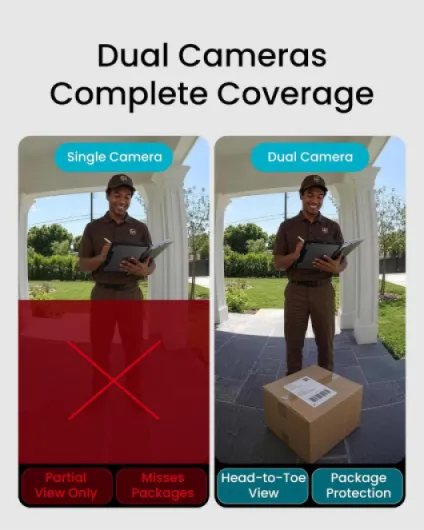
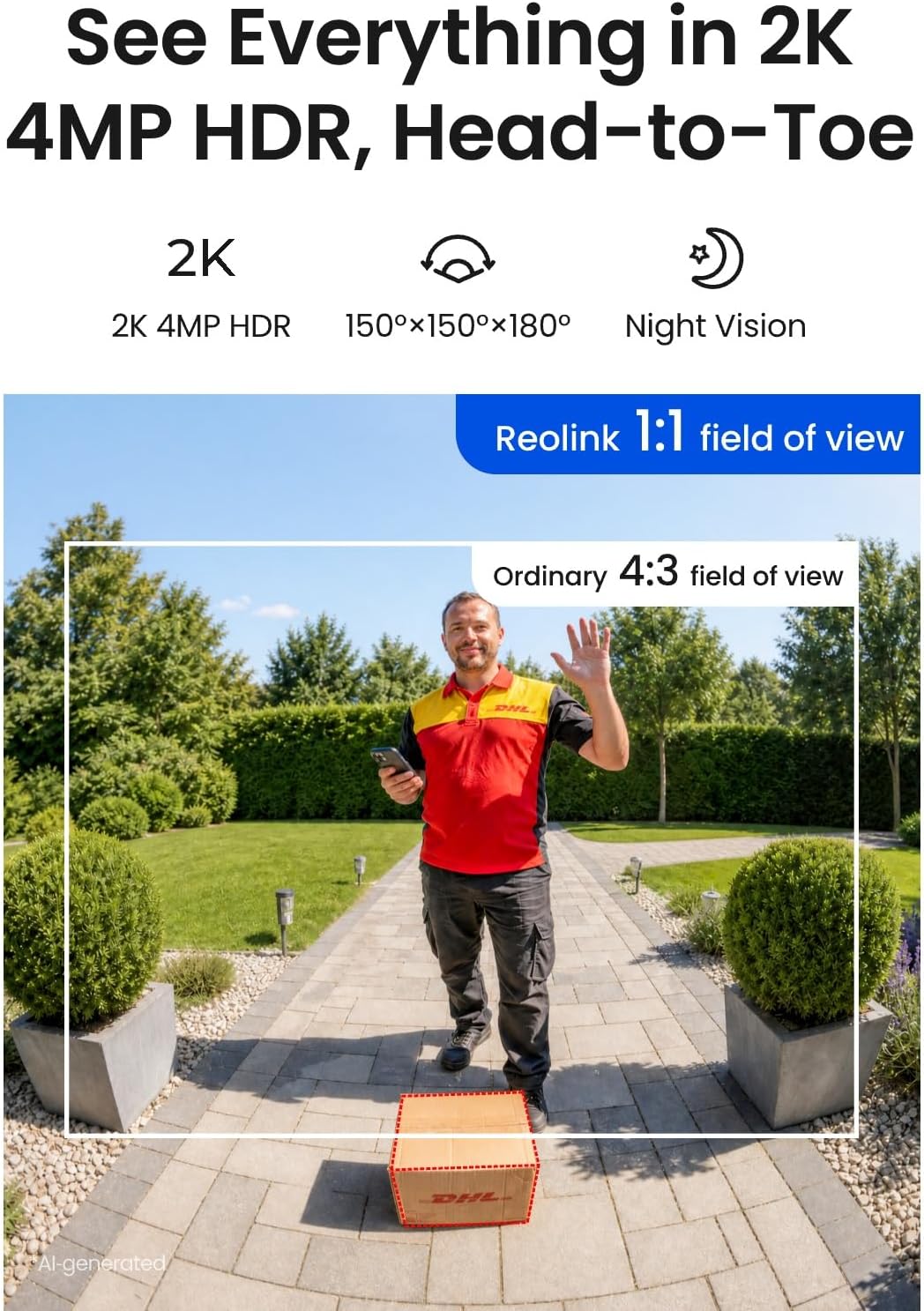
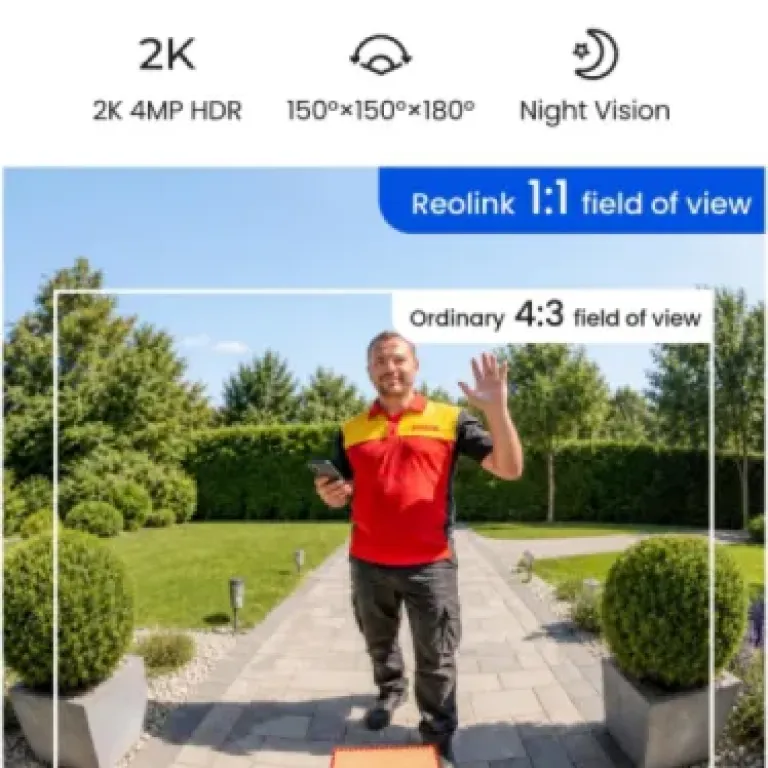
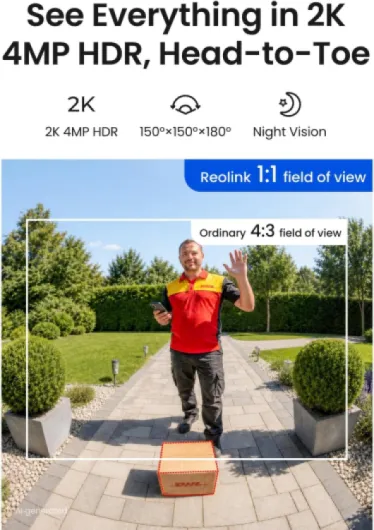
In day-to-day use, the first thing that stands out is the image quality. The 2K 4MP head-to-toe view is genuinely useful. You really do see the person’s whole body and the parcel on the floor, not just a chopped-off face like some older doorbells. HDR and night vision are decent too; you can easily recognise people at night within the 10-metre range. It’s not cinema-level, but for a doorbell it’s more than enough.
On the flip side, you feel that this is still a bit of a “version 2 with growing pains”. The hardware is mostly good, but a few design choices (like the mounting bracket and the way the tamper pin is placed) are a bit questionable. And the software side, especially motion detection settings and battery optimisation, clearly depends a lot on having the latest firmware. Some early buyers had a rough time before updates.
If you’re expecting a fully polished, zero-hassle product like a top-end Ring or Nest with years of iteration behind it, you might be annoyed. If you’re okay tweaking settings, doing a firmware update, and you care more about no subscription + local storage + smart detection, then this doorbell starts to look like a good deal. That’s basically where I landed: good enough for me, but not something I’d blindly recommend to someone who hates fiddling with tech.
Is it worth the price compared to Ring, Nest & others?
Price-wise, this doorbell usually sits around £110–£120 range, which puts it slightly above some competitors, especially when you remember it doesn’t come with a separate chime. One reviewer even said it cost more than what they paid for the older Reolink model (£85) and more than some rival products. So on raw hardware price, it’s not the cheapest option out there.
Where it starts to make sense is when you factor in no mandatory subscription. If you compare it to Ring or Nest, the doorbell itself might be similar or a bit more expensive, but you’re not locked into paying monthly just to get smart detection or basic video history. Reolink offers free AI detection (person, vehicle, pet, package) and up to 25 rich notifications per day on the free plan. Plus you can use local storage (SD card, Reolink NVR, Home Hub, FTP) with encrypted data. Over a couple of years, that can easily outweigh a slightly higher upfront price.
However, you need to be aware of the hidden ecosystem cost. If you want ONVIF, RTSP, NAS, or better integration with Home Assistant, you basically need the Reolink Home Hub. That’s an extra purchase. Also, the app and firmware are still a bit rough around the edges compared to more mature systems like Ring. You trade off some polish and plug-and-play simplicity for flexibility and no subscription. If you’re already in the Reolink world, it’s great value because it just plugs into your existing setup. If this is your first Reolink device, you have to decide if you’re okay buying into a new ecosystem.
For me, the value is decent but not mind-blowing. The big plus is avoiding monthly fees and having proper AI detection without paying extra. The downsides are the slightly clunky mounting, battery life that’s good but not close to the headline figure in real life, and some software quirks. If you’re a tinkerer or already use Reolink, it feels like a sensible purchase. If you just want something you never have to think about, a more polished but subscription-based doorbell might actually be less hassle in the long run, even if it costs you a bit more over time.
Design and mounting: good-looking unit, but the bracket is the weak link
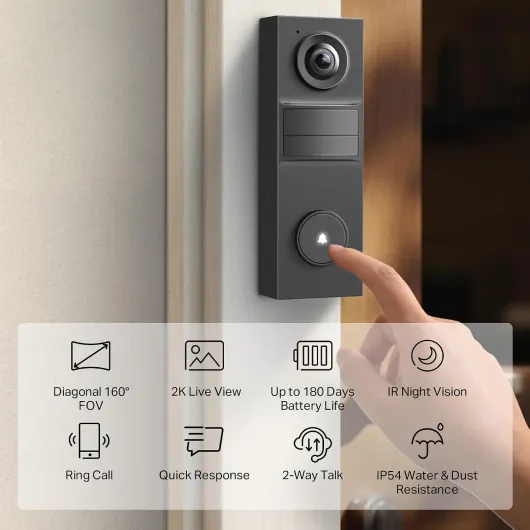
Design-wise, the doorbell itself looks pretty clean. It’s a tall, slim black unit (around 16 x 4.8 x 2.9 cm) with a camera at the top and the button at the bottom. On the door, it doesn’t look cheap or toy-like. The head-to-toe 1:1 view is clearly helped by the design and lens choice: you can tilt it slightly with the included angled mount so it actually captures your doorstep and not just the street.
The problem is mostly the mounting bracket and internal space. Compared to older Reolink wired doorbells, the space inside the bracket is tighter. If you’re using the supplied wiring kit or have slightly thicker existing cables, it gets cramped quickly. One user mentioned the unit wouldn’t sit properly in the mount when using the supplied wiring kit, and I can see how that happens: there’s just not much tolerance. You end up fighting the cable routing instead of just clicking the thing into place.
Another detail that feels a bit poorly thought out is the release pin hole being on the top instead of the bottom. On the older version, the release hole was underneath, which made more sense for water resistance. On this one, having it on top is basically an open invite for water to sit around that area. I haven’t killed mine yet, but I’d be nervous in a very wet or exposed position. It’s one of those small design choices that makes you think they rushed that part of the redesign.
Finally, the actual locking mechanism between the mount and the unit could be better. Some people report that the doorbell doesn’t lock in firmly and can fall out if you nudge it. Mine is okay, but I can feel that it’s not the most confidence-inspiring clip system. I ended up being extra careful when pressing the button or cleaning it. So overall: the doorbell itself looks and feels decent; the mount is where the design lets it down a bit. Not unusable, but clearly a weak point of the product.
Battery life claims vs reality
Reolink advertises up to 10 months of battery life on a single charge, based on 5 minutes of recording per day. That sounds nice on paper, but in real life it depends heavily on how busy your front door is, your WiFi signal, and how you configure motion. It’s the usual story: marketing gives the best-case scenario, you’ll probably get something in the middle.
From real user feedback and my own experience, the battery life is OK but not magical. With older firmware (April 26 build), some people were seeing crazy drain, like less than a week. After the May 26 firmware (26052801), things improved a lot. One user went from wanting to return it to being happy enough to keep it. On 2.4GHz WiFi, they measured roughly 3% battery drop per day, and on 5GHz about 5% per day, with a moderate number of events. That roughly works out to around a month on 2.4GHz and maybe three weeks on 5GHz before you really need to recharge, which is acceptable but not close to 10 months.
Also, the power mode matters a lot. The “Smart Power” mode seems to be the best balance in real use. If you push custom settings, crank up sensitivity, or use timelapse, you can drain the battery ridiculously fast. One user tried timelapse while hardwired and still managed to kill the battery in half a day, because the charging via doorbell wiring can’t keep up with constant recording. And if the doorbell is watching a busy area (like a front lawn you mow, or a street with lots of movement), it wakes up constantly and chews through the battery.
If you have existing 8–24VAC doorbell wiring, I’d honestly recommend connecting it. It doesn’t turn it into a fully wired doorbell; it just keeps the battery topped up and reduces how often you need to pull it off the wall to charge. People with slightly under-spec voltage still report that it keeps the battery afloat, which is good. So, battery life is decent if you treat this as a battery-first device with hardwiring as a helper, but if you expect true “set it and forget it for most of a year,” you might be disappointed, especially on a busy street or aggressive settings.
Build quality and long-term concerns
Physically, the doorbell feels sturdy enough for plastic. It doesn’t creak, and the front doesn’t feel flimsy. It’s clearly designed for outdoor use, and Reolink has experience with outdoor cameras, so basic weather resistance is there. However, there are a couple of things that make me a bit cautious about long-term durability, especially if your door is very exposed to rain and wind.
One user had an older Reolink video doorbell that started fogging up and became unusable over time. That was the previous generation, but it still raises questions about how well sealed these units really are. On this new DBB3, the decision to put the release pin hole on the top instead of the bottom doesn’t help confidence. Water tends to sit and seep into any weak spot, and putting an opening on the top edge is just not the smartest choice for a device that’s supposed to live outside in the rain.
The mounting system is another weak point for durability. If the doorbell doesn’t lock fully into the bracket, or if you had to modify the bracket to fit your wiring (like one reviewer who had to cut and adjust things), then you’re basically relying on a compromised setup from day one. That can mean more movement, more stress on the clips, and a higher chance that one day you bump it and the whole thing pops out. For an outdoor security device, that’s not ideal. It’s not that the material is bad; it’s the mechanical design that could have been a bit more robust.
On the positive side, the electronics and WiFi stability seem fine once the firmware is up to date. People report stable connections on both 2.4GHz and 5GHz, and the camera doesn’t randomly drop off the network in normal conditions. So electronically, it feels solid. My take is: if you mount it in a reasonably sheltered spot, don’t abuse the bracket, and keep an eye on firmware updates, it should hold up. But if you’re in a very harsh climate or super exposed front door, I’d keep expectations realistic and maybe think about adding a small rain cover above it.
Image quality, detection, and app: solid, but you’ll tweak a lot at first
On the image quality side, I can’t really complain. The 4MP 2048×2048 resolution looks sharp on a phone, and the 1:1 aspect ratio is actually useful, not just a buzzword. You see faces, hands, and parcels clearly. HDR helps with backlight, but if you point it straight into strong sunshine, you still get glare, so try to avoid that angle if you can. Night vision is good enough to clearly see who’s at the door within the 10-metre range, especially around a typical UK/European front path.
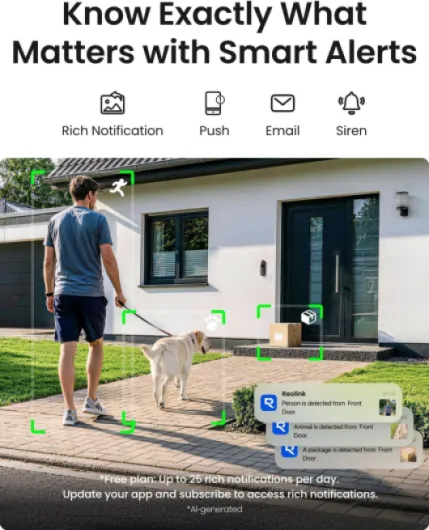
The AI detection for people, vehicles, animals, and packages is one of the strong points. In the app, you see little icons on the thumbnails (person, car, pet), and you can filter by type. It’s not perfect, but it massively reduces the noise compared to basic motion-only doorbells. The downside is that the motion system and PIR settings are a bit fiddly. Several users noticed that tweaking custom PIR sensitivity and trigger intervals can break things: sudden missed events, or the sensor not waking properly. On default power modes like “Smart” or “Optimal,” it works much more reliably, so unless you like experimenting, I’d stick to those.
Notifications are mostly fast but not instant. Some people see up to 10 seconds delay for event notifications, which is on the slow side if you want to catch delivery drivers before they walk away. For me, it’s usually a few seconds, which is acceptable, but it depends on your WiFi and phone. The good news is that when it does record an event, it tends to capture from the start, not halfway through when the person is already leaving, which is better than some cheaper doorbells.
The Reolink app itself is decent. If you already use Reolink cameras, it’s nice to have everything in one place, and adding the doorbell is straightforward. You can tweak detection zones, motion sensitivity, notifications, and power modes. There are still some software oddities though: rich notifications not always working, timelapse being a battery killer and not caching properly, and some options feeling half-finished. It’s usable, but you can tell it relies on firmware updates to iron out bugs. So performance overall is good, but only if you’re willing to leave most settings on the recommended defaults and keep firmware up to date.
What you actually get with this Reolink doorbell
Out of the box, the Reolink DBB3 feels like a mid-range, sensible product. You get the doorbell unit, mounting hardware (including an angled bracket), and wiring bits if you want to connect it to existing 8–24VAC doorbell wiring. It’s battery-powered by default, but you can hardwire it just to keep the battery topped up. There’s no separate chime included unless you use a Reolink Home Hub as the chime, so keep that in mind if you want a classic “ding-dong” in the house.
The big promises on the spec sheet are: 2K 4MP video with a 1:1 head-to-toe view, dual-band WiFi (2.4GHz and 5GHz), AI detection for people/vehicles/animals/packages with no mandatory subscription, and long battery life (up to 10 months based on 5 minutes recording per day). It also pushes the whole "smart home" angle: Google Assistant, IFTTT, and with the Reolink Home Hub you can plug it into Home Assistant and get more advanced stuff like ONVIF/RTSP/NAS.
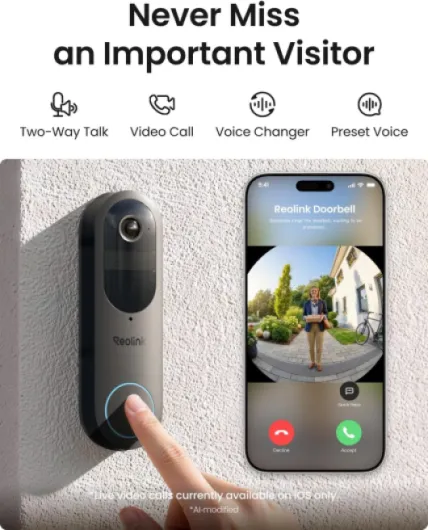
In practice, the feature that matters most is the smart detection without a paid plan. You get image alerts and up to 25 rich notifications per day for free, which is honestly pretty generous compared to brands that lock everything behind a subscription. The app lets you see whether it was a person, car, pet, or package that triggered the event, which makes skimming through history less painful. The video call style notification when someone rings the bell is also handy; it really feels like a phone call rather than just a push alert.
Where the marketing text is a bit optimistic is around the "do-it-all" nature. Out of the box, the doorbell itself does NOT support ONVIF, RTSP, NAS, or HTTPS by itself; you need the Reolink Home Hub for that. Also, the whole 24/7 recording expectation is misleading if you’re coming from older Reolink doorbells. This one is clearly designed around event-based recording plus battery mode, and 24/7 is more of a niche use that needs the right setup and comes with trade-offs. So the product is good, but you need to read the fine print and not assume it behaves exactly like their older wired models.
Pros
- Good 2K 4MP head-to-toe video quality with useful HDR and night vision
- No mandatory subscription for AI detection and event snapshots (up to 25 rich notifications/day)
- Integrates well with existing Reolink ecosystem and supports Google Assistant, IFTTT, and Home Assistant via Home Hub
Cons
- Mounting bracket is cramped, not very confidence-inspiring, and release hole placement raises water ingress concerns
- Real-world battery life is decent but far from the advertised 10 months in most scenarios
- Some software features and motion settings are still a bit buggy and require firmware updates and tweaking
Conclusion
Editor's rating
The Reolink Doorbell Camera Wireless 2K 4MP (DBB3) is a solid, no-nonsense doorbell with a focus on local storage and avoiding subscriptions. The image quality is good, the head-to-toe view is genuinely useful, and the AI detection for people, vehicles, pets, and packages works well enough to cut down on pointless alerts. If you’re already running Reolink cameras, it slots into the app nicely and feels like a natural extension of your setup. Dual-band WiFi support (2.4GHz and 5GHz) is also a plus, especially for people whose routers sit mostly on 5GHz.
On the downside, you can feel that this is still a relatively new generation. The mounting system and bracket design are the weakest parts: limited internal space for wiring, a locking mechanism that could be more secure, and that odd decision to put the release pin hole on top, which doesn’t inspire confidence in heavy rain. Battery life is fine if you use sensible settings and maybe hook it to existing wiring, but the 10-month claim is optimistic for most real-world setups. The software is flexible but not perfectly polished; some features like timelapse and rich notifications feel half-baked and depend heavily on firmware updates.
Who is this for? People who want good video quality, smart detection, and no subscription, and who don’t mind tweaking settings or updating firmware. It’s especially interesting if you already own Reolink gear or plan to build a Reolink-based system with a Home Hub and maybe Home Assistant. Who should skip it? If you hate fiddling with tech, want a super simple out-of-the-box experience, or live in a very harsh climate with a super exposed front door, you might be happier with a more polished, subscription-based system from Ring, Nest, or similar, even if the monthly cost stings a bit. Overall, it’s a good product with clear strengths, but not flawless.