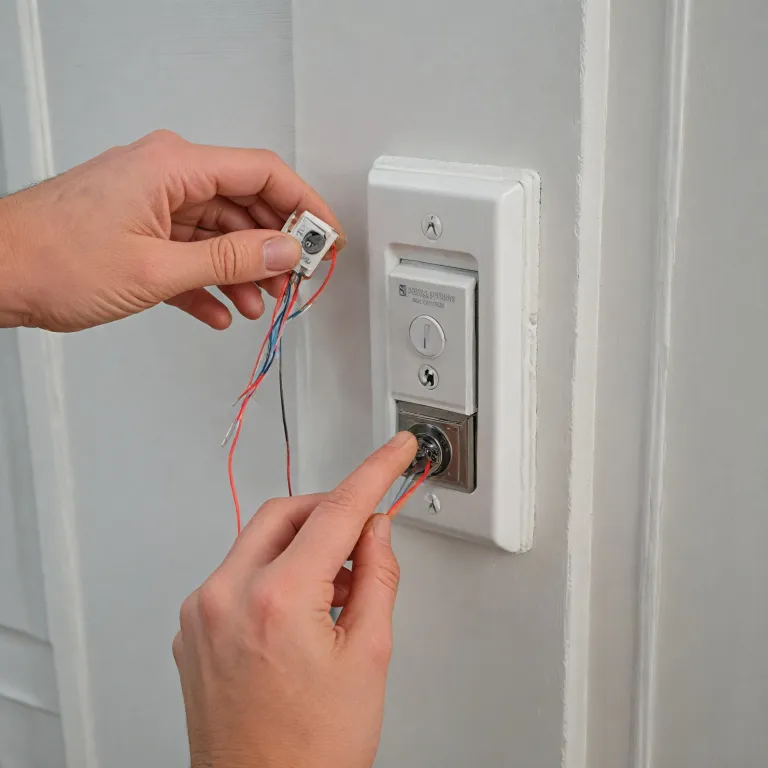
Planning how to add doorbell wiring from an existing light switch
Understanding how to add doorbell wiring from an existing light switch starts with a clear plan. You need to map the path from the light switch box to the front door where the doorbell button and chime will sit, while also considering where a transformer and junction box may be required. This planning phase will determine whether you keep a basic doorbell layout, upgrade to a wired doorbell that powers a Ring doorbell, or combine a wireless doorbell with existing wiring for flexibility.
Begin by turning off the electrical power at the main panel, because any work on a light switch or box must be done safely. Remove the light switch cover and inspect the existing wiring, identifying the white black conductors, the earth wire, and any spare wires that could support low voltage doorbell wiring. If you see only a simple loop with one cable and no neutral, your options for how to add doorbell wiring from an existing light switch may be limited, and a separate doorbell transformer near the panel or another junction box could be safer.
When planning the route, think about how the wires will travel from the light switch to the front door and to the chime location. Many homes already have an existing doorbell or existing wiring hidden behind walls, and tracing those wires can simplify how to install doorbell wiring from the light switch. If there is no existing doorbell, you will need to choose between running new low voltage wiring doorbell cables or relying on a wireless doorbell while still using the porch light switch for power.
Understanding transformers, low voltage and safety for doorbell wiring
Any project involving how to add doorbell wiring from an existing light switch depends on a safe transformer setup. A doorbell transformer reduces mains electrical voltage down to low voltage levels suitable for a basic doorbell, a wired doorbell, or a Ring doorbell that uses existing wiring. You may find a transformer in a junction box near the panel, inside a ceiling box, or occasionally near the porch light or front door chime.
Never connect a doorbell button or button chime directly to mains electrical power, because these components are designed for low voltage only. Instead, route the white black mains conductors into the transformer from the supply side, then run low voltage wires from the transformer to the chime and doorbell button. This separation between electrical mains and low voltage doorbell wiring is essential when you install doorbell systems or upgrade existing doorbells to smart doorbells.
When you open a light switch box, you may see several cables, wire nuts, and screw terminals. Identify which wires feed the porch light or other light controlled by the light switch, and which wires pass through as existing wiring for other circuits. The transformer from the light switch circuit should be connected only on the line side, and the low voltage side should exit the junction box through separate screw holes or knockouts to avoid confusion with mains conductors.
Routing wires from the light switch box to the chime and front door
Once you understand the transformer and safety basics, you can plan how to add doorbell wiring from an existing light switch to the chime and front door. The goal is to create a clear path where low voltage wires run from the doorbell transformer in or near the light switch box to the chime location, then to the doorbell button at the front door. This routing must respect building rules, avoid sharp edges, and keep the wiring doorbell cables separate from high voltage conductors where possible.
Start by choosing cable rated for low voltage doorbell wiring, which is usually flexible and easy to pull through walls. From the junction box or light switch box that houses the transformer, feed the wires through existing screw holes or knockouts, then along wall cavities toward the chime location, often near the hallway or living area. Secure the wires with appropriate clips or staples, but do not crush the insulation, and avoid running them too close to hot light fittings or other electrical equipment.
From the chime, continue the wires toward the front door where the doorbell button will be mounted. If there is an existing doorbell, you may be able to reuse the existing wiring and simply connect the new transformer and chime, which simplifies how to install wired doorbell systems. If no existing doorbells or posts are present, drill a small hole near the door frame, feed the wires through, and leave enough slack to connect to the button chime or Ring doorbell later.
Connecting the chime, button and Ring doorbell to existing wiring
With the cables in place, you can focus on how to add doorbell wiring from an existing light switch into the chime and button connections. A traditional basic doorbell uses a transformer, a chime, and a doorbell button wired in series, and this same layout often supports a Ring doorbell that uses existing wiring. The key is to connect the low voltage wires correctly at each device, while keeping the mains electrical side isolated inside the junction box or light switch box.
At the chime, identify the terminals marked for transformer and door, which may be labelled differently on various doorbells. Connect the low voltage wires from the doorbell transformer to the transformer terminals, then run another pair of wires from the door terminals to the doorbell button at the front door. Tighten each screw firmly, but do not overtighten, and gently pull each wire to confirm that no thread of copper slips out from under the screw head.
At the front door, mount the doorbell button or Ring doorbell backplate using appropriate screw holes and wall plugs. Pull the low voltage wires through the opening, strip a small section of insulation, and connect them to the button chime or Ring doorbell terminals, observing polarity if the manufacturer specifies it. If you are combining a wired doorbell with a wireless doorbell extension, follow the instructions to pair the wireless unit so that pushes on the wired button also trigger the wireless chime in distant rooms.
Using a porch light switch circuit to power a Ring doorbell
Many homeowners ask how to add doorbell wiring from an existing light switch that controls a porch light, because this circuit is already near the front door. In such cases, the light switch box can host a doorbell transformer, allowing you to install doorbell wiring without running a new mains electrical line from the panel. The transformer from the porch light circuit steps down the voltage, and the low voltage side then feeds the chime and Ring doorbell or other doorbells at the front door.
When you open the porch light switch, you will typically see a line conductor, a switched conductor going to the light, a neutral, and an earth wire. The white black conductors must be clearly identified, and the transformer primary should connect only to the permanent line and neutral, not to the switched leg that feeds the light. This way, the doorbell wiring and chime remain powered even when the porch light is off, ensuring the doorbell button and Ring doorbell respond to every push.
If you do not want to alter the existing wiring heavily, you can sometimes keep the existing doorbell wiring for a basic doorbell and add a wireless doorbell as a backup. A wireless doorbell can be useful when you do not wish to open more junction boxes or run additional wires through finished walls. For a deeper look at how a combined doorbell and light can improve safety, see this guide on a doorbell with integrated light for home security and convenience.
Troubleshooting wired doorbell, chime and Ring doorbell issues
After you complete how to add doorbell wiring from an existing light switch, testing and troubleshooting ensure everything works reliably. Restore power at the panel, then press the doorbell button at the front door and listen for the chime, watching the Ring doorbell if installed. If the chime does not sound, or the Ring doorbell does not power up, you will need to check each part of the wiring doorbell path carefully.
First, verify that the transformer in the junction box or light switch box is receiving mains electrical power on the white black conductors. Use a suitable tester on the low voltage side to confirm that the doorbell transformer outputs the correct voltage for your basic doorbell, wired doorbell, or Ring doorbell model. If there is no output, the transformer from the porch light circuit may be wired incorrectly, or the internal protection may have tripped, requiring replacement by a qualified professional.
Next, inspect the chime connections and the wires leading to the doorbell button and Ring doorbell. Loose screw terminals, damaged insulation, or a broken thread of copper can interrupt the low voltage circuit and prevent the chime from sounding when you push the button. If you still cannot resolve the issue, consider temporarily substituting a simple wireless doorbell to maintain functionality while you consult an electrician, especially when multiple posts of wiring converge in a crowded box that is difficult to interpret.
When to choose wireless doorbells or professional installation
Not every home is a good candidate for how to add doorbell wiring from an existing light switch, particularly when the electrical layout is complex. In older properties, the light switch box may lack a neutral, or the existing wiring may be too fragile to support a new doorbell transformer and low voltage circuit. In such cases, a wireless doorbell or a battery powered Ring doorbell can provide a practical alternative without disturbing the existing door or porch light wiring.
Wireless doorbells have improved significantly, with reliable button chime communication and long battery life, making them suitable for many front door installations. You can mount the wireless button near the door, place the chime unit in a convenient room, and avoid running wires through walls or opening additional junction boxes. However, if you want to install wired systems that integrate with a Ring doorbell and use existing doorbell wiring, professional help may still be the safest route.
Whenever you feel uncertain about identifying white black conductors, connecting a transformer from a light switch circuit, or working inside a crowded box, do not proceed alone. A licensed electrician can assess the existing doorbell, posts, and electrical layout, then advise whether to install wired doorbell equipment, upgrade the chime, or rely on wireless doorbells instead. This approach balances safety, reliability, and convenience, ensuring that every push on the doorbell button results in a clear chime and a responsive Ring doorbell at your front door.
Frequently asked questions about adding doorbell wiring from a light switch
Can I power a doorbell directly from a light switch circuit ?
You can often power a doorbell transformer from the same circuit as a light switch, but the doorbell itself must always run on low voltage. The transformer connects to the permanent line and neutral, not the switched leg that feeds the light. This ensures the chime and Ring doorbell remain powered even when the light is off.
Do I need a new transformer for a Ring doorbell ?
Many Ring doorbell models require a specific low voltage range that older basic doorbell transformers may not provide reliably. If your existing doorbell transformer is undersized or outside the recommended range, upgrading it can improve performance. Always check the Ring doorbell specifications and consult an electrician if you are unsure.
Can I reuse existing doorbell wiring for a new chime ?
In many homes, existing doorbell wiring can be reused for a new chime or Ring doorbell, provided the insulation is intact and the cable route is suitable. Testing continuity and inspecting for damage helps confirm whether the wires are still reliable. If the wiring is brittle or inaccessible, a wireless doorbell may be a better option.
Is it safe to work inside a light switch box myself ?
Working inside a light switch box involves exposure to mains electrical conductors, which can be dangerous if handled incorrectly. Turning off power at the panel and using proper tools reduces risk, but some situations remain complex. When in doubt, hiring a licensed electrician is the safest and often most efficient choice.
Can I combine a wired doorbell with a wireless doorbell system ?
Some systems allow you to combine a wired doorbell button and chime with a wireless doorbell extender, giving you flexibility in larger homes. The wired button at the front door can trigger both the traditional chime and a wireless unit placed farther away. This hybrid approach can be useful when running new wires is impractical but you still want reliable alerts throughout the property.