
Summary
Editor's rating
Value: good in an ecobee setup, weaker if you hate subscriptions
Design: big, obvious, and not exactly discreet
Power and wiring: not really about battery, but still important
Durability and reliability: tough on paper, mixed in practice
Performance: video, alerts, and day‑to‑day use
What this doorbell actually does in real life
Pros
- Wide field of view with clear 1080p video and decent night vision
- Tight integration with ecobee thermostats, Alexa, Google, and basic HomeKit
- Fast notifications and reliable live view once power and wiring are correct
Cons
- No HomeKit Secure Video and most smart features require a paid ecobee subscription
- Large physical size that may not fit smaller door frames nicely
- Can be finicky with older or weak transformers, and some reports of units failing after a few months

Specifications
View full product page →| Brand | ecobee |
A doorbell that’s great… if you already live in the ecobee world
I’ve been using the ecobee Smart Video Doorbell Camera (wired) for a while now, and the short version is this: it’s a pretty solid wired doorbell with good video and tight integration if you already own ecobee thermostats or use Apple/Alexa/Google a lot. But it’s not perfect, and there are a few things that annoyed me more than I expected, mainly around subscriptions and size.
My setup: older house with existing chime and transformer, decent Wi‑Fi at the front door, and I already had an ecobee Smart Thermostat Premium. I replaced a basic dumb doorbell, so I wasn’t coming from Ring or Nest. That probably helped me be less picky at first, but as I used it day to day, some things really stood out, both good and bad.
The main thing I noticed is that live video, notifications, and 2‑way talk work well and feel fast. When someone presses the button, my phone and thermostat react quickly, and being able to see the camera feed on the thermostat is actually more useful than I expected. On the flip side, if you care about recorded video and smart features like package detection, ecobee pushes you toward their paid subscription pretty hard.
So overall, it’s a capable wired smart doorbell that does the job, but you should go in knowing this isn’t a cheap, no‑strings “buy once and you’re done” situation. It shines in an ecobee ecosystem, but if you’re deep into Apple HomeKit Secure Video or you hate ongoing fees, you’ll probably be a bit frustrated.
Value: good in an ecobee setup, weaker if you hate subscriptions
From a value perspective, this doorbell sits in that zone where the hardware itself is good, but the subscription model drags the overall value down if you’re trying to avoid monthly fees. Out of the box, you get live video, notifications, and integration with Alexa, Google, and Apple HomeKit (with the big caveat that it does not support HomeKit Secure Video). If you just want to see who’s at your door in real time and you don’t care about recordings, that might be enough.
Where things get annoying is if you expect full smart features without paying extra. Package detection, 30‑day video storage, and rich snapshot notifications all require the ecobee Smart Security subscription. It’s around $5/month for just this doorbell. That’s not insane compared to Ring or Nest, but it still adds up, and it feels especially frustrating for HomeKit users who know the hardware could technically support HomeKit Secure Video, but ecobee decided to block that and funnel you into their own service instead.
If you already own ecobee thermostats, especially the Smart Thermostat Premium, the value improves a lot. Being able to answer the door and see video right on your thermostat is genuinely handy, and having your thermostat act as a chime and extra display makes the ecosystem feel more complete. In that case, you’re paying not just for a doorbell, but for a more unified setup in your house, and it makes more sense.
Compared to other brands, I’d say it’s decent value if you’re in the ecobee ecosystem and okay with a small monthly fee. If you’re not, and especially if you want free local recording or HomeKit Secure Video, there are better options for the money. It’s not a rip‑off, but it’s also not some crazy bargain. It’s just a solid wired smart doorbell that becomes pricey once you factor in subscriptions and possible transformer upgrades.
Design: big, obvious, and not exactly discreet
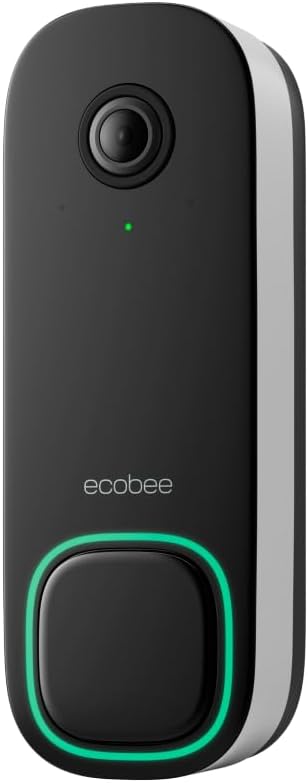
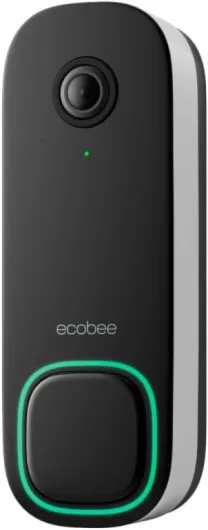
Physically, this doorbell is big. That’s the first thing I noticed when I took it out of the box. It’s not one of those slim, barely‑there doorbells. It’s a chunky rectangular block, and if your door frame is narrow, you may have some fun trying to make it fit. One Amazon reviewer mentioned it almost didn’t fit on their door frame; I had a similar feeling. It’s not ridiculous, but it’s definitely larger than a basic button or some other smart doorbells.
The upside of the size is that the button is huge and obvious. Visitors don’t have to guess where to press. The LED ring and the chime melody give clear feedback that they actually rang the bell, which helps avoid people hammering the button three times. The black plastic body looks fine, nothing fancy, but it’s pretty neutral and doesn’t scream “tech toy” from the street. It looks like a modern security device, which some people may like as a deterrent.
Build quality feels solid enough for a plastic device. The IP65 rating and the -25 to 45°C range are reassuring if you live somewhere with real winters or hot summers. I haven’t had it through multiple winters yet, but so far in rain and cold it hasn’t shown any obvious issues. It doesn’t feel premium in the sense of metal or glass, but it also doesn’t feel cheap or hollow. It’s somewhere in the middle: practical, functional plastic shell that should survive outside.
If you care about your front door aesthetics, just know this isn’t subtle. It’s more like, “Yes, this house has a smart camera watching you.” Personally I don’t mind that, but if you want something small and low‑profile, this might bug you. I also wish ecobee sold spare parts like backplates officially, because losing that, as one buyer did, basically forces you to improvise or rebuy hardware, which is annoying for a product at this price.
Power and wiring: not really about battery, but still important
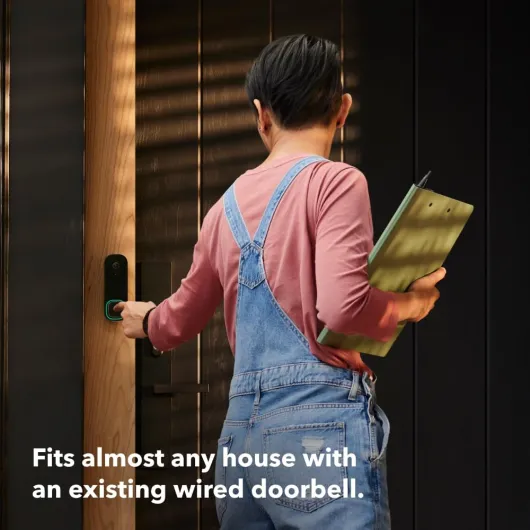
This model is wired only, so there’s no true battery operation like some other doorbells. The specs mention a lithium‑ion battery, but in practice this is more of a backup/internal component, not something you swap or recharge. For daily use, you’re fully dependent on your existing doorbell wiring and transformer. If you don’t already have a wired doorbell with a compatible transformer, you’ll either need to install one or use a separate power adapter like one of the reviewers did by plugging into a wall outlet.
In my case, the existing transformer technically met the 16–24 VAC requirement, but it was old and underpowered. The doorbell worked, but I saw occasional disconnects and weird behavior early on. After seeing other users mention similar issues, I upgraded to a newer, higher‑rated transformer, and the stability improved a lot. So, if you’re having random “offline” problems, don’t assume Wi‑Fi is always to blame. Power draw plus an old mechanical chime can push a weak transformer over the edge.
Since it’s wired, you don’t have to worry about recharging batteries or the camera dying in cold weather, which is a plus. It just sits there powered 24/7 as long as your transformer and wiring are good. But the trade‑off is installation complexity. If you’re not comfortable turning off breakers, dealing with low‑voltage wiring, or checking transformer ratings, you may end up paying someone to set it up. The included chime adapter also adds one more piece in the puzzle, and ecobee support will absolutely make you bypass it and test voltages if you ever call about issues.
So in terms of “battery life”, there isn’t really a story here, and that’s kind of the point. You’re trading battery headaches for wiring headaches. Once the wiring is sorted, it’s nice to forget about charging, but getting to that point might be a hassle if your house is older or your existing doorbell system is a mess.
Durability and reliability: tough on paper, mixed in practice
On paper, the ecobee doorbell looks well prepared for the outdoors: IP65 water resistance, dust protection, and an operating range from -25°C to 45°C (-13°F to 113°F). That’s pretty wide, and for most climates that means it should keep working in winter and summer without drama. The plastic body doesn’t feel fragile, and I’ve had it in rain and cold without any signs of moisture getting in or fogging the lens.
Where durability gets a bit questionable is the long‑term reliability and quality control. There’s at least one detailed review where the doorbell worked fine for about six months and then completely quit: constant blue ring, reset button doing nothing, and multiple days of back‑and‑forth with support before they agreed to replace it. That kind of story doesn’t mean every unit is bad, but it does suggest that if a critical part like the reset button dies, you’re stuck in troubleshooting hell before getting help.
My own experience so far has been mostly stable after the power side was sorted, but I did have a couple of random offline moments early on that required a power cycle. Not enough to call it junk, but enough to remind me this is still a connected gadget that might occasionally need a nudge. ecobee does push firmware updates silently in the background, which can help or hurt depending on how well they test them. You don’t really get clear release notes as a normal user, so you just kind of trust that updates are happening.
So in terms of durability, I’d say the hardware itself feels sturdy enough for outdoor use, but long‑term reliability is more of an open question. The 3‑year manufacturer warranty is decent, and I’d keep proof of purchase handy. If you’re unlucky and get a flaky unit, be prepared for a bit of a slog with support before they agree to a replacement. It’s not a deal‑breaker, but it’s not flawless either.
Performance: video, alerts, and day‑to‑day use
On the performance side, video quality is solid for 1080p. It’s not mind‑blowing, but it’s clear enough to see faces, read packages, and check what’s going on. HDR helps with bright sunlight and shadows at the door. I don’t get that washed‑out look you sometimes see on cheaper cameras when the sun hits just right. Night vision is decent too — faces are recognizable within a normal distance, and the advertised 30‑foot range feels roughly accurate for basic awareness.
The notifications are where it does well. Doorbell presses show up quickly on my phone, and on my ecobee thermostat and Apple TV. The Apple TV pop‑ups are especially handy; someone rings, and a small video window shows up almost instantly, so I can see who’s there without getting off the couch. Motion notifications are also fast, but you do have to tune the zones or you’ll get spammed like any other motion camera. Once I set zones to just cover the porch and walkway, the noise dropped a lot.
2‑way audio is usable. There’s a bit of delay like most Wi‑Fi doorbells, but nothing crazy. People at the door can hear me clearly enough, and I can understand them unless there’s a ton of background noise. It’s not hi‑fi, but it’s fine for “leave it by the door” or “I’ll be right there.” Noise reduction seems to help a bit with street noise, but don’t expect miracles if you’re on a busy road.
Where performance can get sketchy is reliability if your transformer or wiring is borderline. There are reviews mentioning the doorbell going offline and needing restarts, and one user only got it rock solid after upgrading to a beefier transformer. ecobee says it needs 16–24 VAC, 10 VA minimum, but in real life, if you have an old house or a chime that draws a lot of power, you might want to proactively upgrade your transformer. Once the power situation is good, it tends to stay online, but it’s something to keep in mind if you don’t want to play electrician or call one in.
What this doorbell actually does in real life
On paper, ecobee throws a lot of buzzwords at this thing: 1080p HDR video, night vision, radar, person and package detection, 2‑way audio, 175° vertical field of view, 187° diagonal, and so on. In practice, the core stuff you care about is pretty simple: you see who’s at the door, you get alerts on your phone, you can talk to them, and you can optionally record clips if you pay for the subscription.
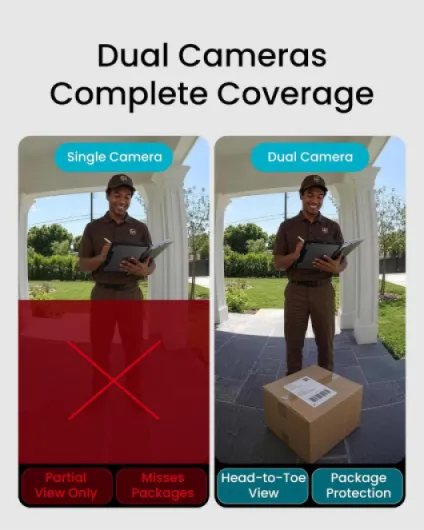
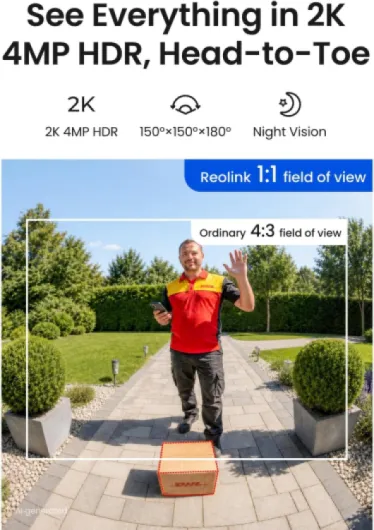
The field of view is genuinely wide. You really do see people head‑to‑toe, plus packages almost up against the door. Compared to more basic cameras I’ve used, this one lets you see packages right on the mat, which is actually useful if your delivery people like to shove boxes close to the door. Motion alerts are customizable, so you can dial in activity zones so you’re not getting pinged every time a car passes or your neighbor walks by.
The Smart Focus/pan/zoom is more of a quality‑of‑life thing than a game‑changer. It auto‑tracks people in the frame and keeps them centered, which is nice when you’re watching live, but I wouldn’t buy the doorbell for that alone. It’s more like a bonus. What matters more to me is that the connection has been mostly stable when the power and transformer are up to spec. Some users clearly had issues with it going offline, and a lot of that seems tied to borderline transformers or older chime setups.
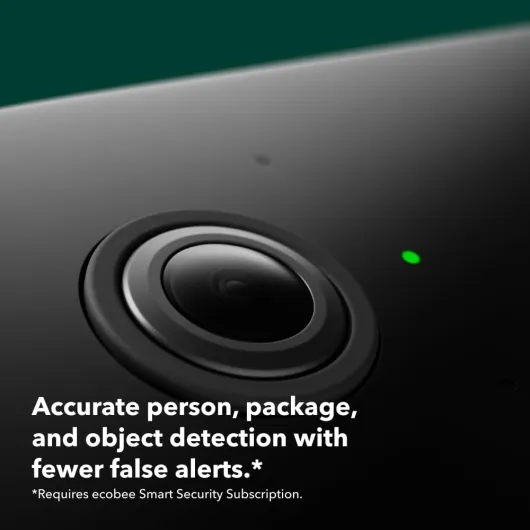
One important detail: a bunch of the “smart” stuff is locked behind ecobee’s Smart Security subscription. Package detection, 30‑day video storage, and richer notifications with snapshots are all paywalled. Without the subscription, you still get live view, basic notifications, and doorbell alerts, but you lose the history and most of the smarter recognition. So if you’re expecting full features off the shelf with no monthly cost, that’s not what this is.
Pros
- Wide field of view with clear 1080p video and decent night vision
- Tight integration with ecobee thermostats, Alexa, Google, and basic HomeKit
- Fast notifications and reliable live view once power and wiring are correct
Cons
- No HomeKit Secure Video and most smart features require a paid ecobee subscription
- Large physical size that may not fit smaller door frames nicely
- Can be finicky with older or weak transformers, and some reports of units failing after a few months
Conclusion
Editor's rating
Overall, the ecobee Smart Video Doorbell Camera (wired) is a pretty solid choice if you’re already using ecobee gear and you want everything in one app. The video quality is good, the field of view really does show people and packages clearly, and the integration with the ecobee Smart Thermostat Premium and smart speakers is genuinely practical. Notifications are fast, 2‑way audio is usable, and once your transformer and wiring are sorted, it can be a reliable front door setup.
Where it falls short is mainly on the business side: no HomeKit Secure Video, key features locked behind a subscription, and some reports of units dying after a few months. If you’re the type who hates paying monthly just to get recordings and package detection, this will annoy you. If you’re deep into Apple’s ecosystem and wanted to rely fully on HomeKit Secure Video, this is the wrong product. Also, the size is on the large side, and installation can turn into a small project if your existing transformer is weak or your chime is old and power‑hungry.
I’d recommend this doorbell to: people who already own ecobee thermostats, are okay with paying for ecobee’s Smart Security plan, and want a wired solution with strong smart home integration. I’d say skip it if: you want free or HomeKit Secure Video recording, you don’t want any subscriptions, or you’re not ready to deal with wiring and possibly upgrading a transformer. In short, it gets the job done well in the right setup, but it’s not the best fit for everyone.